Why it works: Flour and egg are a kitchen classic. They rank in the top 15% of all ingredient pairs, and cooks put them together in 106,462 recipes. Both carry isobutyraldehyde, which smells malty, green. The science ↓
Sponge-cake No. 2
Ingredients
Directions
Prepare the batter
Weigh any number of eggs.
Weigh the same weight of sugar.
Weigh one half the weight of flour.
Add grated rind and juice of one lemon to the eggs.
Whisk the mixture until very light and spongy, taking care not to break down the whipped whites.
Bake and finish
Preheat the oven to a moderate heat.
Bake the cake, increasing the heat after a time.
Do not move or jar the cake while it bakes.
Bake for forty to fifty minutes, according to the size of the loaf.
Dust the finished cake with powdered sugar.
(Optional) Add rose water instead of lemon for flavor.
(Optional) Mix finely chopped almonds into the batter.
(Optional) Grate orange rind over the cake before frosting.
Nutrition, whole recipe (rough)
What these numbers assume: 3 portions
| Ingredient | Portion assumed | kcal |
|---|---|---|
| Flour | 1 cup (125g) all-purpose | 455 |
| Egg | 1 large egg (50g) | 78 |
| Lemon | juice of 1 lemon (48ml) | 12 |
One typical portion per ingredient; the recipe's quantities are not counted. A rough guide only, not for medical or dietary planning.
Transcribed from a scanned cookbook and modernised for today's kitchens. Where the book gave no heat or time, or said "a moderate oven", the temperatures and times here may be modern equivalents rather than the book's own figures. See the original page.
Explore the science
The flavor team
The pairs that carry this dish. Each one is judged two ways: how much their aromas overlap, and how often cooks already put them together.
-
Flour + eggtop 15% of all pairsSmell alikelowCooked together106,462 recipes
Shared aroma: isobutyraldehyde (malty, green).
-
Flour + lemontop 17% of all pairsSmell alikemoderateCooked together30,404 recipes
Shared aroma: isobutyraldehyde (malty, green).
-
Lemon + eggtop 19% of all pairsSmell alikelowCooked together44,316 recipes
Shared aroma: (e,e)-2,4-decadienal (fatty, deep fried).
Flour and egg barely smell alike, yet cooks put them together in 106,462 recipes: they work on texture and structure more than aroma.
Ranks compare each pair with 20,000 random ingredient pairs on CompKitchen. How we score pairs
What each ingredient does
- Eggs
- Whipped into foam that gives the cake its light, spongy structure.
- Sugar (in the method)
- Sweetens the cake and helps stabilise the whipped egg foam.
- Flour
- Provides the set structure that holds the light foam together as it bakes.
- Lemon
- Adds aroma and a bright acidity to the batter.
The step that matters
Whisk the mixture until very light and spongy. Air whipped into the eggs is the only leavening in this cake, so under-whisking leaves it dense, while over-whisking or folding roughly breaks the foam and collapses the rise.
Swap the lemon
How well each one fits the dish's main ingredients (flour, egg):
- Raisinfits better
- Vanillafits about as well
- Lemonthe original
- Blueberryfits about as well
Fit is the average pairing score against flour, egg. Candidates are from the same food group and used in at least 100 recipes.
“What each ingredient does” and “The step that matters” were written by Claude from this recipe’s own method and reviewed in samples by CompKitchen.
More sponge cake recipes
You might also like
 Lemon Cake228 recipes
 Lemon Ice147 recipes
 Lemon Sherbet103 recipes
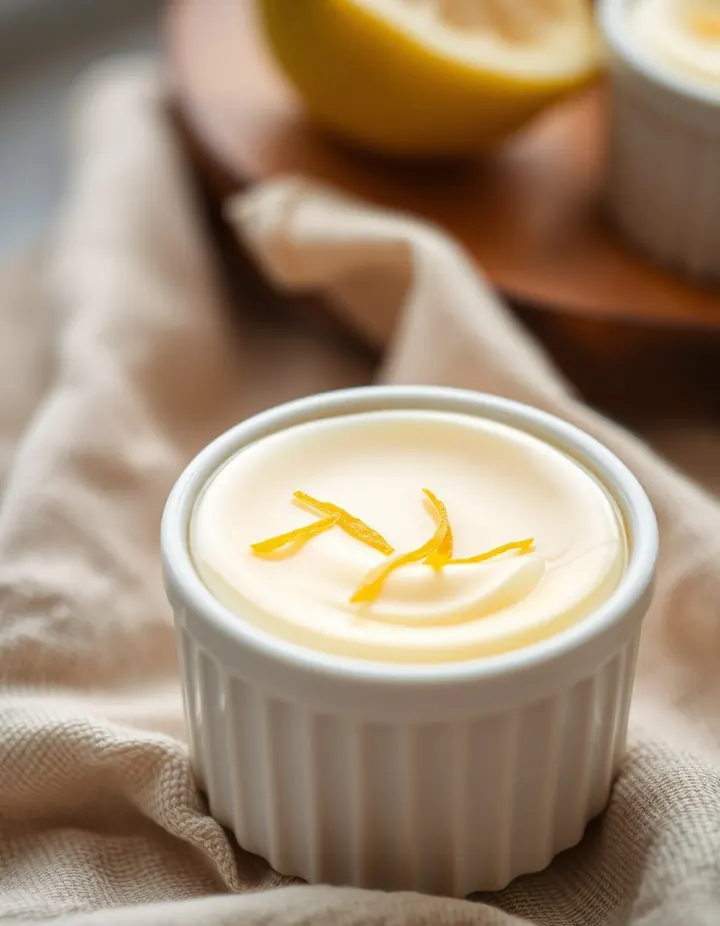 Lemon Custard64 recipes
The free Flavor Lab newsletter: one surprising pairing a week and the molecular reason it works, in 60 seconds. No spam, unsubscribe anytime.
Prefer an account? Create a free account to save pairings and unlock the full chemistry.