Why it works: Cinnamon and nutmeg match in chemistry and in kitchens. They rank in the top 1% of all ingredient pairs, and cooks put them together in 11,917 recipes. Both carry estragole, which smells anise, licorice. The science ↓
Doughnuts I
Ingredients
Directions
Make the dough
Cream the butter and add one-half cup sugar.
Beat the egg until light, add remaining sugar, and combine mixtures.
Add three and one-half cups flour, mixed and sifted with baking powder, salt, and spices; then add enough more flour to make dough stiff enough to roll.
Shape and fry
Toss one-third of the mixture on a floured board, knead slightly, pat, and roll out to one-fourth inch thickness.
Shape with a doughnut cutter, fry in deep fat, take up on a skewer, and drain on brown paper.
Add trimmings to one-half remaining mixture, roll, shape, and fry as before; repeat.
Doughnuts should come quickly to the top of the fat, brown on one side, then be turned to brown on the other; avoid turning more than once.
Keep the fat at a uniform temperature; if too cold, doughnuts will absorb fat; if too hot, doughnuts will brown before sufficiently risen.
See rule for testing fat.
Nutrition, whole recipe (rough)
What these numbers assume: 8 portions
| Ingredient | Portion assumed | kcal |
|---|---|---|
| Flour | 1 cup (125g) all-purpose | 455 |
| Milk | 1 cup (244ml) whole | 149 |
| Butter | 1 tbsp (14g) | 102 |
| Egg | 1 large egg (50g) | 78 |
| Sugar | 1 tbsp (12.5g) granulated | 49 |
| Nutmeg | 1 tsp ground (2.2g) | 12 |
| Cinnamon | 1 tsp ground (2.6g) | 6 |
| Salt | 1 tsp (6g) | 0 |
One typical portion per ingredient; the recipe's quantities are not counted. A rough guide only, not for medical or dietary planning.
Transcribed from a scanned cookbook and modernised for today's kitchens. Where the book gave no heat or time, or said "a moderate oven", the temperatures and times here may be modern equivalents rather than the book's own figures. See the original page.
Explore the science
The flavor team
The pairs that carry this dish. Each one is judged two ways: how much their aromas overlap, and how often cooks already put them together.
-
Cinnamon + nutmegtop 1% of all pairsSmell alikestrongCooked together11,917 recipes
Shared aroma: estragole (anise, licorice).
-
Butter + milktop 7% of all pairsSmell alikemoderateCooked together81,283 recipes
Shared aroma: (z)-4-heptenal (biscuit, cream).
-
Nutmeg + flourtop 8% of all pairsSmell alikemoderateCooked together18,623 recipes
Shared aroma: isobutyraldehyde (malty, green).
-
Cinnamon + flourtop 9% of all pairsSmell alikemoderateCooked together17,341 recipes
Shared aroma: isobutyraldehyde (malty, green).
-
Milk + cinnamontop 10% of all pairsSmell alikemoderateCooked together12,655 recipes
Shared aroma: cuminaldehyde (Spicy, cumin).
Ranks compare each pair with 20,000 random ingredient pairs on CompKitchen. How we score pairs
What each ingredient does
- Butter
- Adds richness and tenderness to the dough.
- Eggs
- Add structure and richness, and help the dough bind and rise.
- Baking powder
- Releases gas that leavens the dough so the doughnuts rise in the fat.
- Flour
- Forms the structure of the dough, stiff enough to roll and cut.
- Sugar
- Adds sweetness and helps the doughnuts brown in the fat.
- Milk
- Hydrates the flour and gives the dough moisture and softness.
The step that matters
Keep the fat at a uniform temperature. If the fat is too cold, doughnuts soak up oil and turn greasy; if too hot, the outside browns before the dough has risen through, leaving them dense inside.
“What each ingredient does” and “The step that matters” were written by Claude from this recipe’s own method and reviewed in samples by CompKitchen.
More doughnuts recipes
You might also like
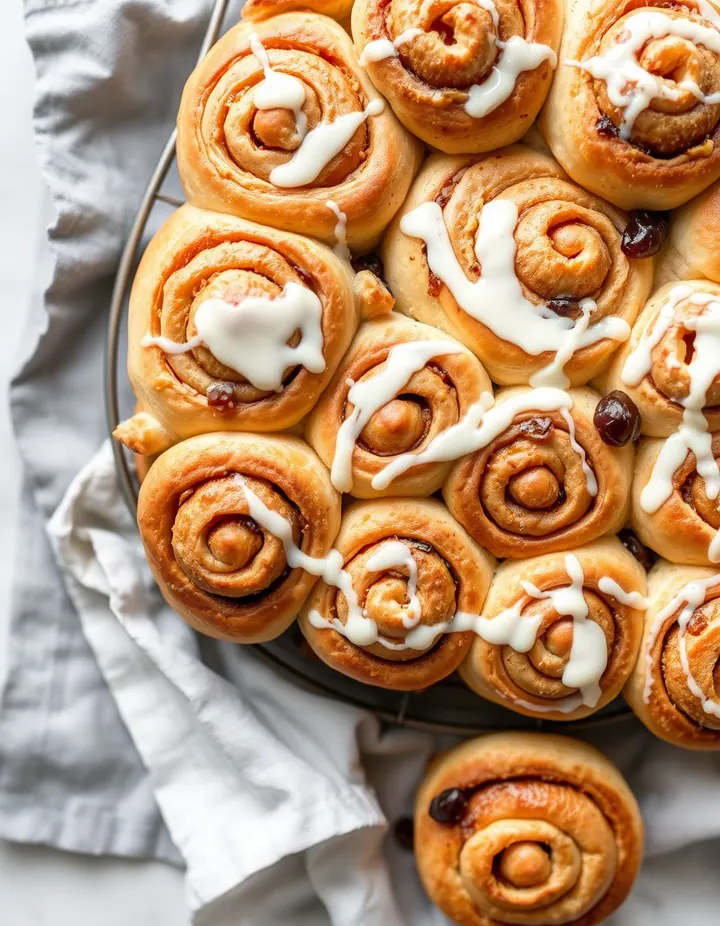 Cinnamon Rolls71 recipes
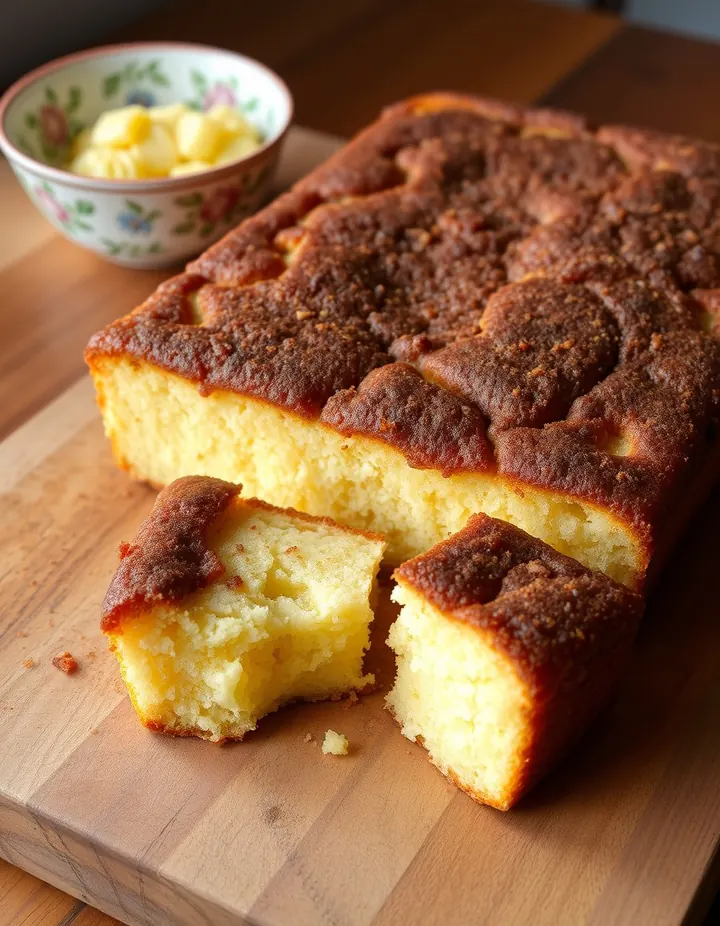 Cinnamon Cake42 recipes
 White Cake431 recipes
 Pound Cake373 recipes
The free Flavor Lab newsletter: one surprising pairing a week and the molecular reason it works, in 60 seconds. No spam, unsubscribe anytime.
Prefer an account? Create a free account to save pairings and unlock the full chemistry.