Why it works: Currant and brandy are a kitchen classic. They rank in the top 7% of all ingredient pairs, and cooks put them together in 3,057 recipes. Both carry ethyl cinnamate, which smells sweet, balsamic. The science ↓
Common Paste for Pies
Ingredients
Directions
Make the paste
Sift the flour into a pan.
Cut the butter into two equal parts.
Cut one half of the butter into the flour, and cut it up as small as possible.
Mix it well with the flour, wetting it gradually with a little cold water.
Spread some flour on your paste-board, take the lump of paste out of the pan, flour your rolling-pin, and roll out the paste into a large sheet.
Then stick it over with the remaining half of the butter in small pieces, and lay at equal distances.
Throw on a little flour, fold up the sheet of paste, flour it slightly, and roll it out again.
Then fold it up, and cut it in half or in four, according to the size of your pies.
Some think it makes common paste more crisp and light, to beat it hard on both sides with the rolling-pin, after you give it the first rolling, when all the butter is in.
If the butter is very fresh, you may mix with the flour a salt-spoonful of salt.
Line and fill the pies
Roll it out into round sheets the size of your pie-plates, pressing rather harder on the rolling-pin.
Butter your pie-plates, lay on your under crust, and trim the edge.
Fill the dish with the ingredients of which the pie is composed, and lay on the lid, in which you must prick some holes, or cut a small slit in the top.
Crimp the edges with a sharp knife.
Heap up the ingredients so that the pie will be highest in the middle.
Nutrition, whole recipe (rough)
Counts 13 of 16 ingredients. The other 3 aren't in our nutrition table and add nothing above, so the real totals are higher.
What these numbers assume: 13 portions
| Ingredient | Portion assumed | kcal |
|---|---|---|
| Flour | 1 cup (125g) all-purpose | 455 |
| Beef | 100g cooked | 250 |
| Milk | 1 cup (244ml) whole | 149 |
| Butter | 1 tbsp (14g) | 102 |
| Apple | 1 medium (182g) | 95 |
| Egg | 1 large egg (50g) | 78 |
| Grape | 1/2 cup (76g) | 62 |
| Orange | 1 medium (131g) | 62 |
| Sugar | 1 tbsp (12.5g) granulated | 49 |
| Wine | 2 tbsp cooking wine (30ml) | 25 |
| Nutmeg | 1 tsp ground (2.2g) | 12 |
| Lemon | juice of 1 lemon (48ml) | 12 |
| Salt | 1 tsp (6g) | 0 |
| Brandy | not in our table | 0 |
| Mace | not in our table | 0 |
| Pie | not in our table | 0 |
One typical portion per ingredient; the recipe's quantities are not counted. A rough guide only, not for medical or dietary planning.
Transcribed from a scanned cookbook and modernised for today's kitchens. Where the book gave no heat or time, or said "a moderate oven", the temperatures and times here may be modern equivalents rather than the book's own figures. See the original page.
Explore the science
The flavor team
The pairs that carry this dish. Each one is judged two ways: how much their aromas overlap, and how often cooks already put them together.
-
Currant + brandytop 7% of all pairsSmell alikelowCooked together3,057 recipes
Shared aroma: ethyl cinnamate (sweet, balsamic).
-
Apple + white winetop 8% of all pairsSmell alikemoderateCooked together372 recipes
Shared aroma: 2-isobutyl-3-methoxypyrazine (green bell pepper, earthy).
-
White wine + brandytop 9% of all pairsSmell alikemoderateCooked together620 recipes
Shared aroma: beta-damascenone (apple, rose).
-
Raisin + curranttop 10% of all pairsSmell alikelowCooked together6,180 recipes
Shared aroma: gamma-nonanolactone (coconut, creamy).
-
Apple + brandytop 11% of all pairsSmell alikemoderateCooked together1,291 recipes
Shared aroma: beta-damascenone (apple, rose).
Ranks compare each pair with 20,000 random ingredient pairs on CompKitchen. How we score pairs
What each ingredient does
- Flour
- Forms the structure of the paste that holds the pie together.
- Butter
- Cut into the flour in pieces, it creates flaky layers that make the crust tender and light.
The step that matters
Cutting the butter into the flour and rolling it in. Butter left in small, evenly spaced pieces stays solid during rolling and melts in the oven, leaving flaky layers. If the butter softens or is worked in too much, the crust turns greasy and dense.
Swap the currant
How well each one fits the dish's main ingredients (beef, apple, raisin, sugar, white wine, brandy, bread):
- Figfits better
- Apricotfits better
- Plumfits better
- Currantthe original
Fit is the average pairing score against beef, apple, raisin, sugar, white wine, brandy, bread. Candidates are from the same food group and used in at least 100 recipes.
“What each ingredient does” and “The step that matters” were written by Claude from this recipe’s own method and reviewed in samples by CompKitchen.
You might also like
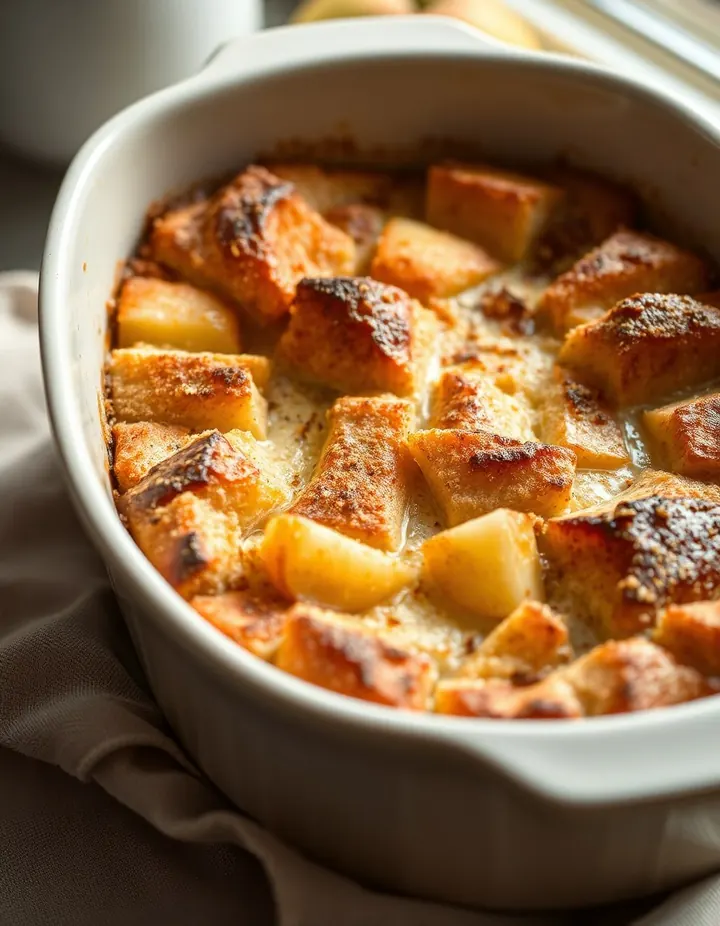 Apple Bread Pudding21 recipes
 Orange Bundt Cake349 recipes
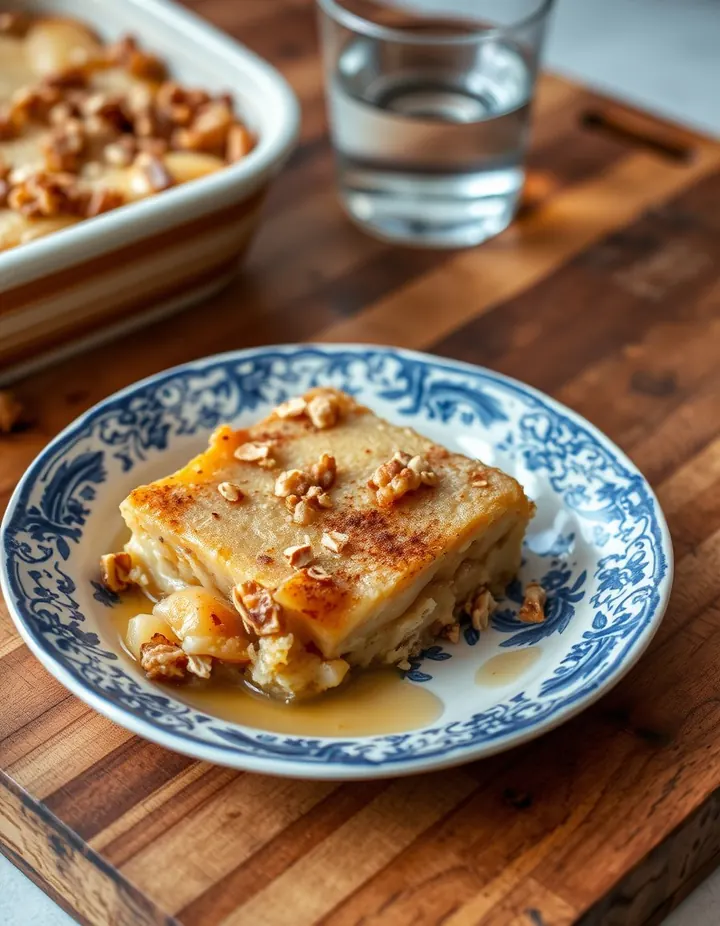 Apple Pudding256 recipes
 Lemon Cake228 recipes
The free Flavor Lab newsletter: one surprising pairing a week and the molecular reason it works, in 60 seconds. No spam, unsubscribe anytime.
Prefer an account? Create a free account to save pairings and unlock the full chemistry.