
Why it works: Flour and butter are a kitchen classic. They rank in the top 12% of all ingredient pairs, and cooks put them together in 124,287 recipes. Both carry isobutyraldehyde, which smells malty, green. The science ↓
Pound Cake
Ingredients
Directions
Prepare
Sift one pound of flour and one pound of white sugar.
Cut one pound of fresh butter into small pieces.
Pound the spices and sift them, ensuring twice as much cinnamon as mace; mix cinnamon, mace, and nutmeg together.
Sift the flour into a broad pan or wooden bowl.
Sift the powdered sugar into a large deep pan, add the butter pieces.
If the butter is very cold, warm it near the fire for a few minutes; if too warm, the cake will be heavy.
Make the batter
Stir the butter and sugar together with a wooden stick until light, white, and creamy.
Beat the eggs in a broad shallow pan with a wooden egg-beater or whisk until thick, smooth, and custard-like.
Gradually pour the wine, brandy, and rose water into the butter and sugar mixture, stirring continuously.
Mix in ten eggs, half a glass of wine, half a glass of brandy, half a glass of rose water, twelve drops of lemon essence, a tablespoon of mace and cinnamon, and a powdered nutmeg.
Add the lemon essence and spices by degrees.
Alternately stir in the beaten eggs and flour, adding a handful of flour and about two spoonfuls of egg, continuing to beat the eggs during mixing.
When all is incorporated, stir the mixture vigorously for about ten minutes.
Bake and finish
Butter a large tin pan or a cake mould with an open tube rising from the middle.
Pour the batter evenly into the pan.
Bake in a moderate oven for two, three, or four hours, depending on thickness and heat.
When nearly done, insert a twig or wooden skewer into the cake; if it comes out clean, the cake is almost baked.
When fully baked, the cake will shrink from the sides of the pan and stop making noise.
Remove the coals (if baked in a Dutch oven), lift the lid, and allow the cake to cool gradually in the oven.
Before icing, dredge the cake with flour and wipe off the excess to help the icing adhere.
Ice the cake either warm or cold.
If time permits, apply a second icing the next day after the first has dried.
While the icing is wet, decorate with colored sugar sand or nonpareils.
Nutrition, whole recipe (rough)
What these numbers assume: 5 portions
| Ingredient | Portion assumed | kcal |
|---|---|---|
| Flour | 1 cup (125g) all-purpose | 455 |
| Butter | 1 tbsp (14g) | 102 |
| Egg | 1 large egg (50g) | 78 |
| Sugar | 1 tbsp (12.5g) granulated | 49 |
| Lemon | juice of 1 lemon (48ml) | 12 |
One typical portion per ingredient; the recipe's quantities are not counted. A rough guide only, not for medical or dietary planning.
Transcribed from a scanned cookbook and modernised for today's kitchens. Where the book gave no heat or time, or said "a moderate oven", the temperatures and times here may be modern equivalents rather than the book's own figures. See the original page.
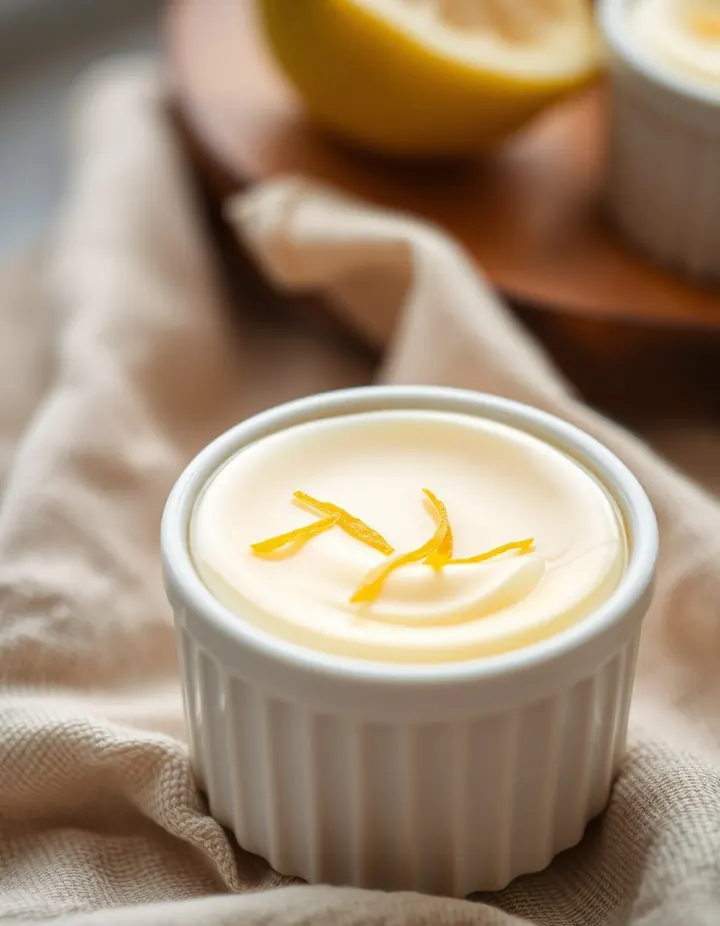
Photo for illustrative purposes only · Contact us to use it
Explore the science
The flavor team
The pairs that carry this dish. Each one is judged two ways: how much their aromas overlap, and how often cooks already put them together.
-
Flour + buttertop 12% of all pairsSmell alikelowCooked together124,287 recipes
Shared aroma: isobutyraldehyde (malty, green).
-
Flour + sugartop 15% of all pairsSmell alikemoderateCooked together92,116 recipes
Shared aroma: phenylacetaldehyde (hawthorne, honey).
-
Flour + eggtop 15% of all pairsSmell alikelowCooked together106,462 recipes
Shared aroma: isobutyraldehyde (malty, green).
-
Butter + lemontop 16% of all pairsSmell alikemoderateCooked together41,227 recipes
Shared aroma: 3-hexenal (apple, fruity).
-
Flour + lemontop 17% of all pairsSmell alikemoderateCooked together30,404 recipes
Shared aroma: isobutyraldehyde (malty, green).
Flour and butter barely smell alike, yet cooks put them together in 124,287 recipes: they work on texture and structure more than aroma.
Ranks compare each pair with 20,000 random ingredient pairs on CompKitchen. How we score pairs
What each ingredient does
- Flour
- Forms the structure of the cake as the batter sets in the oven.
- Butter
- Creamed with sugar to trap air, giving the cake a tender, rich crumb.
- White sugar
- Sweetens the cake and, creamed with butter, helps build a light texture.
- Eggs
- Add structure, richness, and lift when beaten into the batter.
The step that matters
Keep the butter at the right temperature. Butter that is too cold will not cream with the sugar, and butter that is too warm produces a dense, heavy cake because it cannot hold air well.
Swap the lemon
How well each one fits the dish's main ingredients (flour, sugar, butter, egg):
- Raisinfits better
- Vanillafits better
- Figfits about as well
- Lemonthe original
Fit is the average pairing score against flour, sugar, butter, egg. Candidates are from the same food group and used in at least 100 recipes.
“What each ingredient does” and “The step that matters” were written by Claude from this recipe’s own method and reviewed in samples by CompKitchen.
More pound cake recipes
You might also like
 Lemon Cake228 recipes
 Lemon Ice147 recipes
 Lemon Sherbet103 recipes
 Lemon Custard64 recipes
The free Flavor Lab newsletter: one surprising pairing a week and the molecular reason it works, in 60 seconds. No spam, unsubscribe anytime.
Prefer an account? Create a free account to save pairings and unlock the full chemistry.