Why it works: Ginger and clove match in chemistry and in kitchens. They rank in the top 1% of all ingredient pairs, and cooks put them together in 6,038 recipes. Both carry estragole, which smells anise, licorice. The science ↓
Sponge Cake
Ingredients
Directions
Make the sponge cake
Beat the yolks of the eggs with the granulated sugar to a cream.
Add the whites of the eggs, which must be beaten very stiff.
Gradually add the flour.
Add the rind and juice of the lemon.
Bake in a moderate oven.
Make the dough
Mix creamed butter with sugar.
Add the yolks of the eggs and scalded soda.
Stir in sifted flour with cream of tartar and salt.
Wash the raisins, dry them, chop them coarsely, and flour them.
Mix the raisins and spices with the dough.
Fold in the beaten whites of the eggs.
Put 1 teaspoon of dough in a pan.
Make a sponge: beat together 1 cup scalded milk, 1 egg, 1 teaspoonful sugar, then add 1 saltspoonful of salt, ¼ cup yeast, and 2 cups flour, and beat it well.
Mix the sponge in the morning and let it stand until night.
Add the other ingredients at night and let the whole rise until the next morning.
Shape and fry
When risen, cut the dough into diamond-shaped squares about 1 inch thick.
Let the squares rise for 20 minutes.
Fry the squares in boiling lard, into which a washed clean potato has been put to prevent the cakes from burning.
Ensure the lard is boiling hot and deep enough to cover the doughnuts entirely.
Nutrition, whole recipe (rough)
What these numbers assume: 13 portions
| Ingredient | Portion assumed | kcal |
|---|---|---|
| Flour | 1 cup (125g) all-purpose | 455 |
| Milk | 1 cup (244ml) whole | 149 |
| Lard | 1 tbsp (12.8g) | 115 |
| Butter | 1 tbsp (14g) | 102 |
| Egg | 1 large egg (50g) | 78 |
| Grape | 1/2 cup (76g) | 62 |
| Cream | 1 tbsp (15ml) heavy | 51 |
| Sugar | 1 tbsp (12.5g) granulated | 49 |
| Lemon | juice of 1 lemon (48ml) | 12 |
| Clove | 1 tsp ground (2g) | 7 |
| Cinnamon | 1 tsp ground (2.6g) | 6 |
| Ginger | 1 tsp grated fresh (2g) | 2 |
| Salt | 1 tsp (6g) | 0 |
One typical portion per ingredient; the recipe's quantities are not counted. A rough guide only, not for medical or dietary planning.
Transcribed from a scanned cookbook and modernised for today's kitchens. Where the book gave no heat or time, or said "a moderate oven", the temperatures and times here may be modern equivalents rather than the book's own figures. See the original page.
Explore the science
The flavor team
The pairs that carry this dish. Each one is judged two ways: how much their aromas overlap, and how often cooks already put them together.
-
Ginger + clovetop 1% of all pairsSmell alikestrongCooked together6,038 recipes
Shared aroma: estragole (anise, licorice).
-
Lemon + gingertop 5% of all pairsSmell alikestrongCooked together5,154 recipes
Shared aroma: beta-phellandrene (minty, terpene).
-
Butter + milktop 7% of all pairsSmell alikemoderateCooked together81,283 recipes
Shared aroma: (z)-4-heptenal (biscuit, cream).
-
Lemon + clovetop 10% of all pairsSmell alikestrongCooked together8,150 recipes
Shared aroma: eucalyptol (eucalyptus, herbal).
-
Flour + buttertop 12% of all pairsSmell alikelowCooked together124,287 recipes
Shared aroma: isobutyraldehyde (malty, green).
Flour and butter barely smell alike, yet cooks put them together in 124,287 recipes: they work on texture and structure more than aroma.
Ranks compare each pair with 20,000 random ingredient pairs on CompKitchen. How we score pairs
What each ingredient does
- Eggs
- Whipped whites trap air for lift, while yolks add richness and structure.
- Flour
- Its proteins set during baking to give the cake its structure.
- Butter
- Creamed with sugar, it adds tenderness and richness to the crumb.
- Yeast
- In the sponge, it ferments slowly to make the dough rise.
- Soda
- Reacts with the acid in the batter to release gas and lighten it.
- Cream of tartar
- An acid that stabilizes beaten whites and works with soda to lighten the batter.
The step that matters
Folding in the stiffly beaten whites. Stiff whites hold air that gives the cake its lift. Folding gently, rather than stirring, keeps that air from collapsing, so the cake rises evenly instead of turning dense.
Swap the clove
How well each one fits the dish's main ingredients (flour, sugar, butter, milk, lemon, egg, ginger):
- Cinnamonfits better
- Cardamomfits better
- Nutmegfits better
- Clovethe original
Fit is the average pairing score against flour, sugar, butter, milk, lemon, egg, ginger. Candidates are from the same food group and used in at least 100 recipes.
“What each ingredient does” and “The step that matters” were written by Claude from this recipe’s own method and reviewed in samples by CompKitchen.
More sponge cake recipes
You might also like
 Lemon Cake228 recipes
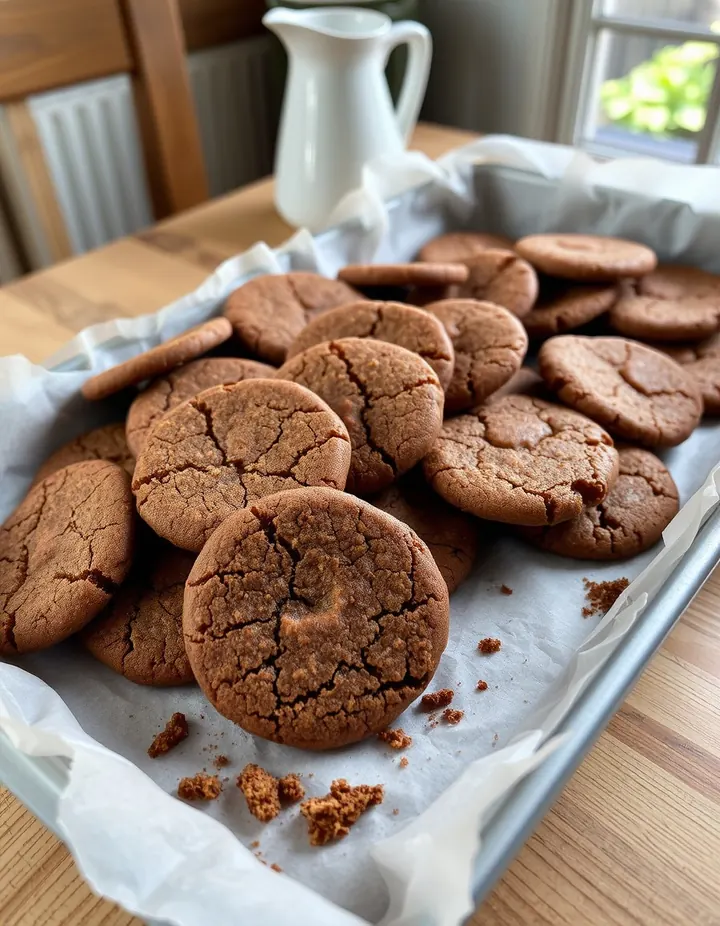 Ginger Cookies213 recipes
 Lemon Ice147 recipes
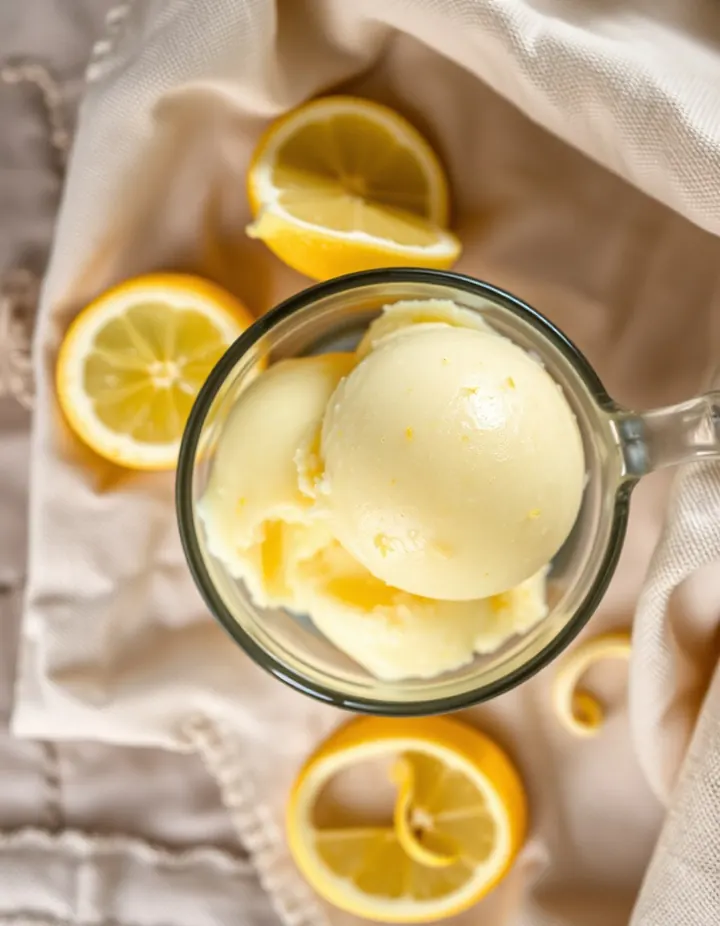 Lemon Sherbet103 recipes
The free Flavor Lab newsletter: one surprising pairing a week and the molecular reason it works, in 60 seconds. No spam, unsubscribe anytime.
Prefer an account? Create a free account to save pairings and unlock the full chemistry.