
Why it works: Flour and butter are a kitchen classic. They rank in the top 12% of all ingredient pairs, and cooks put them together in 124,287 recipes. Both carry isobutyraldehyde, which smells malty, green. The science ↓
Roast Beef
Ingredients
Directions
The book says “a hot oven”. The 400°F (200°C) in the steps is the modern equivalent, not the book's own figure.
Prepare the meat
Order a 3-pound prime cut of porter-house roast, have the bone removed for soup stock, and the coarse end corned for 24-30 hours.
Cut off the dry outer edge of fat and skewer the meat firmly with a long clinch-nail.
Brown the meat on all sides by broiling over hot coals or frying in a smoking-hot pan for a few minutes.
Dredge the browned meat with flour, season lightly with pepper, and place fat side down on a wire rack in a small dripping pan.
Roast and check
Roast in a hot oven at 400°F (200°C) for 15 minutes.
Add ½ cup boiling water and cover with a pan.
After 30 minutes, check doneness by cutting a deep slit.
If the roast is too rare, return it to the oven for 15-20 minutes.
Ensure the water in the pan does not boil away completely to avoid scorched gravy.
Make the gravy and serve
Transfer the roast to a platter, dust with coarse sea salt, and garnish with celery tops.
Stir together 1 teaspoon flour with 2 tablespoons cold water.
Add the flour-water mixture to the pan sediment and boil.
Add more boiling water and salt to taste; there should be about ½ cup of gravy.
If the gravy is too pale, add a few drops of caramel.
If there is no sediment, brown 1 tablespoon butter in the pan before adding flour and water.
Transcribed from a scanned cookbook and modernised for today's kitchens. Where the book gave no heat or time, or said "a moderate oven", the temperatures and times here may be modern equivalents rather than the book's own figures.
Photo for illustrative purposes only · Contact us to use it
Explore the science
The flavor team
The pairs that carry this dish. Each one is judged two ways: how much their aromas overlap, and how often cooks already put them together.
-
Flour + buttertop 12% of all pairsSmell alikelowCooked together124,287 recipes
Shared aroma: isobutyraldehyde (malty, green).
-
Flour + celerytop 15% of all pairsSmell alikemoderateCooked together6,905 recipes
Shared aroma: isobutyraldehyde (malty, green).
-
Celery + buttertop 25% of all pairsSmell alikemoderateCooked together10,049 recipes
Shared aroma: guaiacol (smoky, sweet).
Flour and butter barely smell alike, yet cooks put them together in 124,287 recipes: they work on texture and structure more than aroma.
Ranks compare each pair with 20,000 random ingredient pairs on CompKitchen. How we score pairs
What each ingredient does
- Porter-house roast
- Lean and tender cut that becomes juicy and sliceable when roasted gently.
- Flour
- Dredged on the surface for browning, and thickens the pan juices into gravy.
- Butter
- Browned in the pan to add richness and toasty flavor to the gravy when sediment is missing.
- Caramel (in the method)
- Adds deeper color to a pale gravy without changing its basic flavor much.
The step that matters
Keep water in the pan. Water in the pan keeps the drippings from scorching and gives the gravy its base. If it boils away completely, the sediment burns and the gravy turns bitter and dark.
Swap the celery
How well each one fits the dish's main ingredients (flour, butter):
- Jalapenofits better
- Capersfits better
- Nutmegfits better
- Celerythe original
Fit is the average pairing score against flour, butter. Candidates are from the same food group and used in at least 100 recipes.
“What each ingredient does” and “The step that matters” were written by Claude from this recipe’s own method and reviewed in samples by CompKitchen.
More roast beef recipes
You might also like
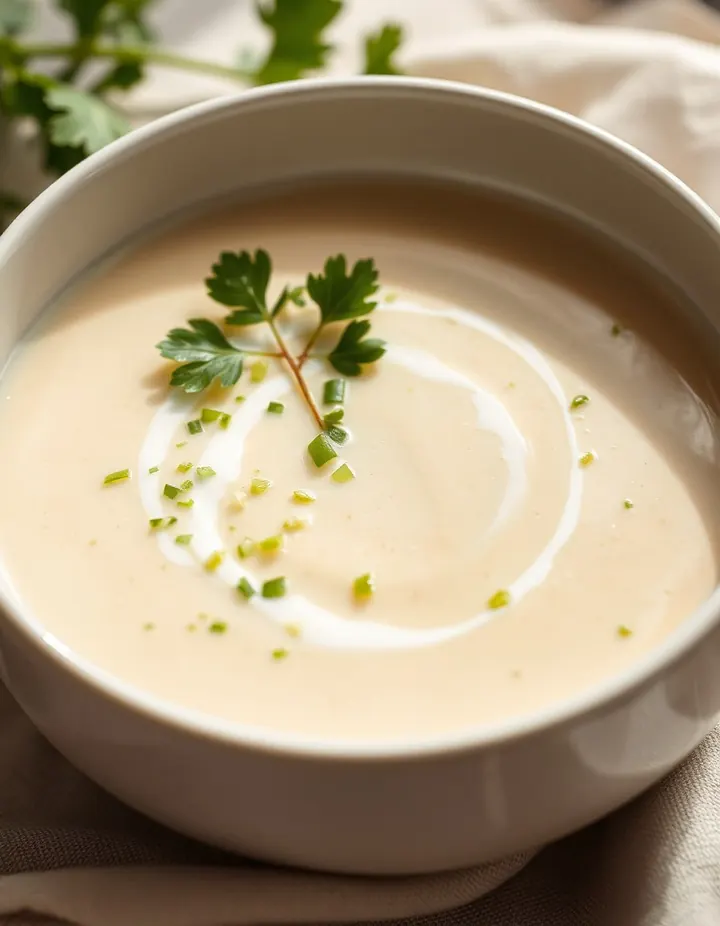 Cream of Celery Soup113 recipes
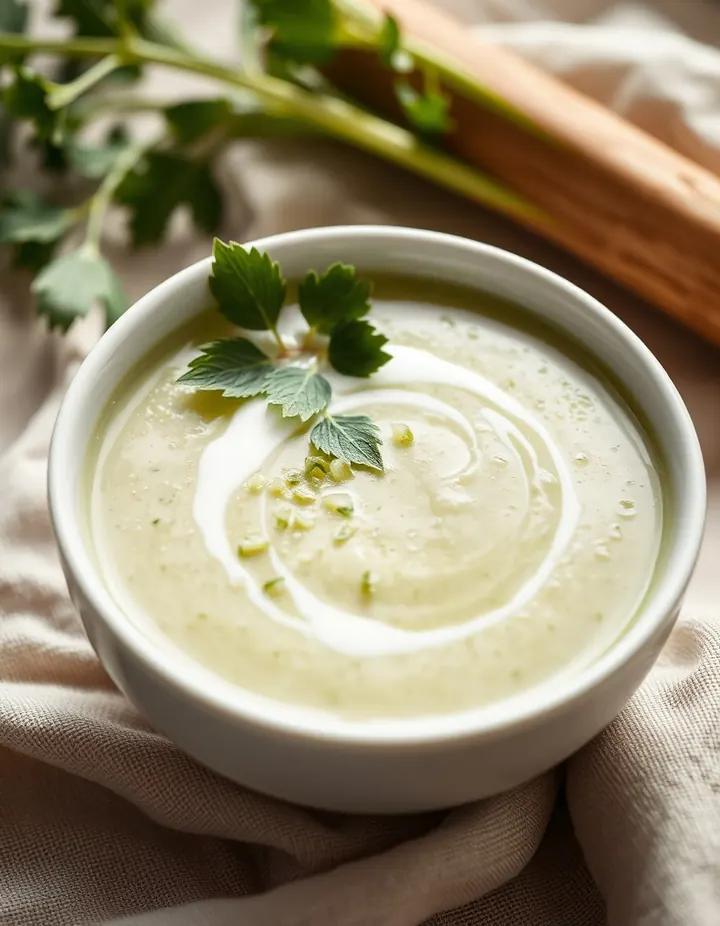 Celery Stew25 recipes
 Celery Croquettes16 recipes
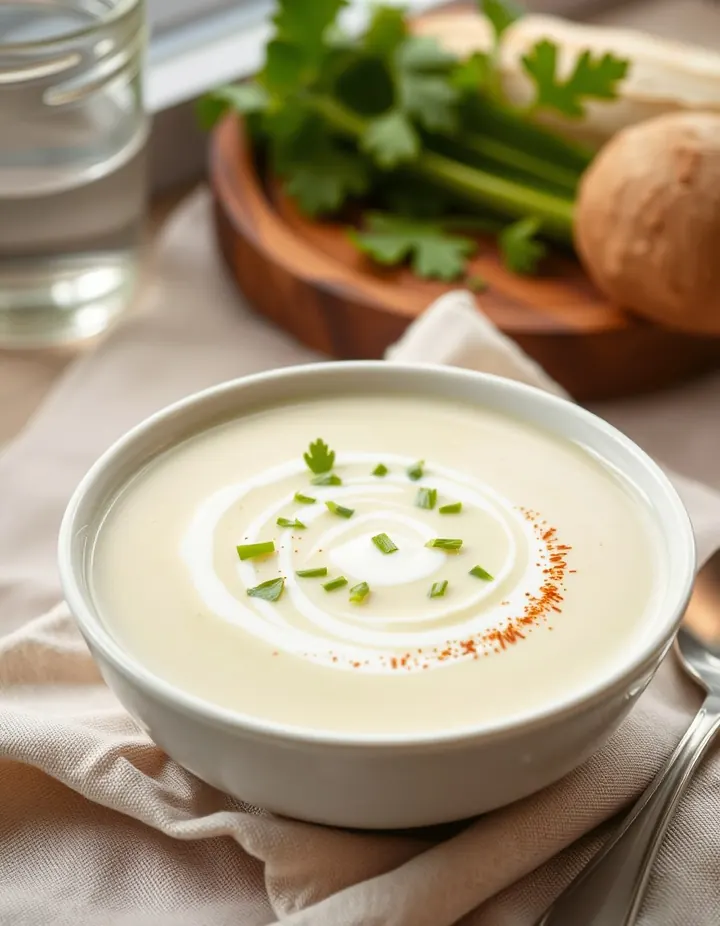 Celery Cream Soup15 recipes
The free Flavor Lab newsletter: one surprising pairing a week and the molecular reason it works, in 60 seconds. No spam, unsubscribe anytime.
Prefer an account? Create a free account to save pairings and unlock the full chemistry.