Why it works: Lemon and pepper match in chemistry and in kitchens. They rank in the top 3% of all ingredient pairs, and cooks put them together in 27,047 recipes. Both carry trans-2-nonenal, which smells cardboard, fatty. The science ↓
Oyster Patties
12 pattiesIngredients
Directions
The book says “a hot oven”. The 400°F (200°C) in the steps is the modern equivalent, not the book's own figure.
Prepare the cases
Roll out the puff pastry and cut out 12 rounds with a 3‑inch cutter.
Mark the center of each round with a smaller cutter without cutting through.
Brush the outer ring with egg wash.
Cut out tops for the patties using the smaller cutter.
Bake all in a 400 °F (200 °C) oven, watching the tops to prevent burning.
Once cooked and risen, remove the soft part from the patty cases.
Make the filling
For the filling, remove gills from oysters and cut large ones in half or quarters.
Make a sauce by cooking flour and butter, then add oyster liquor and cream, stirring until boiling.
Add the oysters and lemon juice, seasoning with salt, pepper, and cayenne.
Assemble and serve
Fill each patty with the mixture and place the tops on before serving hot.
Transcribed from a scanned cookbook and modernised for today's kitchens. Where the book gave no heat or time, or said "a moderate oven", the temperatures and times here may be modern equivalents rather than the book's own figures.
Explore the science
The flavor team
The pairs that carry this dish. Each one is judged two ways: how much their aromas overlap, and how often cooks already put them together.
-
Lemon + peppertop 3% of all pairsSmell alikestrongCooked together27,047 recipes
Shared aroma: trans-2-nonenal (cardboard, fatty).
-
Butter + creamtop 8% of all pairsSmell alikemoderateCooked together41,516 recipes
Shared aroma: delta-dodecalactone (sweet, creamy).
-
Butter + flourtop 12% of all pairsSmell alikelowCooked together124,287 recipes
Shared aroma: isobutyraldehyde (malty, green).
-
Oyster + buttertop 12% of all pairsSmell alikemoderateCooked together8,184 recipes
Shared aroma: 2,6-nonadienal (cucumber, green).
-
Lemon + buttertop 16% of all pairsSmell alikemoderateCooked together41,227 recipes
Shared aroma: 3-hexenal (apple, fruity).
Butter and flour barely smell alike, yet cooks put them together in 124,287 recipes: they work on texture and structure more than aroma.
Ranks compare each pair with 20,000 random ingredient pairs on CompKitchen. How we score pairs
What each ingredient does
- Puff pastry
- Bakes into flaky, layered cases that hold the filling.
- Oyster liquor
- Adds the liquid base and briny flavor to the sauce.
- Butter
- Enriches the roux and adds richness to the sauce.
- Flour
- Thickens the sauce when cooked with butter into a roux.
- Cream
- Adds body and a smooth, rich texture to the sauce.
- Oysters
- Provide the main seafood filling, cooked briefly in the sauce.
The step that matters
Bringing the sauce to a boil after adding the cream. Flour thickens the liquid only once it has been heated enough for its starch to swell. Stirring while it comes to a boil keeps the sauce smooth and lump-free, so it coats the oysters rather than staying thin or grainy.
“What each ingredient does” and “The step that matters” were written by Claude from this recipe’s own method and reviewed in samples by CompKitchen.
You might also like
 Lemon Sauce236 recipes
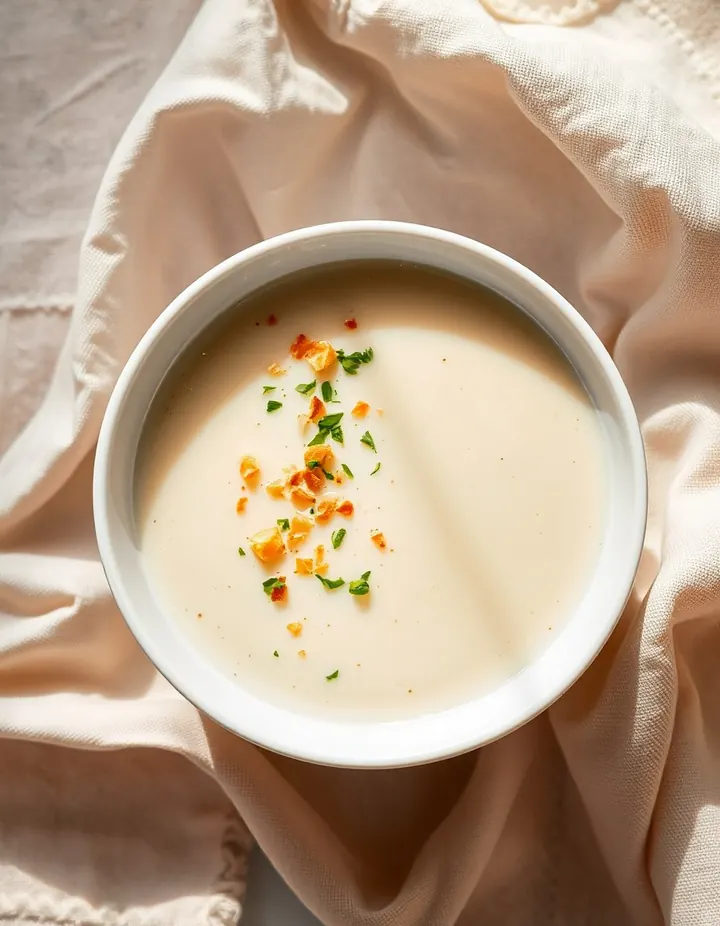 Mock Oyster Soup21 recipes
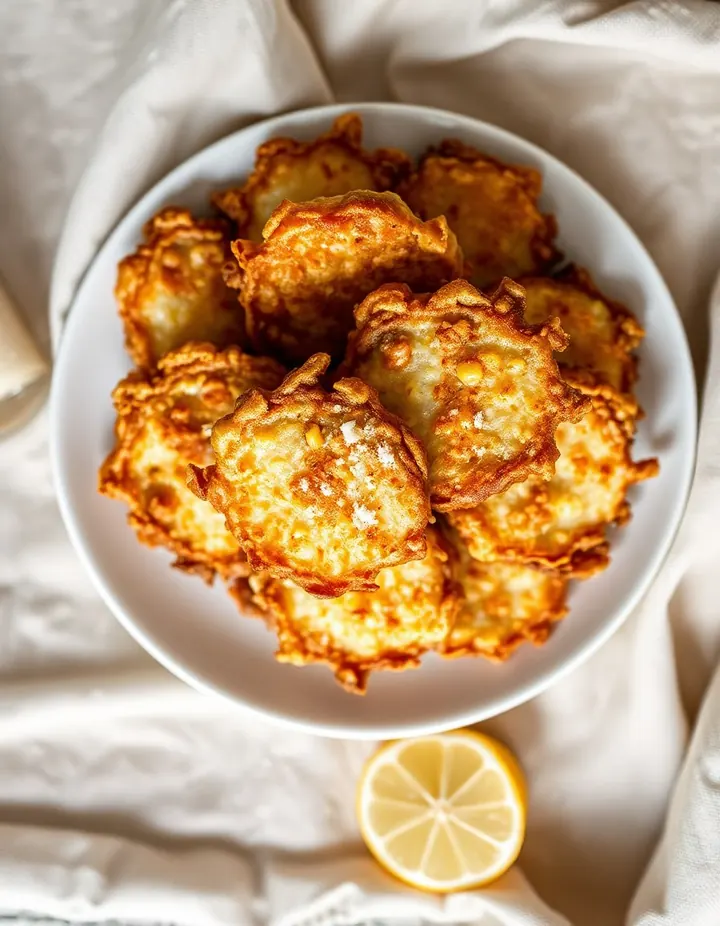 Corn Fritters6 recipes
 Tomato Soup526 recipes
The free Flavor Lab newsletter: one surprising pairing a week and the molecular reason it works, in 60 seconds. No spam, unsubscribe anytime.
Prefer an account? Create a free account to save pairings and unlock the full chemistry.