Why it works: Lemon and pepper match in chemistry and in kitchens. They rank in the top 3% of all ingredient pairs, and cooks put them together in 27,047 recipes. Both carry trans-2-nonenal, which smells cardboard, fatty. The science ↓
Vol-au-vent of Oysters
Ingredients
Directions
The book says “a hot oven”. The 400°F (200°C) in the steps is the modern equivalent, not the book's own figure.
Make the pastry
Combine flour and salt in a basin.
Stir in egg yolk, lemon juice, and enough cold water to form a soft paste.
Place the paste on a slab, add butter in the center, and roll it out four or five times.
Chill for 1 hour.
Roll out the paste again to just over 1 inch thick.
Cut to the size and shape of your dish using a hot knife.
Make a ⅓ inch deep incision around the edge.
Brush with egg yolk.
Place on a baking tin.
Bake at 400°F (200°C) until risen and lightly browned.
Remove from the oven, lift off the cover, and scoop out the soft paste.
Return to the oven for a few minutes to dry.
Make the sauce
Beard the oysters and place the beards and liquor in a saucepan with lemon rind, salt, mace, cayenne, and nutmeg.
Boil for 6-8 minutes, then strain.
Mix flour with butter until smooth.
Add cream and oyster liquor, simmer until the sauce is smooth and thick.
Add oysters to the sauce, simmer for 2-3 seconds.
Serve
Serve in the vol-au-vent.
Transcribed from a scanned cookbook and modernised for today's kitchens. Where the book gave no heat or time, or said "a moderate oven", the temperatures and times here may be modern equivalents rather than the book's own figures.
Explore the science
The flavor team
The pairs that carry this dish. Each one is judged two ways: how much their aromas overlap, and how often cooks already put them together.
-
Lemon + peppertop 3% of all pairsSmell alikestrongCooked together27,047 recipes
Shared aroma: trans-2-nonenal (cardboard, fatty).
-
Mace + nutmegtop 4% of all pairsSmell alikemoderateCooked together6,557 recipes
Shared aroma: myristicin (spice, warm).
-
Lemon + nutmegtop 5% of all pairsSmell alikestrongCooked together11,318 recipes
Shared aroma: beta-phellandrene (minty, terpene).
-
Pepper + nutmegtop 7% of all pairsSmell alikestrongCooked together13,015 recipes
Shared aroma: 4'-methylacetophenone (bitter almond).
-
Flour + nutmegtop 8% of all pairsSmell alikemoderateCooked together18,623 recipes
Shared aroma: isobutyraldehyde (malty, green).
Ranks compare each pair with 20,000 random ingredient pairs on CompKitchen. How we score pairs
What each ingredient does
- Butter
- Enriches the pastry with fat, making it flaky and tender as it bakes.
- Flour
- Forms the pastry's structure and thickens the sauce once cooked with butter.
- Egg yolk
- Binds the pastry dough and gives the glazed top a golden browning.
- Oysters
- Provide the main flavor and tender texture of the filling.
- Cream
- Adds richness and body, giving the sauce a smooth, thick texture.
The step that matters
Simmer the oysters for only 2-3 seconds. Oysters toughen and shrink quickly when overcooked, so they are added last and heated only briefly to keep them tender.
Swap the mace
How well each one fits the dish's main ingredients (flour, egg, lemon, butter, oyster, pepper, nutmeg):
- Parsleyfits better
- Marjoramfits better
- Cinnamonfits better
- Macethe original
Fit is the average pairing score against flour, egg, lemon, butter, oyster, pepper, nutmeg. Candidates are from the same food group and used in at least 100 recipes.
“What each ingredient does” and “The step that matters” were written by Claude from this recipe’s own method and reviewed in samples by CompKitchen.
You might also like
 Lemon Sauce236 recipes
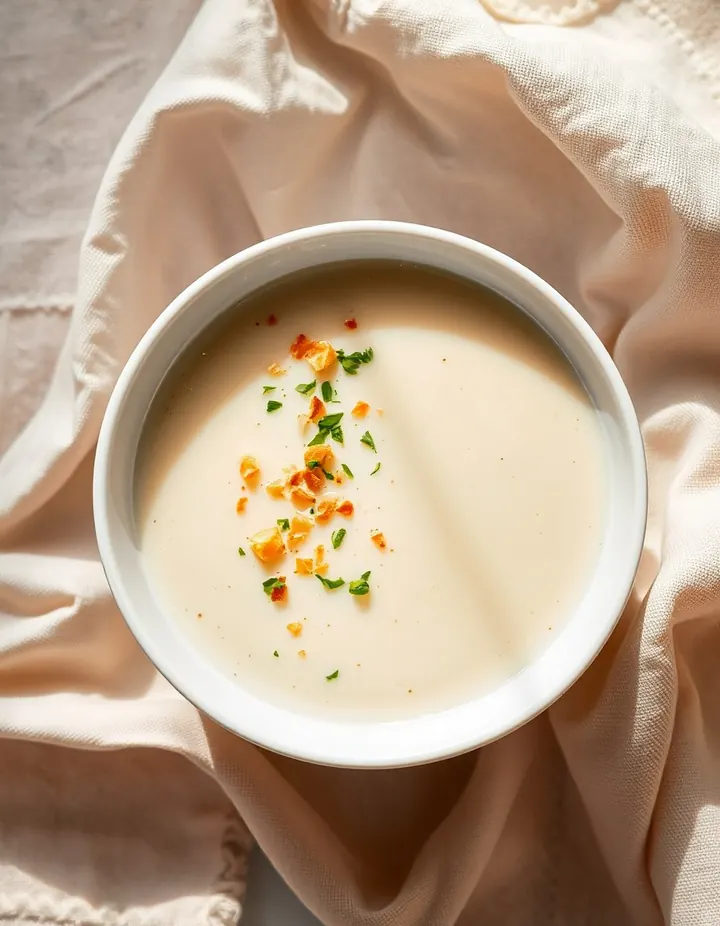 Mock Oyster Soup21 recipes
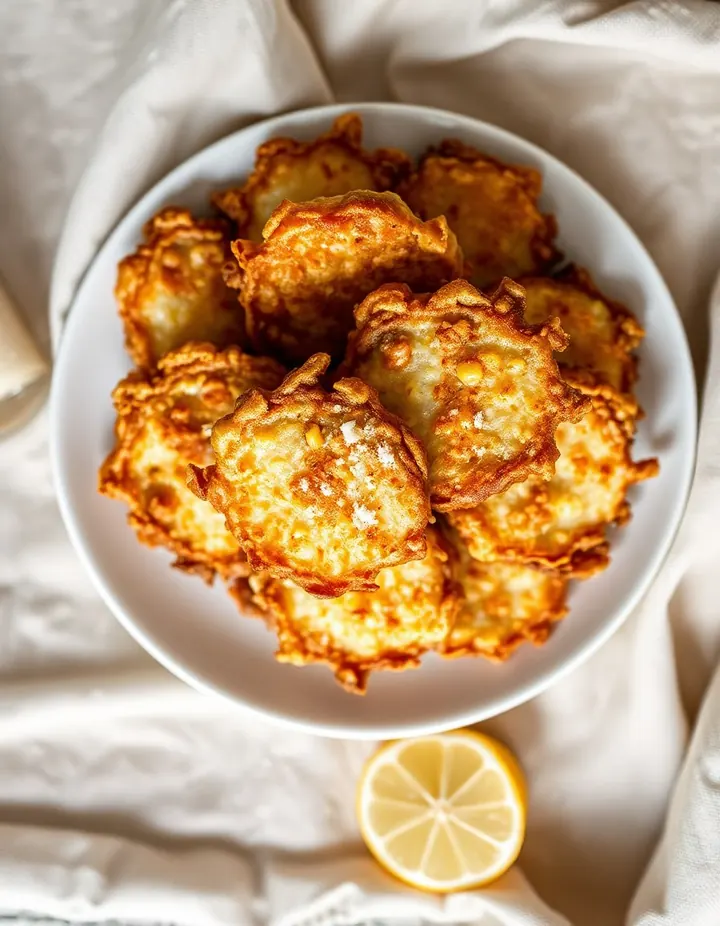 Corn Fritters6 recipes
 Tomato Soup526 recipes
The free Flavor Lab newsletter: one surprising pairing a week and the molecular reason it works, in 60 seconds. No spam, unsubscribe anytime.
Prefer an account? Create a free account to save pairings and unlock the full chemistry.