Why it works: Pepper and nutmeg match in chemistry and in kitchens. They rank in the top 7% of all ingredient pairs, and cooks put them together in 13,015 recipes. Both carry 4'-methylacetophenone, which smells bitter almond. The science ↓
Plaice, Filleted, and Stewed with Oysters
Ingredients
Directions
Prepare the plaice
Fillet the plaice by skinning it, cutting down the backbone, and removing the flesh from head to tail.
Trim the ends of the fillets and set aside.
Dry the fillets with a soft cloth, sprinkle with salt, and dredge lightly with flour.
Fry the fillets
Fry the fillets in plenty of hot dripping until nicely browned.
Make the sauce
Beard and drain the oysters, reserving their liquor.
In a stewpan, combine the oyster liquor, white stock or water, white wine, anchovies, pepper, salt, and nutmeg.
Simmer gently for a few minutes, then add the fillets and the butter rolled in flour.
Cook until the sauce is smooth and thick.
A minute or two before serving, add the oysters to the sauce until heated through.
Serve
Serve the plaice on a hot dish with the sauce poured around it.
Transcribed from a scanned cookbook and modernised for today's kitchens. Where the book gave no heat or time, or said "a moderate oven", the temperatures and times here may be modern equivalents rather than the book's own figures.
Explore the science
The flavor team
The pairs that carry this dish. Each one is judged two ways: how much their aromas overlap, and how often cooks already put them together.
-
Pepper + nutmegtop 7% of all pairsSmell alikestrongCooked together13,015 recipes
Shared aroma: 4'-methylacetophenone (bitter almond).
-
Flour + nutmegtop 8% of all pairsSmell alikemoderateCooked together18,623 recipes
Shared aroma: isobutyraldehyde (malty, green).
-
White wine + buttertop 9% of all pairsSmell alikemoderateCooked together5,083 recipes
Shared aroma: ethyl octanoate (fruity, wine).
-
Flour + buttertop 12% of all pairsSmell alikelowCooked together124,287 recipes
Shared aroma: isobutyraldehyde (malty, green).
-
Oyster + buttertop 12% of all pairsSmell alikemoderateCooked together8,184 recipes
Shared aroma: 2,6-nonadienal (cucumber, green).
Flour and butter barely smell alike, yet cooks put them together in 124,287 recipes: they work on texture and structure more than aroma.
Ranks compare each pair with 20,000 random ingredient pairs on CompKitchen. How we score pairs
What each ingredient does
- Plaice
- Forms the main body of the dish, cooking to tender, flaky fillets.
- Oysters
- Add a briny, savoury flavour to the sauce as they heat through.
- Butter rolled in flour
- Flour thickens the sauce and butter adds richness and smoothness.
- Anchovies
- Add a deep savoury, salty note that enriches the sauce.
- White wine
- Adds acidity and aroma that brighten the rich sauce.
The step that matters
Frying the dredged fillets. Fillets need hot fat and enough room so they brown rather than steam. Browning builds flavour through the Maillard reaction, while flour dredging helps create a golden crust and holds the fish together.
Swap the nutmeg
How well each one fits the dish's main ingredients (flour, oyster, white wine, pepper, butter):
- Parsleyfits better
- Thymefits about as well
- Tarragonfits about as well
- Nutmegthe original
Fit is the average pairing score against flour, oyster, white wine, pepper, butter. Candidates are from the same food group and used in at least 100 recipes.
“What each ingredient does” and “The step that matters” were written by Claude from this recipe’s own method and reviewed in samples by CompKitchen.
You might also like
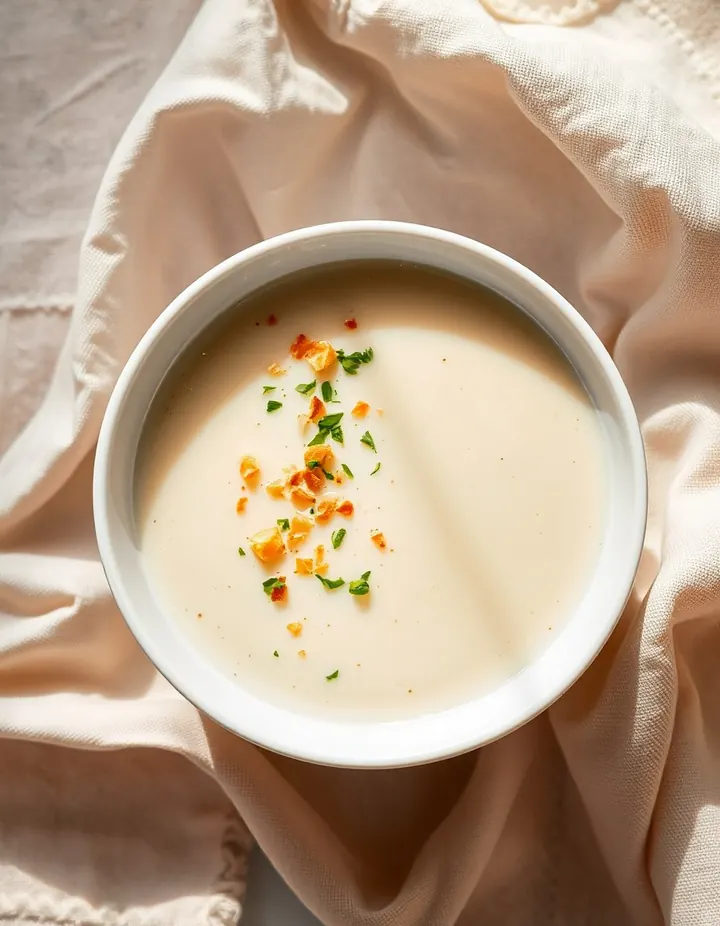 Mock Oyster Soup21 recipes
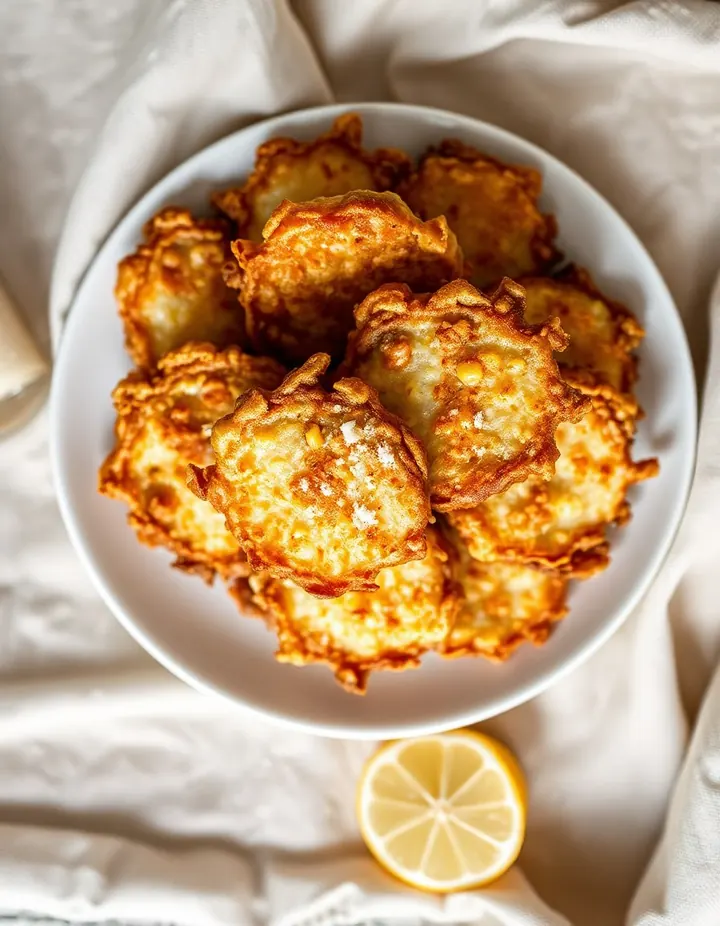 Corn Fritters6 recipes
 Tomato Soup526 recipes
 Brown Bread461 recipes
The free Flavor Lab newsletter: one surprising pairing a week and the molecular reason it works, in 60 seconds. No spam, unsubscribe anytime.
Prefer an account? Create a free account to save pairings and unlock the full chemistry.