Why it works: Sugar and syrup match in chemistry and in kitchens. They rank in the top 6% of all ingredient pairs, and cooks put them together in 5,842 recipes. Both carry ethanol, which smells alcoholic, ethereal. The science ↓
To Preserve Watermelon Rind and Citron
Ingredients
Directions
Prepare the rind
Layer green vine leaves in a kettle and add pieces of watermelon rind, covering each layer with more vine leaves.
Pour in enough water to cover the rind and place a thick cloth over the kettle.
Simmer for two hours, adding a few bits of alum.
Spread the rind on a dish to cool.
Make the syrup
In a separate pot, melt 1½ pounds of sugar with 1 pint of water and mix in the beaten egg white.
Boil and skim the sugar until clear.
Add the rind and boil for two hours.
Remove the rind.
Soak and finish
Boil the syrup again.
Pour the syrup over the rind.
Let it sit overnight.
The next morning, boil the syrup with lemon juice until thick enough to hang from a spoon.
Put the rind in jars and pour the syrup over it.
Allow to sit before using.
Transcribed from a scanned cookbook and modernised for today's kitchens. Where the book gave no heat or time, or said "a moderate oven", the temperatures and times here may be modern equivalents rather than the book's own figures.
Explore the science
The flavor team
The pairs that carry this dish. Each one is judged two ways: how much their aromas overlap, and how often cooks already put them together.
-
Sugar + syruptop 6% of all pairsSmell alikestrongCooked together5,842 recipes
Shared aroma: ethanol (alcoholic, ethereal).
-
Sugar + lemontop 18% of all pairsSmell alikelowCooked together53,532 recipes
Shared aroma: 2-nonenal (fatty, green).
-
Egg + lemontop 19% of all pairsSmell alikelowCooked together44,316 recipes
Shared aroma: (e,e)-2,4-decadienal (fatty, deep fried).
-
Lemon + syruptop 20% of all pairsSmell alikelowCooked together2,235 recipes
Shared aroma: ethanol (alcoholic, ethereal).
-
Sugar + eggtop 21% of all pairsSmell alikemoderateCooked together122,807 recipes
Shared aroma: 2-nonenal (fatty, green).
Sugar and lemon barely smell alike, yet cooks put them together in 53,532 recipes: they work on texture and structure more than aroma.
Ranks compare each pair with 20,000 random ingredient pairs on CompKitchen. How we score pairs
What each ingredient does
- Watermelon rind
- Forms the preserved body of the dish, becoming tender and translucent as it cooks in syrup.
- Sugar
- Sweetens the rind and, when boiled to thickness, preserves it by drawing out moisture.
- Alum
- Firms the rind's texture so it stays crisp rather than turning mushy during cooking.
- Lemon juice
- Adds acidity that brightens the sweet syrup and helps keep it balanced.
- Egg white
- Binds impurities in the sugar syrup so they rise and can be skimmed off, clearing the syrup.
The step that matters
Boil the syrup until it is thick enough to hang from a spoon. Too little boiling leaves the syrup thin, so it will not preserve the rind well; the sugar must concentrate enough to resist spoilage and keep the rind coated.
Swap the lemon
How well each one fits the dish's main ingredients (sugar, egg, syrup):
- Vanillafits better
- Raisinfits better
- Lemonthe original
- Figfits about as well
Fit is the average pairing score against sugar, egg, syrup. Candidates are from the same food group and used in at least 100 recipes.
“What each ingredient does” and “The step that matters” were written by Claude from this recipe’s own method and reviewed in samples by CompKitchen.
You might also like
 Lemon Cake228 recipes
 Lemon Ice147 recipes
 Lemon Sherbet103 recipes
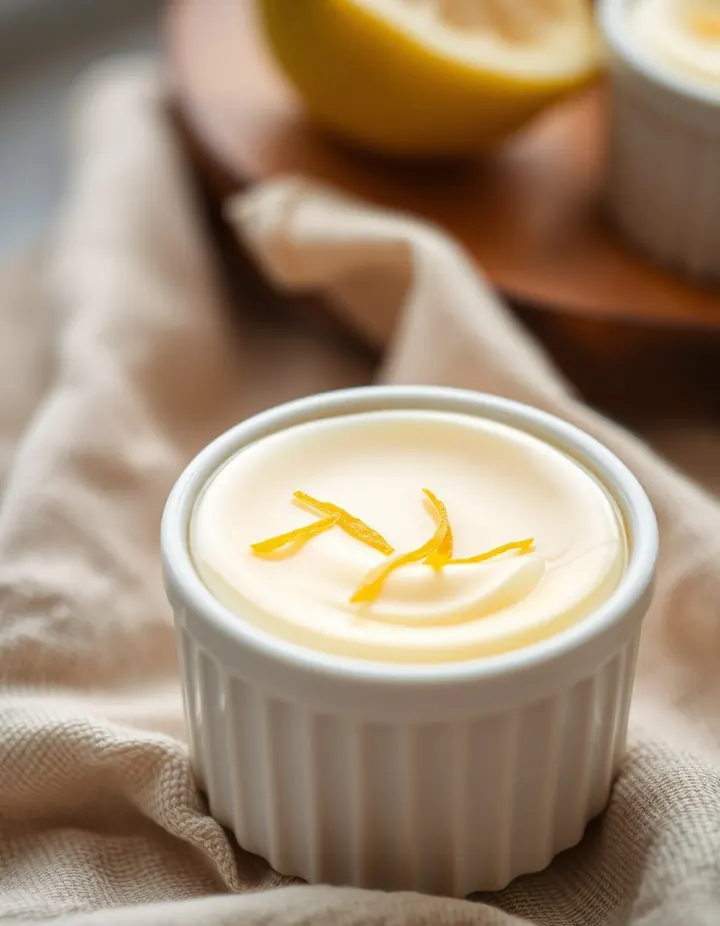 Lemon Custard64 recipes
The free Flavor Lab newsletter: one surprising pairing a week and the molecular reason it works, in 60 seconds. No spam, unsubscribe anytime.
Prefer an account? Create a free account to save pairings and unlock the full chemistry.