Why it works: Egg and lemon are a kitchen classic. They rank in the top 19% of all ingredient pairs, and cooks put them together in 44,316 recipes. Both carry (e,e)-2,4-decadienal, which smells fatty, deep fried. The science ↓
To Make pIte'sHELLS From Puff Paste
Ingredients
Directions
The book gives no oven temperature. The 400°F (200°C) in the steps was added when the recipe was transcribed, as a starting point.
Shape the shells
Roll the puff paste to a thickness of ¼ inch.
Cut into rounds using a fluted or plain cutter.
For one pate shell, use one round; for two rings, cut a hole in the center of each.
Moisten the edge of each circle with a little water.
Place the two rings on top of the whole round, pressing the edges lightly together.
Glaze the top with the egg, avoiding the edges.
Bake and fill
Bake the shells in a hot oven at 400°F (200°C) for about 25 minutes.
For tarts, fill the shells with jelly, jam, preserves, or lemon cream after cooking the lemon cream in a double boiler.
Let the filled tarts cool before serving cold.
Transcribed from a scanned cookbook and modernised for today's kitchens. Where the book gave no heat or time, or said "a moderate oven", the temperatures and times here may be modern equivalents rather than the book's own figures.
Explore the science
The flavor team
The pairs that carry this dish. Each one is judged two ways: how much their aromas overlap, and how often cooks already put them together.
-
Egg + lemontop 19% of all pairsSmell alikelowCooked together44,316 recipes
Shared aroma: (e,e)-2,4-decadienal (fatty, deep fried).
Egg and lemon barely smell alike, yet cooks put them together in 44,316 recipes: they work on texture and structure more than aroma.
Ranks compare each pair with 20,000 random ingredient pairs on CompKitchen. How we score pairs
What each ingredient does
- Puff paste
- Its layers of fat and dough puff into flaky, airy shells when baked.
- Egg
- Glazing the top gives the shells a golden, glossy browned finish.
The step that matters
Pressing the edges together before baking. If the moistened edges are not pressed firmly together, the rings can separate or lift as the pastry rises in the oven, so the shell loses its shape.
“What each ingredient does” and “The step that matters” were written by Claude from this recipe’s own method and reviewed in samples by CompKitchen.
You might also like
 Lemon Cake228 recipes
 Lemon Ice147 recipes
 Lemon Sherbet103 recipes
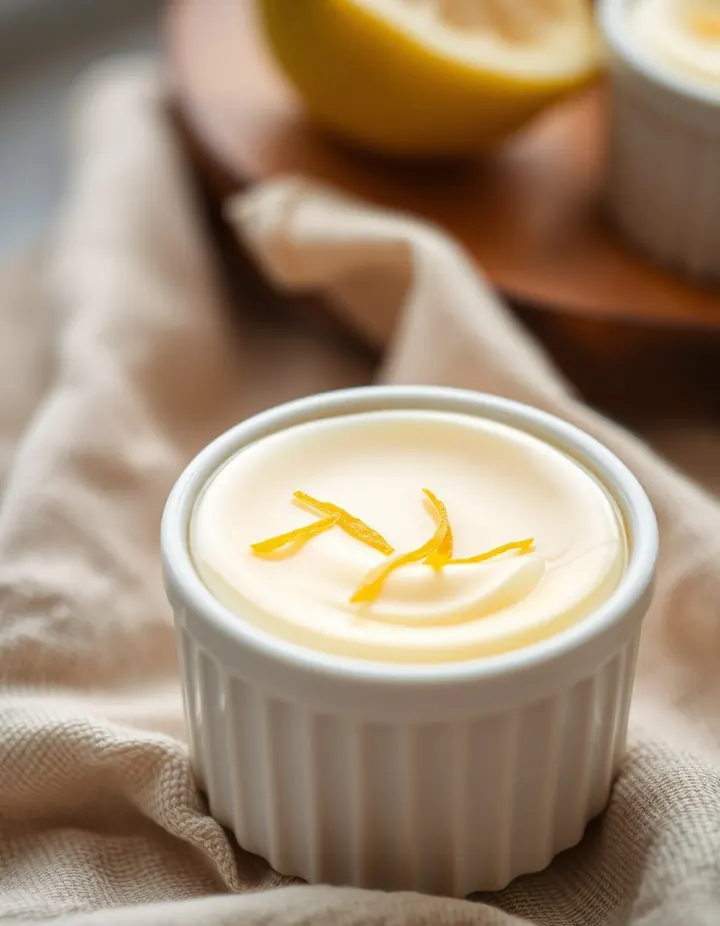 Lemon Custard64 recipes
The free Flavor Lab newsletter: one surprising pairing a week and the molecular reason it works, in 60 seconds. No spam, unsubscribe anytime.
Prefer an account? Create a free account to save pairings and unlock the full chemistry.