Why it works: Lemon and rum are a kitchen classic. They rank in the top 19% of all ingredient pairs, and cooks put them together in 1,341 recipes. Both carry alpha-pinene, which smells pine, turpentine. The science ↓
Roman Jelly
Ingredients
Directions
Prepare
In a bowl, combine the lemon jelly with the kirsch and rum.
Divide the mixture into three equal parts.
Color and whip
Color one part green, the second part red, and leave the third part uncolored.
Whip each part until it begins to thicken.
Layer and set
Layer the whipped mixtures in a mold, alternating colors.
Transcribed from a scanned cookbook and modernised for today's kitchens. Where the book gave no heat or time, or said "a moderate oven", the temperatures and times here may be modern equivalents rather than the book's own figures.
Explore the science
The flavor team
The pairs that carry this dish. Each one is judged two ways: how much their aromas overlap, and how often cooks already put them together.
-
Lemon + rumtop 19% of all pairsSmell alikemoderateCooked together1,341 recipes
Shared aroma: alpha-pinene (pine, turpentine).
Ranks compare each pair with 20,000 random ingredient pairs on CompKitchen. How we score pairs
What each ingredient does
- Lemon jelly
- Forms the set base that holds the layers together as it cools.
- Kirsch
- Adds a strong cherry aroma and flavor that balances the sweetness.
- Rum
- Adds depth of flavor and aroma to the jelly.
The step that matters
Whip each part until it begins to thicken. Whipping only until the mixture starts to thicken lets it hold air and firm slightly while still pourable, so layers stay distinct instead of blending or collapsing. Going too far can make it stiff before layering.
“What each ingredient does” and “The step that matters” were written by Claude from this recipe’s own method and reviewed in samples by CompKitchen.
You might also like
 Lemon Cake228 recipes
 Lemon Ice147 recipes
 Lemon Sherbet103 recipes
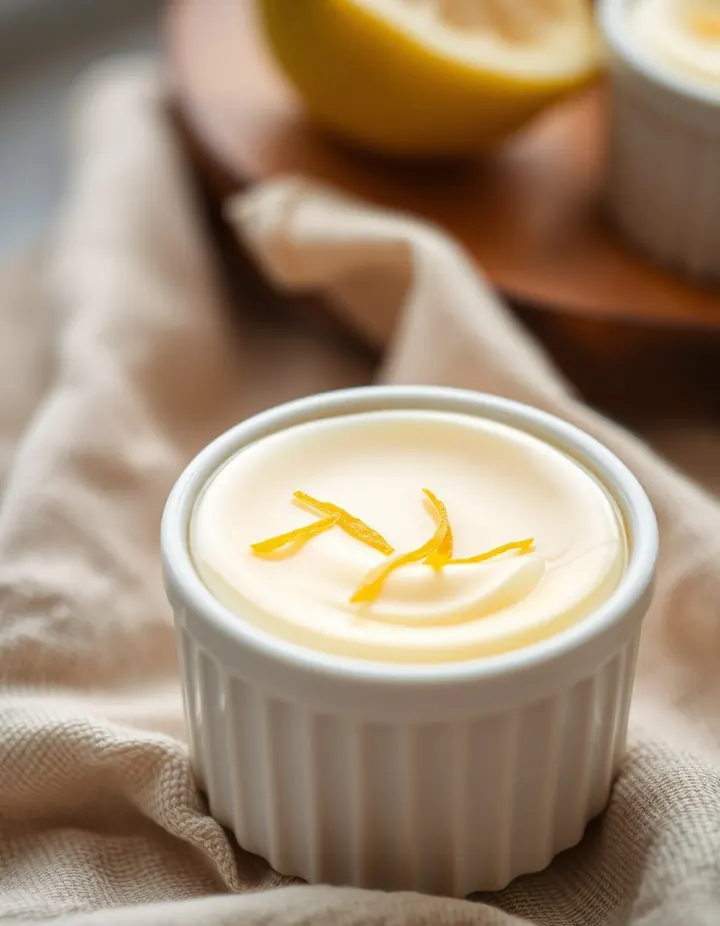 Lemon Custard64 recipes
The free Flavor Lab newsletter: one surprising pairing a week and the molecular reason it works, in 60 seconds. No spam, unsubscribe anytime.
Prefer an account? Create a free account to save pairings and unlock the full chemistry.