Why it works: Milk and vanilla are a kitchen classic. They rank in the top 5% of all ingredient pairs, and cooks put them together in 19,187 recipes. Both carry ethyl caproate, which smells fruity, apple peel. The science ↓
Turret Cream
Ingredients
Directions
Make the custard
Soak the gelatin in a large cup of cold water for 3 hours.
Scald the milk, stir in the sugar, and when melted, add the gelatin.
Stir the mixture over the heat for 5 minutes.
Pour half of the mixture into a bowl.
Add the whipped yolks to the mixture in the saucepan and stir for 1 minute.
Remove the saucepan from heat.
Flavor the yellow mixture with lemon.
Flavor the white mixture with vanilla.
Build the layers
When the yellow mixture begins to congeal, fold in half of the stiffened egg whites gradually.
Repeat with the remaining egg whites in the white mixture, whipping until both mixtures are fluffy.
Wet the inside of a tall fluted mold with water.
Arrange a row of crystallized fruit at the bottom of the mold.
Layer the white mixture.
Add strips of apricots or peaches.
Add a layer of yellow mixture.
Repeat layering until all ingredients are used.
Unmold and serve
On the next day, dip the mold briefly in hot water.
Invert the mold onto a flat dish.
Serve with brandied fruit.
Transcribed from a scanned cookbook and modernised for today's kitchens. Where the book gave no heat or time, or said "a moderate oven", the temperatures and times here may be modern equivalents rather than the book's own figures.
Explore the science
The flavor team
The pairs that carry this dish. Each one is judged two ways: how much their aromas overlap, and how often cooks already put them together.
-
Milk + vanillatop 5% of all pairsSmell alikemoderateCooked together19,187 recipes
Shared aroma: ethyl caproate (fruity, apple peel).
-
Sugar + vanillatop 8% of all pairsSmell alikelowCooked together35,032 recipes
Shared aroma: beta-damascenone (apple, rose).
-
Vanilla + lemontop 15% of all pairsSmell alikemoderateCooked together5,961 recipes
Shared aroma: eucalyptol (eucalyptus, herbal).
-
Milk + lemontop 15% of all pairsSmell alikemoderateCooked together19,053 recipes
Shared aroma: 2-nonenal (fatty, green).
-
Sugar + lemontop 18% of all pairsSmell alikelowCooked together53,532 recipes
Shared aroma: 2-nonenal (fatty, green).
Sugar and vanilla barely smell alike, yet cooks put them together in 35,032 recipes: they work on texture and structure more than aroma.
Ranks compare each pair with 20,000 random ingredient pairs on CompKitchen. How we score pairs
What each ingredient does
- Gelatine
- Sets the cream so it holds its shape when unmolded.
- Eggs
- Whites add lightness and an airy texture; yolks enrich and thicken the custard.
- Milk
- Forms the creamy liquid base of both layers.
- Sugar
- Sweetens the cream and balances the lemon.
- Lemon juice
- Adds acidity and a bright citrus flavor to the yellow layer.
The step that matters
Folding the egg whites into the partly set custard. If the custard is still too runny, the whites deflate and the layers blur; if it has set too firmly, the whites will not blend in smoothly and lumps will form. Fold gently as soon as it begins to thicken.
Swap the lemon
How well each one fits the dish's main ingredients (milk, sugar, egg, vanilla):
- Figfits better
- Peachfits better
- Blueberryfits better
- Lemonthe original
Fit is the average pairing score against milk, sugar, egg, vanilla. Candidates are from the same food group and used in at least 100 recipes.
“What each ingredient does” and “The step that matters” were written by Claude from this recipe’s own method and reviewed in samples by CompKitchen.
You might also like
 Lemon Cake228 recipes
 Lemon Ice147 recipes
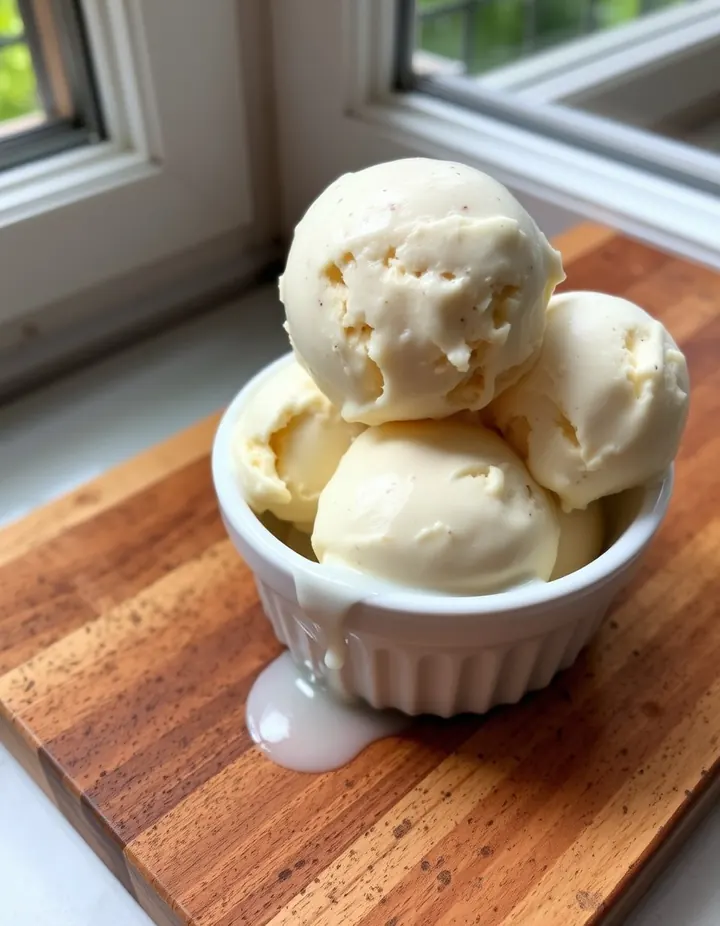 Vanilla Ice Cream108 recipes
 Lemon Sherbet103 recipes
The free Flavor Lab newsletter: one surprising pairing a week and the molecular reason it works, in 60 seconds. No spam, unsubscribe anytime.
Prefer an account? Create a free account to save pairings and unlock the full chemistry.