Why it works: Pepper and parsley match in chemistry and in kitchens. They rank in the top 2% of all ingredient pairs, and cooks put them together in 34,122 recipes. Both carry 4'-methylacetophenone, which smells bitter almond. The science ↓
Oyster Omelet
Ingredients
Directions
The book gives no oven temperature. The 350°F (175°C) in the steps was added when the recipe was transcribed, as a starting point.
Prepare the oysters and sauce
Clean the oysters and cook until plump; drain and reserve the liquor.
Melt 2 tablespoons of butter in a pan, add 2 tablespoons of flour, ½ teaspoon of salt, and a few grains of pepper.
Gradually pour in the reserved oyster liquor and enough milk to make 1 cup of liquid, stirring constantly.
Make the omelet
In a separate bowl, beat the yolks of 3 eggs until thick and lemon-colored; add ½ teaspoon of salt, a few grains of pepper, and 3 tablespoons of hot water.
Beat the whites of 3 eggs until stiff and dry, then gently fold them into the yolk mixture.
Heat an omelet pan and grease it with 1 tablespoon of butter.
Pour the mixture into the pan, spread it evenly, and cook slowly, occasionally turning the pan to brown evenly.
When puffed and delicately browned underneath, place the pan in a 350°F (175°C) oven to finish cooking the top.
Fill and serve
Spread the cooked oysters on one half of the omelet, fold it, and turn it onto a hot platter.
Pour sauce around the omelet and garnish with parsley.
Transcribed from a scanned cookbook and modernised for today's kitchens. Where the book gave no heat or time, or said "a moderate oven", the temperatures and times here may be modern equivalents rather than the book's own figures.
Explore the science
The flavor team
The pairs that carry this dish. Each one is judged two ways: how much their aromas overlap, and how often cooks already put them together.
-
Pepper + parsleytop 2% of all pairsSmell alikestrongCooked together34,122 recipes
Shared aroma: 4'-methylacetophenone (bitter almond).
-
Butter + milktop 7% of all pairsSmell alikemoderateCooked together81,283 recipes
Shared aroma: (z)-4-heptenal (biscuit, cream).
-
Butter + flourtop 12% of all pairsSmell alikelowCooked together124,287 recipes
Shared aroma: isobutyraldehyde (malty, green).
-
Flour + parsleytop 12% of all pairsSmell alikemoderateCooked together16,675 recipes
Shared aroma: isobutyraldehyde (malty, green).
-
Oyster + buttertop 12% of all pairsSmell alikemoderateCooked together8,184 recipes
Shared aroma: 2,6-nonadienal (cucumber, green).
Butter and flour barely smell alike, yet cooks put them together in 124,287 recipes: they work on texture and structure more than aroma.
Ranks compare each pair with 20,000 random ingredient pairs on CompKitchen. How we score pairs
What each ingredient does
- Eggs
- Whites beaten stiff trap air and yolks thicken the batter, giving the omelet its light, puffed structure.
- Butter
- Enriches the sauce and greases the pan so the omelet browns without sticking.
- Flour
- Thickens the butter and liquid into a smooth sauce that coats the oysters.
- Milk
- Adds liquid and richness to the sauce, making it creamy rather than thin.
- Oysters
- Provide the savory seafood filling and their liquor adds briny flavor to the sauce.
The step that matters
Folding the whites into the yolks. Stiff egg whites hold the air that makes the omelet rise. Folding gently keeps that air in; stirring or deflating the whites makes the omelet dense and flat.
Swap the parsley
How well each one fits the dish's main ingredients (oyster, butter, flour, pepper, milk, egg):
- Nutmegfits about as well
- Parsleythe original
- Cinnamonfits about as well
- Capersfits about as well
Fit is the average pairing score against oyster, butter, flour, pepper, milk, egg. Candidates are from the same food group and used in at least 100 recipes.
“What each ingredient does” and “The step that matters” were written by Claude from this recipe’s own method and reviewed in samples by CompKitchen.
You might also like
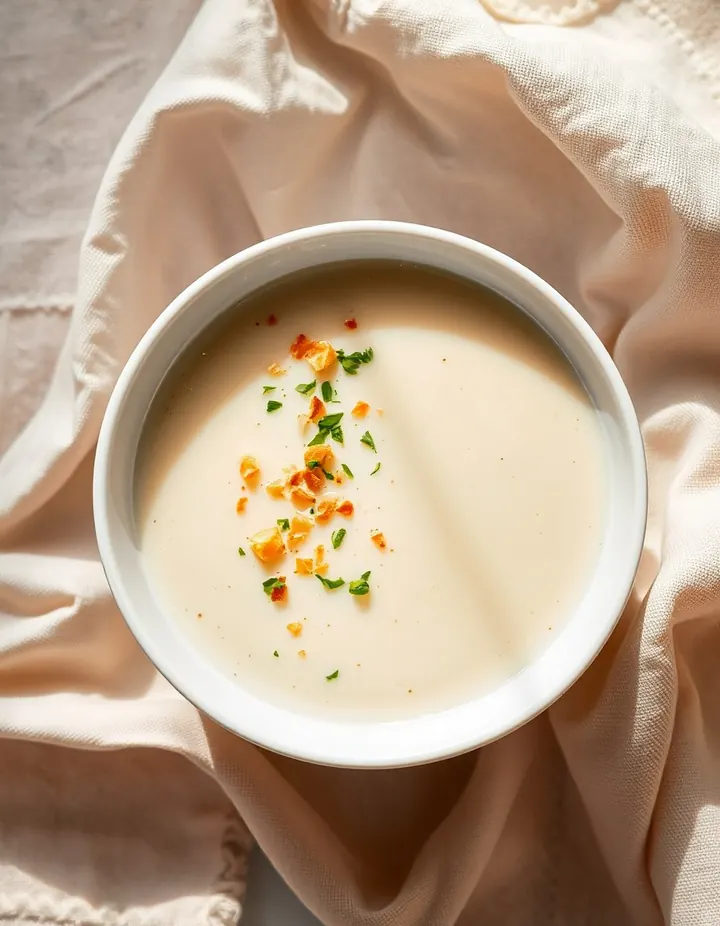 Mock Oyster Soup21 recipes
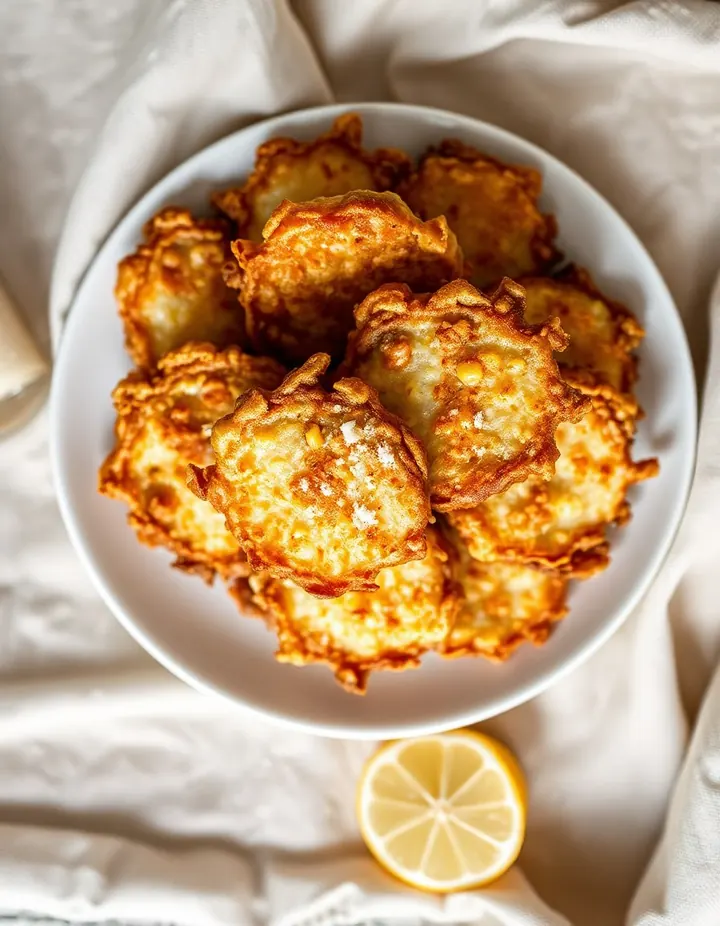 Corn Fritters6 recipes
 Tomato Soup526 recipes
 Brown Bread461 recipes
The free Flavor Lab newsletter: one surprising pairing a week and the molecular reason it works, in 60 seconds. No spam, unsubscribe anytime.
Prefer an account? Create a free account to save pairings and unlock the full chemistry.