Why it works: Cauliflower and cucumber match in chemistry and in kitchens. They rank in the top 1% of all ingredient pairs, and cooks put them together in 584 recipes. Both carry 2-hexenal, which smells green, leafy. The science ↓
Yellow Pickle
Ingredients
Directions
Prepare the vegetables
Cut the green tomatoes and peppers, removing any imperfections and seeds.
Soak the tomatoes and peppers in strong brine for 1 hour, then drain and cook in fresh hot water until tender.
In separate pots, cook the cauliflowers broken into small pieces and the peeled onions until tender, then drain.
Make the sauce and simmer
In a large kettle, combine the vinegar, then mix the mustard, flour, and turmeric into a smooth paste with a little vinegar and stir into the rest of the vinegar.
Bring the vinegar mixture to a boil, then add all the cooked ingredients and simmer for at least 1 hour, stirring often.
Transcribed from a scanned cookbook and modernised for today's kitchens. Where the book gave no heat or time, or said "a moderate oven", the temperatures and times here may be modern equivalents rather than the book's own figures.
Explore the science
The flavor team
The pairs that carry this dish. Each one is judged two ways: how much their aromas overlap, and how often cooks already put them together.
-
Cauliflower + cucumbertop 1% of all pairsSmell alikestrongCooked together584 recipes
Shared aroma: 2-hexenal (green, leafy).
-
Cauliflower + mustardtop 1% of all pairsSmell alikestrongCooked together687 recipes
Shared aroma: trans-2-hexenal (green, leafy).
-
Cucumber + mustardtop 3% of all pairsSmell alikestrongCooked together2,281 recipes
Shared aroma: 2-isopropyl-3-methoxypyrazine (earthy, pea).
-
Cider + vinegartop 6% of all pairsSmell alikemoderateCooked together3,431 recipes
Shared aroma: 4-ethyl-2-methoxyphenol (smoky, clove).
-
Mustard + vinegartop 7% of all pairsSmell alikemoderateCooked together14,067 recipes
Shared aroma: isobutyraldehyde (malty, green).
Ranks compare each pair with 20,000 random ingredient pairs on CompKitchen. How we score pairs
What each ingredient does
- Green tomatoes
- Provide the bulk of the pickle and absorb the vinegar and spice flavours during simmering.
- Cauliflowers
- Add firm pieces that hold their shape and texture through the long simmer.
- Cider vinegar
- Provides the acidity that preserves the pickle and gives it its sharp, tangy flavour.
- Dry mustard
- Adds a sharp, pungent flavour that complements the vinegar and vegetables.
- Turmeric
- Gives the pickle its distinctive yellow colour and a mild, earthy aroma.
- Flour
- Thickens the vinegar mixture so the sauce clings to the vegetables.
The step that matters
Make the mustard paste smooth before stirring it in. Dry mustard, flour and turmeric clump easily if added dry. Mixing them into a smooth paste with a little vinegar first lets them disperse evenly, so the sauce thickens without lumps and colours the pickle uniformly.
Swap the cauliflower
How well each one fits the dish's main ingredients (cucumber, pepper, sugar, flour, mustard, cider, vinegar):
- Horseradishfits better
- Radishfits about as well
- Lettucefits about as well
- Cauliflowerthe original
Fit is the average pairing score against cucumber, pepper, sugar, flour, mustard, cider, vinegar. Candidates are from the same food group and used in at least 100 recipes.
“What each ingredient does” and “The step that matters” were written by Claude from this recipe’s own method and reviewed in samples by CompKitchen.
You might also like
 Tomato Soup526 recipes
 Cream of Tomato Soup107 recipes
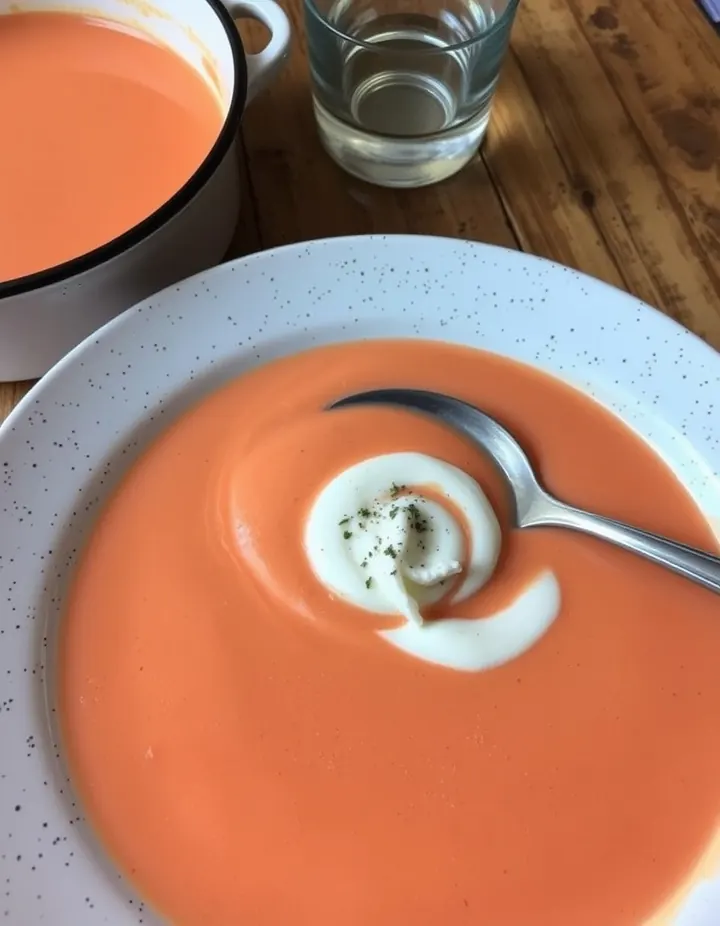 Tomato Bisque61 recipes
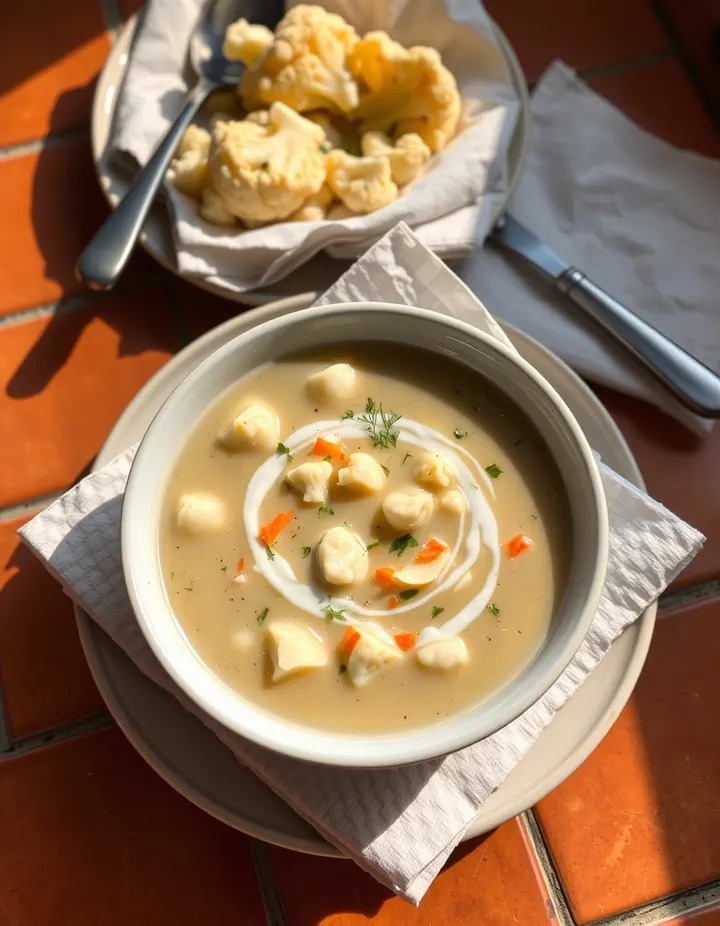 Cauliflower Soup28 recipes
The free Flavor Lab newsletter: one surprising pairing a week and the molecular reason it works, in 60 seconds. No spam, unsubscribe anytime.
Prefer an account? Create a free account to save pairings and unlock the full chemistry.