Why it works: Sugar and cream are a kitchen classic. They rank in the top 9% of all ingredient pairs, and cooks put them together in 43,450 recipes. Both carry 2,3-butanedione, which smells butter, sweet. The science ↓
Cream Sponge Cake
Ingredients
Directions
The book says “a moderately warm oven”. The 350°F (175°C) in the steps is the modern equivalent, not the book's own figure. The book gives no cooking times; the times in the steps were added in transcription, so check for doneness rather than trusting the clock.
Prepare the batter
Preheat the oven to 350°F (175°C).
In a mixing bowl, combine sugar and cream until smooth.
Add eggs one at a time, mixing well after each addition.
Sift together flour, cream of tartar, and baking soda; gradually add to the mixture.
Stir in lemon essence.
Bake
Pour the batter into a greased cake pan and bake for 25-30 minutes or until a toothpick comes out clean.
Transcribed from a scanned cookbook and modernised for today's kitchens. Where the book gave no heat or time, or said "a moderate oven", the temperatures and times here may be modern equivalents rather than the book's own figures.
Explore the science
The flavor team
The pairs that carry this dish. Each one is judged two ways: how much their aromas overlap, and how often cooks already put them together.
-
Sugar + creamtop 9% of all pairsSmell alikemoderateCooked together43,450 recipes
Shared aroma: 2,3-butanedione (butter, sweet).
-
Sugar + flourtop 15% of all pairsSmell alikemoderateCooked together92,116 recipes
Shared aroma: phenylacetaldehyde (hawthorne, honey).
-
Egg + flourtop 15% of all pairsSmell alikelowCooked together106,462 recipes
Shared aroma: isobutyraldehyde (malty, green).
-
Flour + lemontop 17% of all pairsSmell alikemoderateCooked together30,404 recipes
Shared aroma: isobutyraldehyde (malty, green).
-
Sugar + lemontop 18% of all pairsSmell alikelowCooked together53,532 recipes
Shared aroma: 2-nonenal (fatty, green).
Egg and flour barely smell alike, yet cooks put them together in 106,462 recipes: they work on texture and structure more than aroma.
Ranks compare each pair with 20,000 random ingredient pairs on CompKitchen. How we score pairs
What each ingredient does
- Eggs
- Add structure and richness to the batter as they set during baking.
- Flour
- Forms the main structure of the cake as its proteins set in the oven.
- Cream of tartar
- Stabilizes the batter and helps give the cake a lighter, finer texture.
- Baking soda
- Reacts with acidic ingredients to produce gas that helps the cake rise.
- Sugar
- Sweetens the cake and helps keep it tender and moist.
The step that matters
Adding the dry ingredients. Flour, cream of tartar and baking soda should be sifted and added gradually so they blend evenly. Overmixing once flour is added develops gluten and can make the cake tough, while uneven distribution of baking soda can leave pockets that taste bitter or cause uneven rising.
Swap the lemon
How well each one fits the dish's main ingredients (sugar, cream, egg, flour):
- Raisinfits better
- Vanillafits better
- Figfits about as well
- Lemonthe original
Fit is the average pairing score against sugar, cream, egg, flour. Candidates are from the same food group and used in at least 100 recipes.
“What each ingredient does” and “The step that matters” were written by Claude from this recipe’s own method and reviewed in samples by CompKitchen.
You might also like
 Lemon Cake228 recipes
 Lemon Ice147 recipes
 Lemon Sherbet103 recipes
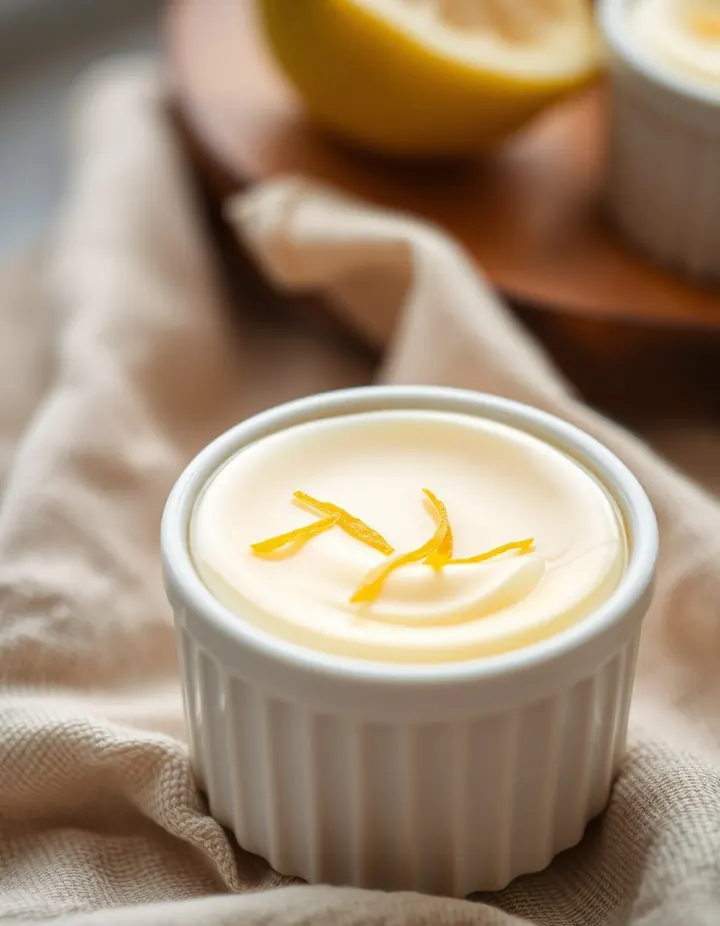 Lemon Custard64 recipes
The free Flavor Lab newsletter: one surprising pairing a week and the molecular reason it works, in 60 seconds. No spam, unsubscribe anytime.
Prefer an account? Create a free account to save pairings and unlock the full chemistry.