Why it works: Pepper and lemon match in chemistry and in kitchens. They rank in the top 3% of all ingredient pairs, and cooks put them together in 27,047 recipes. Both carry trans-2-nonenal, which smells cardboard, fatty. The science ↓
Oyster Patties
Ingredients
Directions
Make the dough
Sift together flour, acid, baking soda, and salt.
Wash butter in ice water.
Work half of the butter into the flour mixture.
Add enough ice water to form a stiff dough, then roll it out.
Dredge remaining butter with flour, sprinkle over the dough, and roll it up like a jelly roll.
Roll out again, repeating the butter and flour process once more.
Roll out the dough to ½ inch thick and cut into 2‑inch rounds.
Press a smaller cutter into each round to create a shell.
Bake and make the filling
Place on a buttered baking sheet and bake until golden brown.
Remove the center circle and set aside for a cover.
Scald oysters in hot water, drain, and add to a saucepan with melted butter.
Whisk in flour, salt, pepper, warm milk, and oyster liquid until thick.
Add oysters and lemon juice, then fill the shells and cover with the small circles.
Transcribed from a scanned cookbook and modernised for today's kitchens. Where the book gave no heat or time, or said "a moderate oven", the temperatures and times here may be modern equivalents rather than the book's own figures.
Explore the science
The flavor team
The pairs that carry this dish. Each one is judged two ways: how much their aromas overlap, and how often cooks already put them together.
-
Pepper + lemontop 3% of all pairsSmell alikestrongCooked together27,047 recipes
Shared aroma: trans-2-nonenal (cardboard, fatty).
-
Butter + milktop 7% of all pairsSmell alikemoderateCooked together81,283 recipes
Shared aroma: (z)-4-heptenal (biscuit, cream).
-
Flour + buttertop 12% of all pairsSmell alikelowCooked together124,287 recipes
Shared aroma: isobutyraldehyde (malty, green).
-
Butter + oystertop 12% of all pairsSmell alikemoderateCooked together8,184 recipes
Shared aroma: 2,6-nonadienal (cucumber, green).
-
Flour + milktop 14% of all pairsSmell alikelowCooked together78,219 recipes
Shared aroma: isobutyraldehyde (malty, green).
Flour and butter barely smell alike, yet cooks put them together in 124,287 recipes: they work on texture and structure more than aroma.
Ranks compare each pair with 20,000 random ingredient pairs on CompKitchen. How we score pairs
What each ingredient does
- Flour
- Forms the structure of the dough and thickens the sauce when cooked.
- Butter
- Layered into the dough to create flaky texture as it bakes and steams.
- Baking soda
- Reacts with the acid to produce gas that helps the dough rise.
- Acid
- Reacts with the baking soda to leaven the dough and add slight tang.
- Oysters
- Provide the main savory flavor and tender texture of the filling.
- Milk
- Gives the sauce body, richness, and a smooth, creamy texture.
The step that matters
Working the butter into the dough in layers. Keeping the butter cold and in distinct layers creates flaky pastry. If the butter softens or melts into the flour, the dough turns dense rather than flaky.
Swap the lemon
How well each one fits the dish's main ingredients (flour, butter, sauce, pepper, milk, oyster):
- Lemonthe original
- Figfits about as well
- Plumfits less well
- Cherryfits less well
Fit is the average pairing score against flour, butter, sauce, pepper, milk, oyster. Candidates are from the same food group and used in at least 100 recipes.
“What each ingredient does” and “The step that matters” were written by Claude from this recipe’s own method and reviewed in samples by CompKitchen.
You might also like
 Lemon Sauce236 recipes
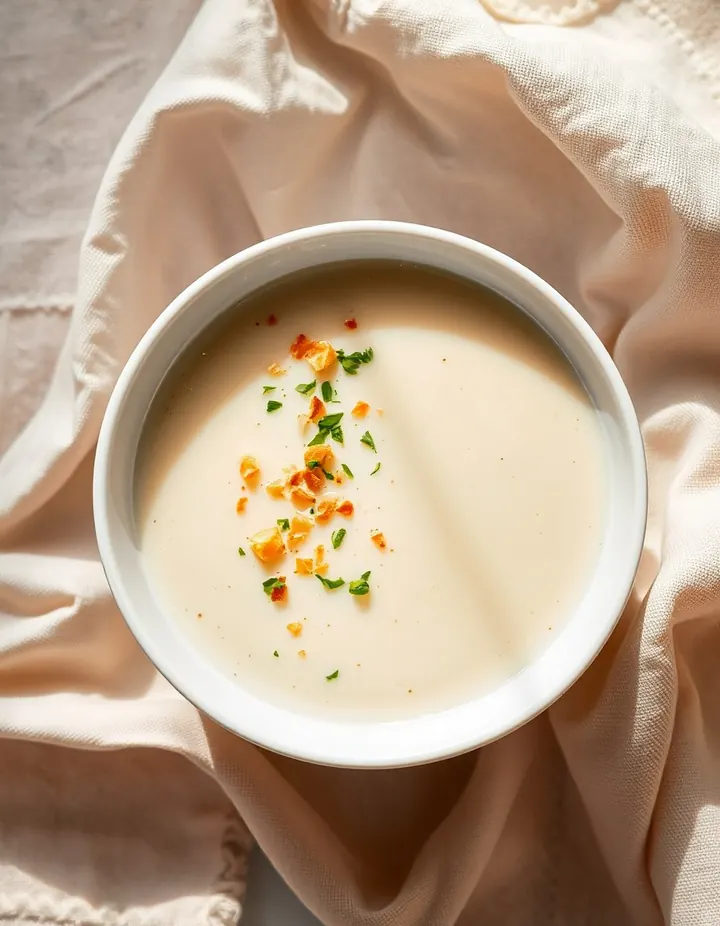 Mock Oyster Soup21 recipes
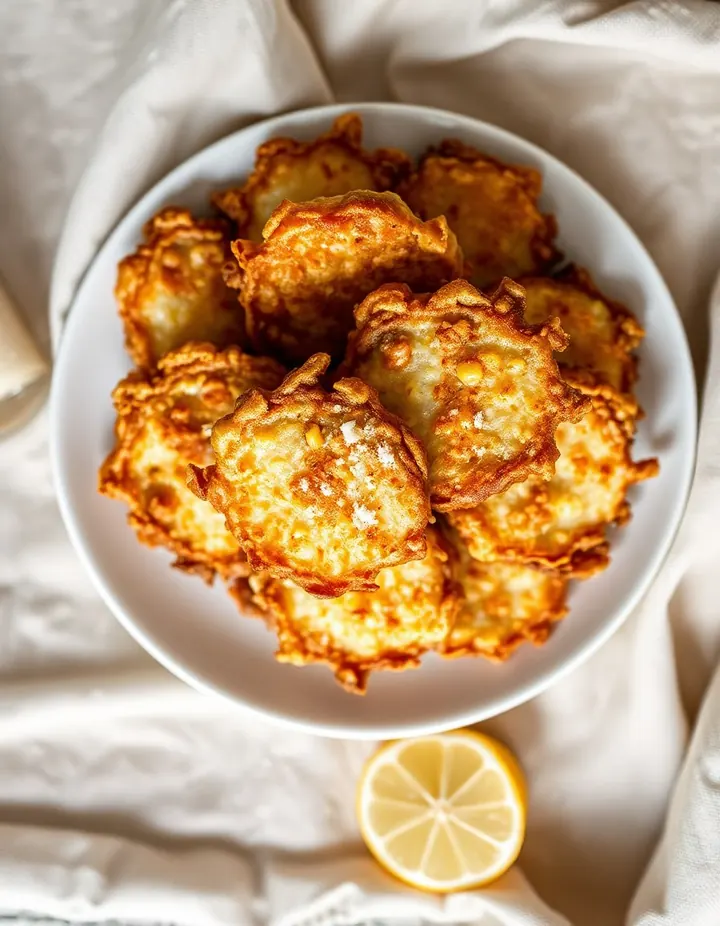 Corn Fritters6 recipes
 Tomato Soup526 recipes
The free Flavor Lab newsletter: one surprising pairing a week and the molecular reason it works, in 60 seconds. No spam, unsubscribe anytime.
Prefer an account? Create a free account to save pairings and unlock the full chemistry.