Why it works: Cider and vinegar are a kitchen classic. They rank in the top 6% of all ingredient pairs, and cooks put them together in 3,431 recipes. Both carry 4-ethyl-2-methoxyphenol, which smells smoky, clove. The science ↓
Pickled Oysters
Ingredients
Directions
Cook the oysters
Drain the oysters in a colander.
Pick them out one by one with a fork and place them in a skillet, cooking as many as will fit on the bottom.
Season with coarse sea salt and black pepper.
Remove the oysters when the edges curl and place them on a platter, being careful not to burn them.
Save the juice from the skillet in a bowl.
Continue cooking the remaining oysters in the same manner.
Make the pickling liquid
Strain and measure the saved juice, then add cider vinegar, a few pieces of mace, a tablespoon of whole peppercorns, and butter.
Boil the mixture for five minutes.
Can
Can the oysters in glass jars.
Transcribed from a scanned cookbook and modernised for today's kitchens. Where the book gave no heat or time, or said "a moderate oven", the temperatures and times here may be modern equivalents rather than the book's own figures.
Explore the science
The flavor team
The pairs that carry this dish. Each one is judged two ways: how much their aromas overlap, and how often cooks already put them together.
-
Cider + vinegartop 6% of all pairsSmell alikemoderateCooked together3,431 recipes
Shared aroma: 4-ethyl-2-methoxyphenol (smoky, clove).
-
Oyster + buttertop 12% of all pairsSmell alikemoderateCooked together8,184 recipes
Shared aroma: 2,6-nonadienal (cucumber, green).
-
Oyster + eggtop 14% of all pairsSmell alikemoderateCooked together4,103 recipes
Shared aroma: 2-nonenal (fatty, green).
-
Pepper + vinegartop 14% of all pairsSmell alikemoderateCooked together27,814 recipes
Shared aroma: 4'-methylacetophenone (bitter almond).
-
Pepper + macetop 16% of all pairsSmell alikelowCooked together12,257 recipes
Shared aroma: myristicin (spice, warm).
Pepper and mace barely smell alike, yet cooks put them together in 12,257 recipes: they work on texture and structure more than aroma.
Ranks compare each pair with 20,000 random ingredient pairs on CompKitchen. How we score pairs
What each ingredient does
- Oysters
- The main ingredient, cooked briefly until the edges curl so they firm up before pickling.
- Cider vinegar
- Provides the acidity that gives the pickling liquid its sharp, preserving tang.
- Butter
- Adds richness and a rounded, mellow fat to the pickling liquid.
The step that matters
Removing the oysters when the edges curl. Oysters cook very quickly. Taking them off as soon as the edges curl keeps them tender and moist, while leaving them too long toughens the flesh and can scorch the fat in the pan.
Swap the mace
How well each one fits the dish's main ingredients (oyster, pepper, cider, vinegar, butter, egg):
- Tarragonfits better
- Parsleyfits better
- Dillfits better
- Macethe original
Fit is the average pairing score against oyster, pepper, cider, vinegar, butter, egg. Candidates are from the same food group and used in at least 100 recipes.
“What each ingredient does” and “The step that matters” were written by Claude from this recipe’s own method and reviewed in samples by CompKitchen.
You might also like
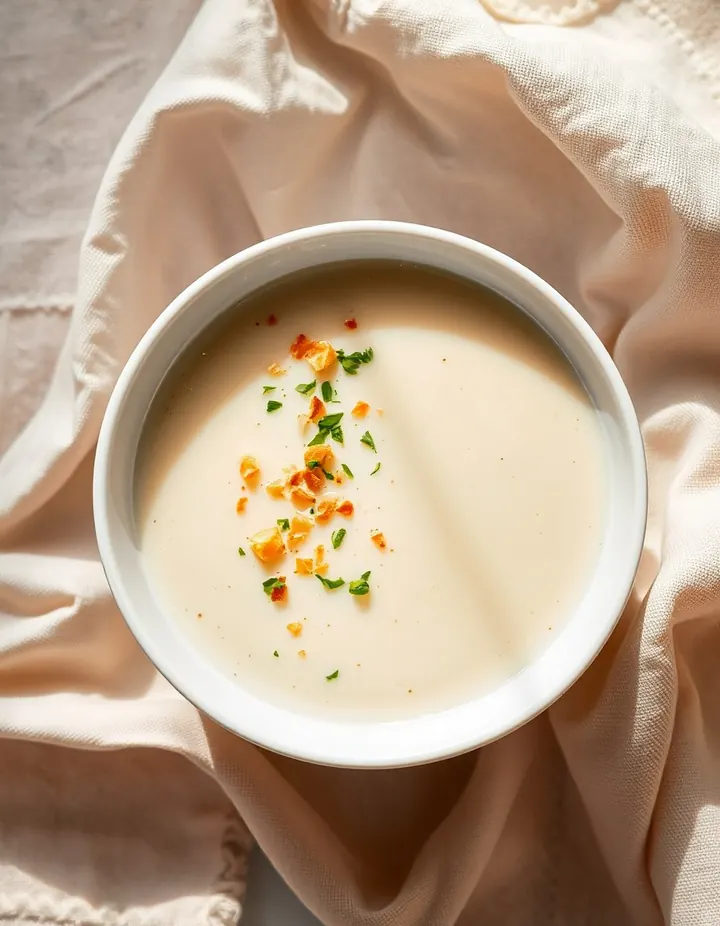 Mock Oyster Soup21 recipes
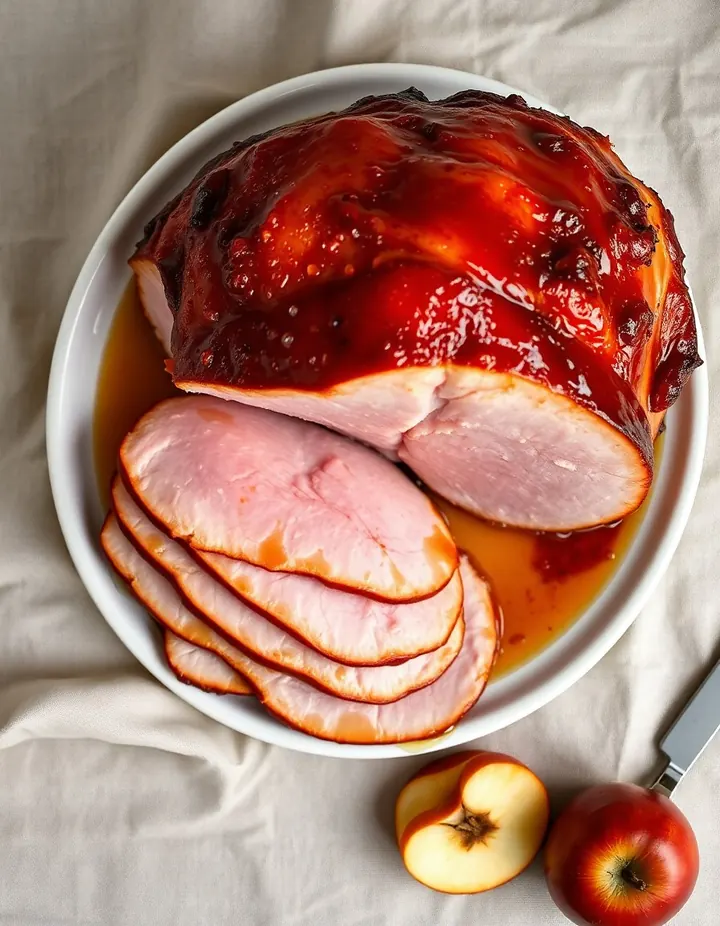 Ham in Cider10 recipes
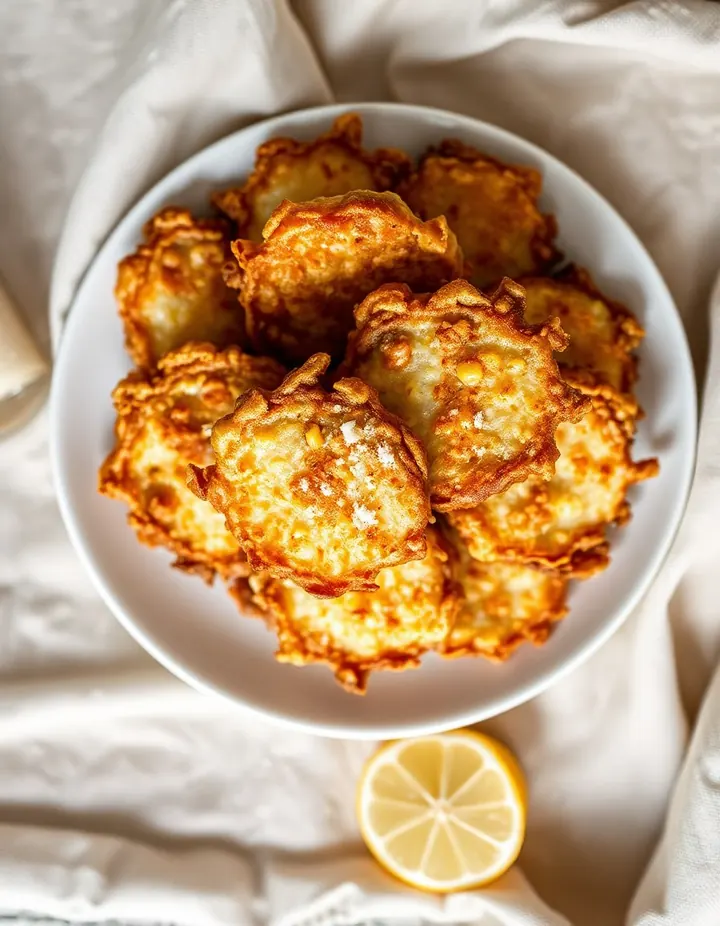 Corn Fritters6 recipes
 Tomato Soup526 recipes
The free Flavor Lab newsletter: one surprising pairing a week and the molecular reason it works, in 60 seconds. No spam, unsubscribe anytime.
Prefer an account? Create a free account to save pairings and unlock the full chemistry.