Why it works: Apple and cauliflower work together. They rank in the top 13% of all ingredient pairs, and 68 recipes mention both. Both carry 2-octenal, which smells fatty, green. The science ↓
The recipe
Ingredients
Directions
Pat the chine dry with paper towels; do not rinse it. Rub all over with the coarse sea salt, place in a dish, cover and refrigerate for up to 2 days.
Remove the chine from the refrigerator and wipe off excess salt with paper towels. Score the skin deeply.
Bake the pork stuffing separately in a greased dish at 375°F (190°C) until its centre reaches 165°F (74°C), about 40 minutes.
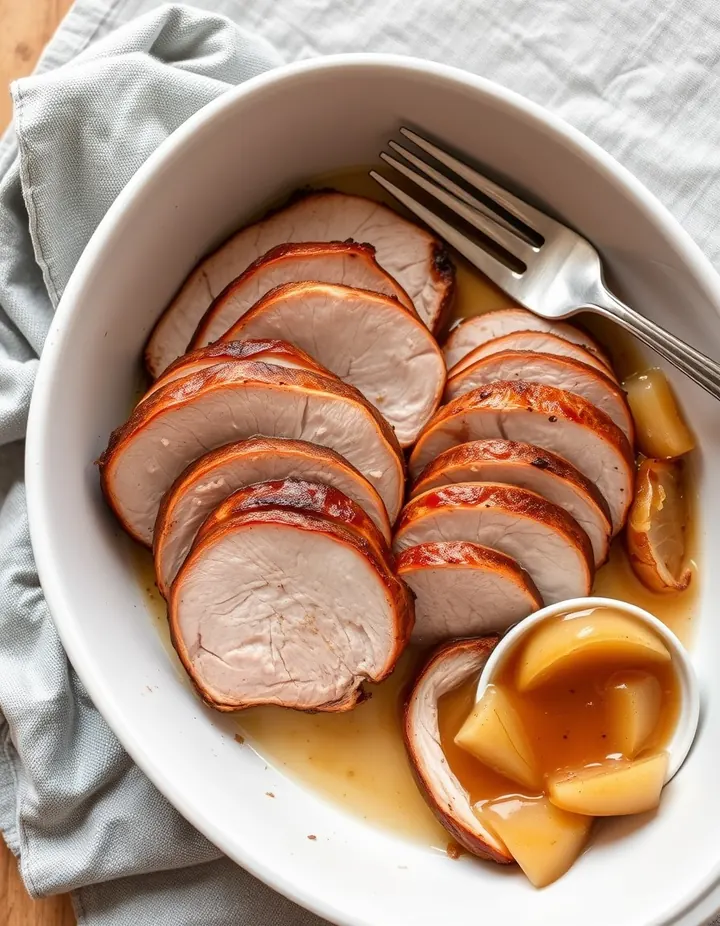
To roast: put the chine skin side up in a 400°F (200°C) oven, allowing about 20 minutes per pound (45 minutes per kg), until a thermometer in the thickest part reads 145°F (63°C).
Rest the roast for 3 minutes, then carve.
To boil instead: put the chine in a saucepan, cover with water, bring to a simmer and skim off the foam. Simmer gently until the thickest part reads 145°F (63°C), about 20 minutes per pound.
Trim the cauliflowers or greens into neat pieces. Boil or steam until just tender, about 8 to 10 minutes, then drain.
Serve the pork with the apple sauce and stuffing, garnished with the cauliflower or greens.
Refrigerate leftovers within 2 hours. Eat within 3 to 4 days, or freeze for longer storage.
Original text from the book (6 steps)
Salt the chine of pork for 60-70 hours before cooking.
Score the skin deeply and stuff it with pork stuffing.
Roast the chine gently in a 400°F (200°C) oven for 20 minutes per pound.
For boiling, soak the chine in brine for 9-10 days, turning daily.
Cover the soaked chine with water in a saucepan and boil slowly, skimming well.
Serve garnished with small well-trimmed cauliflowers or greens.
From a scanned old cookbook. The method has been rewritten by AI to follow current food-safety guidance (safe cooking temperatures, refrigeration, no raw-egg shortcuts). It hasn't been kitchen-tested. The original text is under the method.
Found this recipe through an AI assistant? CompKitchen also shows which ingredients go well together and why, from the aroma molecules they share and how often recipes combine them. Try the pairing tools.
Explore the science
The flavor team
The pairs that carry this dish. Each one is judged two ways: how much aroma chemistry they share, and how many recipes mention both.
-
Apple + cauliflowertop 13% of all pairsAroma overlapmoderateMentioned together68 recipes
Shared aroma: 2-octenal (fatty, green).
-
Pork + appletop 6% of all pairsAroma overlapstrongMentioned together1,577 recipes
Shared aroma: 4-heptenal (creamy, biscuit).
-
Pork + cauliflowertop 10% of all pairsAroma overlapstrongMentioned together116 recipes
Shared aroma: 3-ethylphenol (must).
-
Pork + saucetop 12% of all pairsAroma overlaplowMentioned together4,582 recipes
Shared aroma: ethanol (alcoholic, ethereal).
-
Sauce + cauliflowertop 13% of all pairsAroma overlaplowMentioned together463 recipes
Shared aroma: ethanol (alcoholic, ethereal).
Ranks compare each pair with 20,000 random ingredient pairs on CompKitchen. How we score pairs
Flavor stand-ins for the cauliflower
How well each one fits the dish's main ingredients (pork, apple, sauce):
- Capsicumbetter flavor fit
- Tomatobetter flavor fit
- Potatobetter flavor fit
- Cauliflowerthe original
Fit is the average pairing score against pork, apple, sauce. Candidates are from the same food group and used in at least 100 recipes. This compares flavor only: it does not check the job the ingredient does in the dish (bulk, moisture, acidity, structure).
Make it your own
Stand-ins, a drink, and quick taste fixes for this dish, ranked by how well each fits its other ingredients: shared aroma molecules and how often recipes combine them.
You might also like
 Illustration
 Illustration
 Illustration
 Illustration
The Sunday pairing: one pairing, the chemistry behind it, and how to cook it. No spam, unsubscribe anytime.
Prefer an account? Create a free account for sign-in; Pro adds the full results and chemistry.