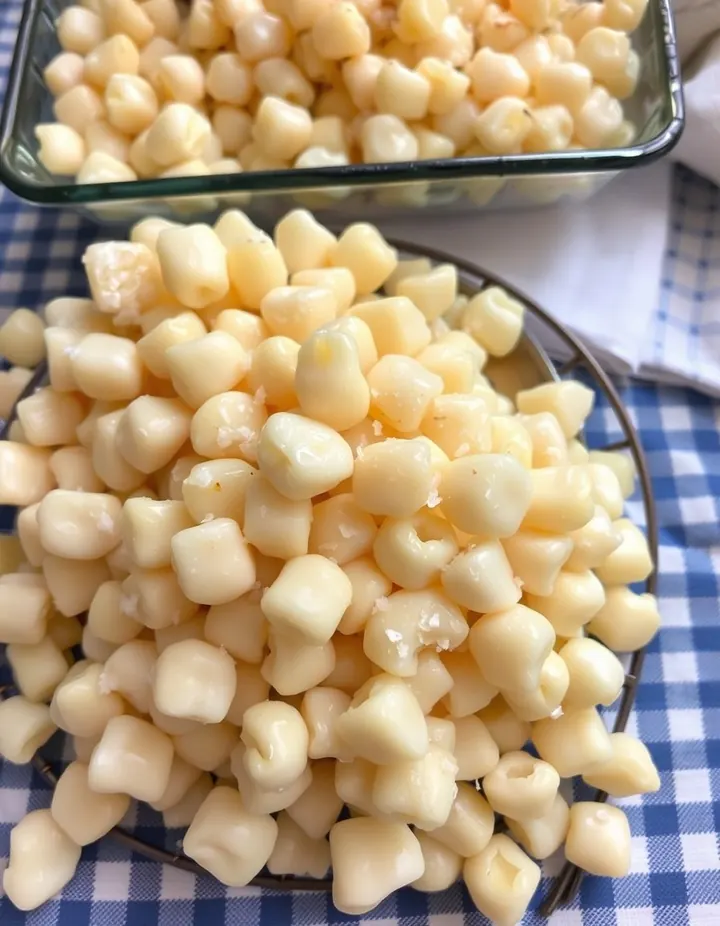
Hulled Corn
Ingredients
Directions
Make the lye
Combine 6 quarts hard wood ashes and 3 gallons of water in a large iron kettle and boil the mixture for 5 minutes.
Remove the kettle from heat, add 1 pint of cold water to the mixture to settle, and strain the lye from the mixture.
Soak and clean the corn
Add 6 quarts of shelled corn to the lye in the kettle and boil the corn for 30 minutes, stirring frequently.
Strain off the lye from the corn.
Rinse the corn thoroughly in several clear waters, then transfer the corn to a large dish pan and cover it with water.
Rub the corn to remove the black chits, then rinse the corn until the water is clear.
Cook and serve
Return the corn to a clean kettle, cover the corn with water, and boil slowly until the corn is soft, adding water as needed.
Once the corn is soft, stir in 2 large tablespoons of coarse sea salt.
Serve the corn with milk or butter and sugar.
Transcribed from a scanned cookbook and modernised for today's kitchens. Where the book gave no heat or time, or said "a moderate oven", the temperatures and times here may be modern equivalents rather than the book's own figures.
Photo for illustrative purposes only · Contact us to use it
Explore the science
What each ingredient does
- Shelled corn
- Forms the main body of the dish, becoming soft and tender after lye treatment and long boiling.
- Hard wood ashes
- Produce the lye solution that softens the corn hulls so they can be rubbed and rinsed away.
The step that matters
Rinsing the corn after the lye boil. Lye left on the kernels keeps attacking them and leaves a harsh, bitter taste. Thorough rinsing in several clear waters removes the residual lye before the final cooking.
“What each ingredient does” and “The step that matters” were written by Claude from this recipe’s own method and reviewed in samples by CompKitchen.
You might also like
 Tomato Soup526 recipes
 Brown Bread461 recipes
 Mutton Broth292 recipes
 Yorkshire Pudding264 recipes
The free Flavor Lab newsletter: one surprising pairing a week and the molecular reason it works, in 60 seconds. No spam, unsubscribe anytime.
Prefer an account? Create a free account to save pairings and unlock the full chemistry.