Why it works: Ginger and lemon match in chemistry and in kitchens. They rank in the top 5% of all ingredient pairs, and cooks put them together in 5,154 recipes. Both carry beta-phellandrene, which smells minty, terpene. The science ↓
Another Easy Method of Preserving the Rinds of Melons
Ingredients
Directions
Prepare the rinds
Rub the outside of the melon rinds.
Soak them in a strong pickle of salt and water for 10 to 12 days.
Change the water regularly.
Quarter the rinds.
Make the syrup
Steep the pulp in water.
Make a rich syrup from the steeped pulp.
Pour the hot syrup over the prepared skins until they become tender.
Add sugar as needed.
Cook and finish
Boil the rinds until they become clear.
Add ginger and lemon zest while boiling.
Cut the rinds into fine straws.
Transcribed from a scanned cookbook and modernised for today's kitchens. Where the book gave no heat or time, or said "a moderate oven", the temperatures and times here may be modern equivalents rather than the book's own figures.
Explore the science
The flavor team
The pairs that carry this dish. Each one is judged two ways: how much their aromas overlap, and how often cooks already put them together.
-
Ginger + lemontop 5% of all pairsSmell alikestrongCooked together5,154 recipes
Shared aroma: beta-phellandrene (minty, terpene).
-
Melon + gingertop 7% of all pairsSmell alikemoderateCooked together342 recipes
Shared aroma: methyl 2-methylbutyrate (fruity, apple).
-
Melon + lemontop 14% of all pairsSmell alikemoderateCooked together362 recipes
Shared aroma: trans-2-nonenal (cardboard, fatty).
-
Sugar + gingertop 17% of all pairsSmell alikelowCooked together14,054 recipes
Shared aroma: 1-penten-3-one (fish, pungent).
-
Sugar + lemontop 18% of all pairsSmell alikelowCooked together53,532 recipes
Shared aroma: 2-nonenal (fatty, green).
Sugar and ginger barely smell alike, yet cooks put them together in 14,054 recipes: they work on texture and structure more than aroma.
Ranks compare each pair with 20,000 random ingredient pairs on CompKitchen. How we score pairs
What each ingredient does
- Melon rinds
- Form the bulk of the preserve and become tender and translucent when simmered in syrup.
- Salt
- Draws water out of the rinds during the long pickle, firming their texture.
- Sugar
- Thickens the syrup and preserves the rinds through sweetness.
- Ginger
- Adds a warm, aromatic bite that balances the sweetness.
- Lemon zest
- Adds bright aromatic oils and a touch of acidity to the syrup.
The step that matters
Pouring the hot syrup over the prepared skins until tender. The rinds must be soaked and softened fully before final cooking; if they are not tender, they stay tough and fibrous. Cooking gently until they turn clear shows the sugar has penetrated the cell walls.
Swap the melon
How well each one fits the dish's main ingredients (sugar, ginger, lemon):
- Orangefits better
- Limefits better
- Mangofits better
- Melonthe original
Fit is the average pairing score against sugar, ginger, lemon. Candidates are from the same food group and used in at least 100 recipes.
“What each ingredient does” and “The step that matters” were written by Claude from this recipe’s own method and reviewed in samples by CompKitchen.
You might also like
 Lemon Cake228 recipes
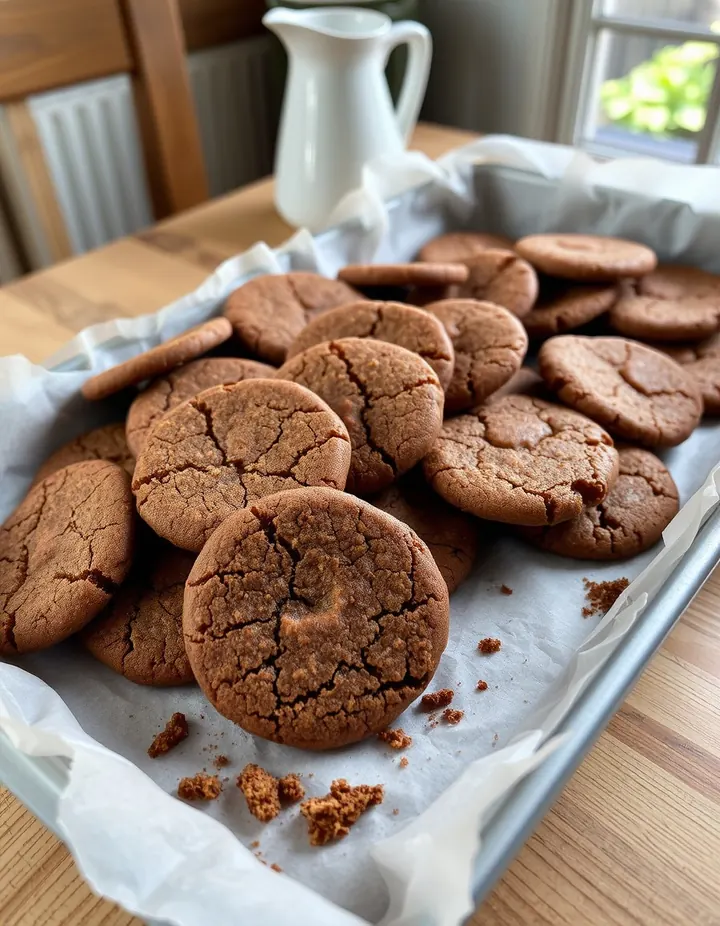 Ginger Cookies213 recipes
 Lemon Ice147 recipes
 Lemon Sherbet103 recipes
The free Flavor Lab newsletter: one surprising pairing a week and the molecular reason it works, in 60 seconds. No spam, unsubscribe anytime.
Prefer an account? Create a free account to save pairings and unlock the full chemistry.