Why it works: Lemon and spinach match in chemistry and in kitchens. They rank in the top 6% of all ingredient pairs, and cooks put them together in 1,109 recipes. Both carry 1-octen-3-ol, which smells mushroom, earthy. The science ↓
Marbled Jelly
Ingredients
Directions
Prepare the jelly
Coat a mold with a thin layer of cool jelly.
Set aside 3 or 4 tablespoons of jelly.
Divide the remaining jelly into 3 equal portions.
Color one portion green, one red, and leave the other plain.
Let the jelly firm up.
Assemble and set
Place rough pieces of the colored jelly into the mold, about the size of a large walnut.
Use a little cool jelly to set the pieces in place.
Chill in the refrigerator or a cool place until firm.
Turn out the jelly and serve.
Transcribed from a scanned cookbook and modernised for today's kitchens. Where the book gave no heat or time, or said "a moderate oven", the temperatures and times here may be modern equivalents rather than the book's own figures.
Explore the science
The flavor team
The pairs that carry this dish. Each one is judged two ways: how much their aromas overlap, and how often cooks already put them together.
-
Lemon + spinachtop 6% of all pairsSmell alikestrongCooked together1,109 recipes
Shared aroma: 1-octen-3-ol (mushroom, earthy).
Ranks compare each pair with 20,000 random ingredient pairs on CompKitchen. How we score pairs
What each ingredient does
- Lemon or wine jelly
- Forms the set gel that holds the marbled pieces in shape.
- Cochineal coloring
- Provides the red color that contrasts with the plain and green portions.
- Sap-green or spinach coloring
- Provides the green color that creates the marbled pattern.
The step that matters
Let the jelly firm up before placing the pieces. Jelly sets as it cools, and the coloured portions must be firm enough to hold their rough shape when placed. If they are still liquid or too soft, they will smear into the surrounding jelly and lose the marbled effect.
“What each ingredient does” and “The step that matters” were written by Claude from this recipe’s own method and reviewed in samples by CompKitchen.
You might also like
 Lemon Cake228 recipes
 Lemon Ice147 recipes
 Lemon Sherbet103 recipes
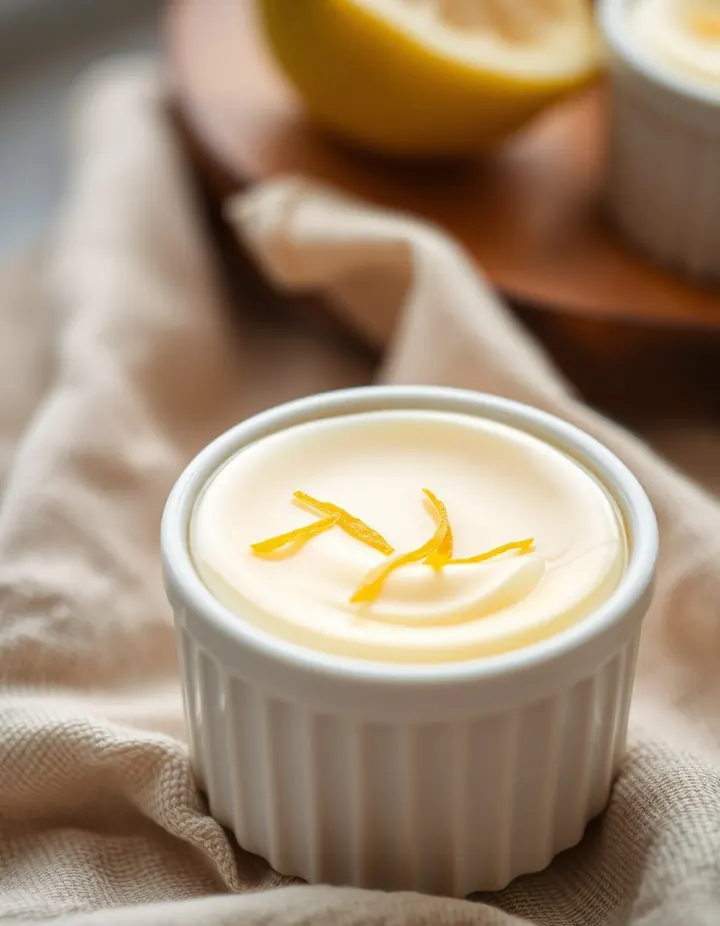 Lemon Custard64 recipes
The free Flavor Lab newsletter: one surprising pairing a week and the molecular reason it works, in 60 seconds. No spam, unsubscribe anytime.
Prefer an account? Create a free account to save pairings and unlock the full chemistry.