Why it works: Nutmeg and clove match in chemistry and in kitchens. They rank in the top 1% of all ingredient pairs, and cooks put them together in 8,686 recipes. Both carry estragole, which smells anise, licorice. The science ↓
Roast Turkey, a LA C
Ingredients
Directions
The book gives no cooking times; the times in the steps were added in transcription, so check for doneness rather than trusting the clock.
Prepare the stuffing
Cut the turkey into pieces the size of a small walnut.
Pound the parings with the fat ham or bacon and add to the turkey pieces.
Season with mignonette pepper, coarse sea salt, grated nutmeg, chopped bay leaf, thyme, and minced garlic.
Simmer the mixture gently in a stewpan over low heat for about 30 minutes, stirring occasionally.
Allow the mixture to cool slightly, then stuff it into the turkey, keeping the crop full.
Truss and rest
Use a small trussing needle and twine to secure the crop and fasten it to the back of the turkey.
Place the turkey on an earthen dish and refrigerate overnight if time permits.
Truss the turkey for roasting the next day.
Roast and serve
Cover the turkey breast with thin layers of fat bacon.
Wrap the entire turkey in thick, buttered paper and secure it to the spit with string.
Roast the turkey, being careful not to tear the crop when removing it from the spit.
Serve with a rich Perigueux sauce and garnish with large quenelles of fowl and truffles if desired.
Transcribed from a scanned cookbook and modernised for today's kitchens. Where the book gave no heat or time, or said "a moderate oven", the temperatures and times here may be modern equivalents rather than the book's own figures.
Explore the science
The flavor team
The pairs that carry this dish. Each one is judged two ways: how much their aromas overlap, and how often cooks already put them together.
-
Nutmeg + clovetop 1% of all pairsSmell alikestrongCooked together8,686 recipes
Shared aroma: estragole (anise, licorice).
-
Thyme + clovetop 2% of all pairsSmell alikestrongCooked together4,108 recipes
Shared aroma: cuminaldehyde (Spicy, cumin).
-
Nutmeg + thymetop 3% of all pairsSmell alikestrongCooked together1,907 recipes
Shared aroma: beta-phellandrene (minty, terpene).
-
Pepper + thymetop 4% of all pairsSmell alikemoderateCooked together11,585 recipes
Shared aroma: beta-phellandrene (minty, terpene).
-
Thyme + garlictop 4% of all pairsSmell alikestrongCooked together5,608 recipes
Shared aroma: beta-phellandrene (minty, terpene).
Ranks compare each pair with 20,000 random ingredient pairs on CompKitchen. How we score pairs
What each ingredient does
- Turkey
- Forms the main body of the dish, cooked as both stuffing and roast.
- Fat ham or bacon
- Adds fat and moisture, keeping the lean stuffing and breast from drying out.
- Garlic
- Adds pungent aroma that deepens the savoury flavour of the stuffing.
- Bay leaf
- Adds a subtle herbal aroma to the seasoned stuffing.
- Thyme
- Adds a savoury herbal aroma that complements the meat and fat.
The step that matters
Removing the turkey from the spit. The crop is held closed only by the trussing and the cooked stuffing inside, so tearing the crop during removal lets the stuffing spill and dries the bird.
Swap the garlic
How well each one fits the dish's main ingredients (turkey, ham, pepper, nutmeg, thyme, clove, liver):
- Marjoramfits better
- Allspicefits better
- Sagefits better
- Garlicthe original
Fit is the average pairing score against turkey, ham, pepper, nutmeg, thyme, clove, liver. Candidates are from the same food group and used in at least 100 recipes.
“What each ingredient does” and “The step that matters” were written by Claude from this recipe’s own method and reviewed in samples by CompKitchen.
You might also like
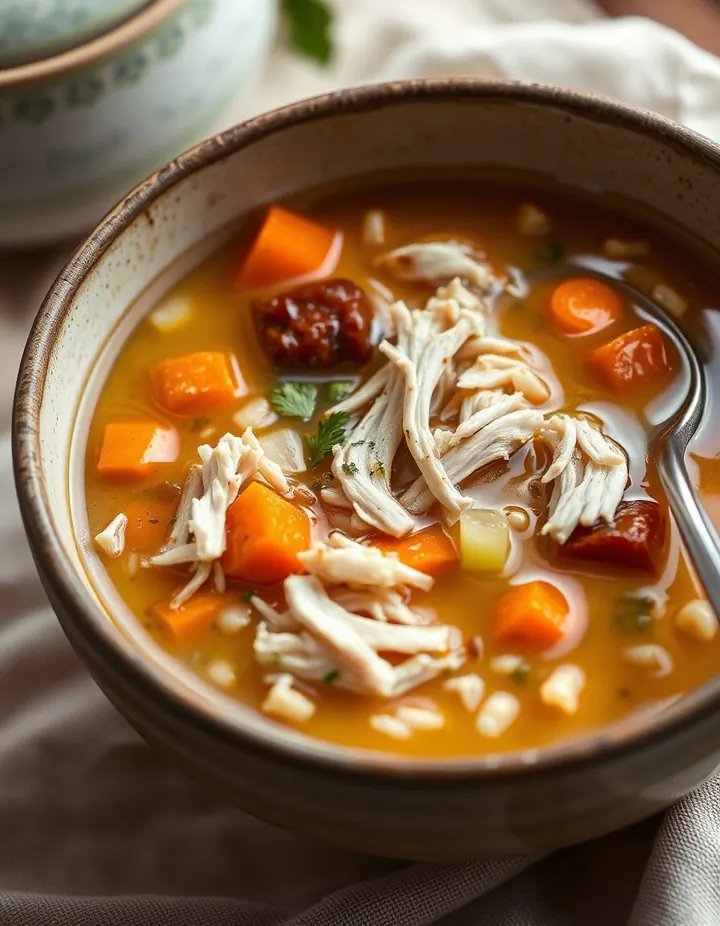 Turkey Soup71 recipes
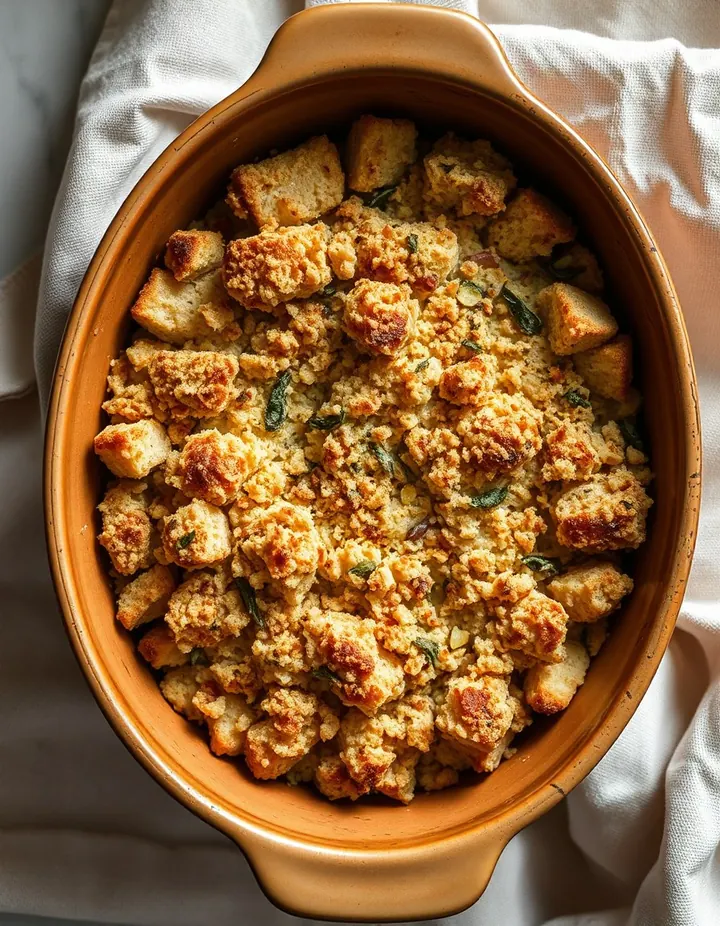 Turkey Stuffing26 recipes
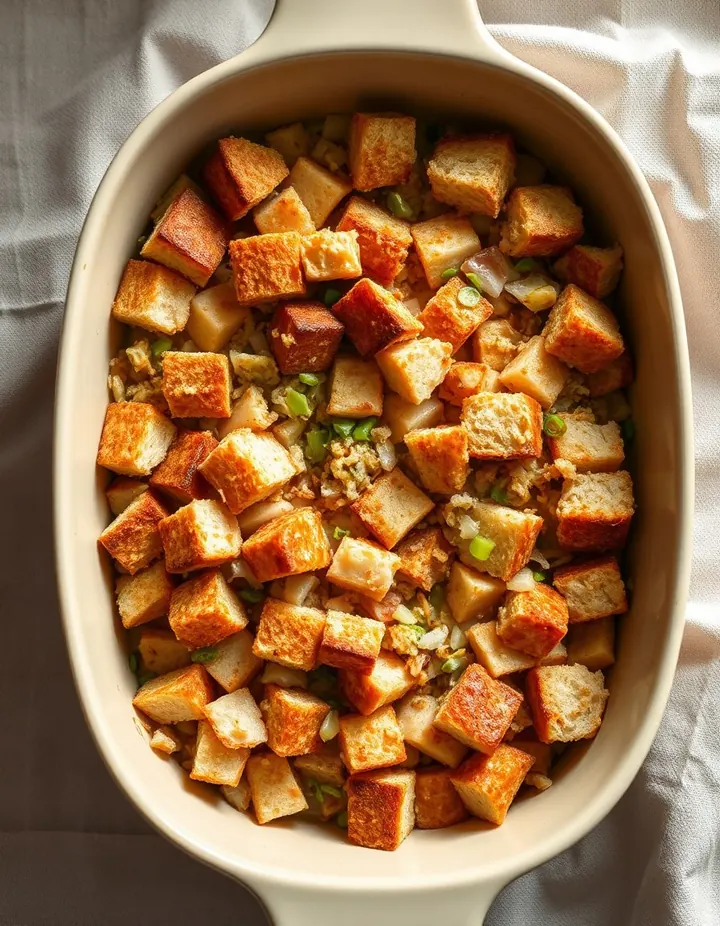 Turkey Dressing24 recipes
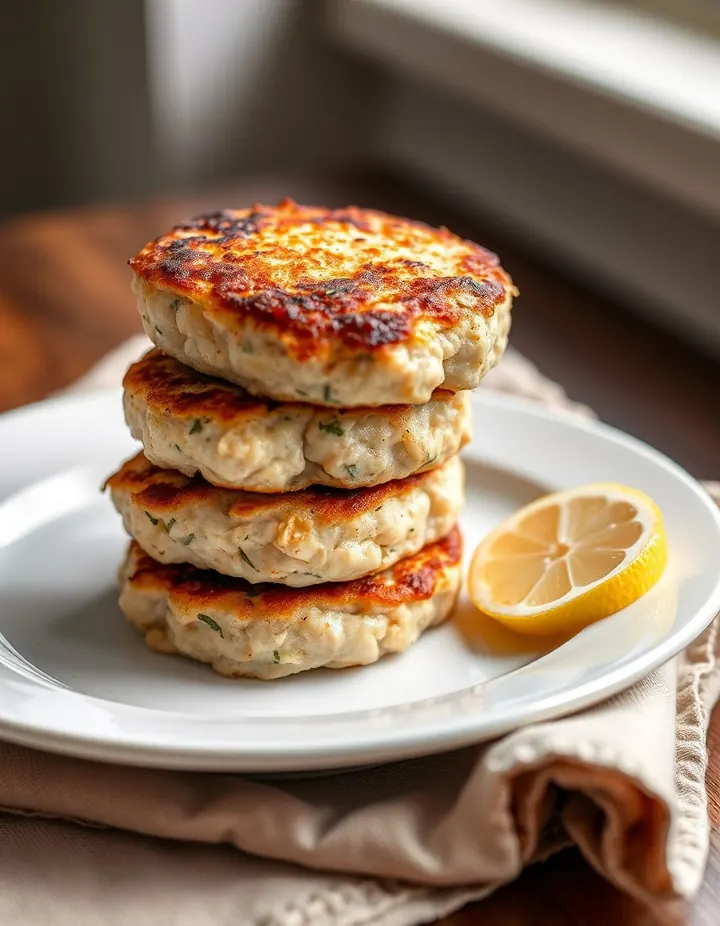 Turkey Patties12 recipes
The free Flavor Lab newsletter: one surprising pairing a week and the molecular reason it works, in 60 seconds. No spam, unsubscribe anytime.
Prefer an account? Create a free account to save pairings and unlock the full chemistry.