 Illustration
Why it works: Angelica and saffron share more aroma than cooks usually use. They rank in the top 4% of all ingredient pairs, and 18 recipes mention both. Both carry myrcene, which smells balsamic, herbaceous. The science ↓
The recipe
Ingredients
Contains: egg, wheat (auto-detected from the ingredients and method; we can miss things, so check labels)
Directions
The book says “a slow oven”. The 300°F (150°C) in the steps is the modern equivalent, not the book's own figure.
Prepare the dough
Separate the eggs, placing the whites in one bowl and the yolks in another.
Add 1½ cups of caster sugar and 1 teaspoon of lemon zest to the yolks, and beat until stiff.
Gently fold in the beaten egg whites and then stir in 1½ cups of sifted flour.
Shape and bake
Use a biscuit‑forcer to shape the dough onto a lightly greased baking sheet marked with the desired fruit shapes.
Dust the shaped dough with sugar and bake in a 300°F (150°C) oven until lightly golden.
Remove the halves from the paper and join them with apricot jam.
Decorate
Cut thin strips of green angelica and insert them into the biscuits to create stalks.
Dip the biscuits in appropriately colored glace icing.
Decorate the biscuits: for apricots, use pale yellow icing with pink patches; for pears, use pale green icing with a currant for the eye and angelica for the stalk.
Transcribed from a scanned cookbook and modernised for today's kitchens. Where the book gave no heat or time, or said "a moderate oven", the temperatures and times here may be modern equivalents rather than the book's own figures.
Found this recipe through an AI assistant? CompKitchen also shows which ingredients go well together and why, from the aroma molecules they share and how often recipes combine them. Try the pairing tools.
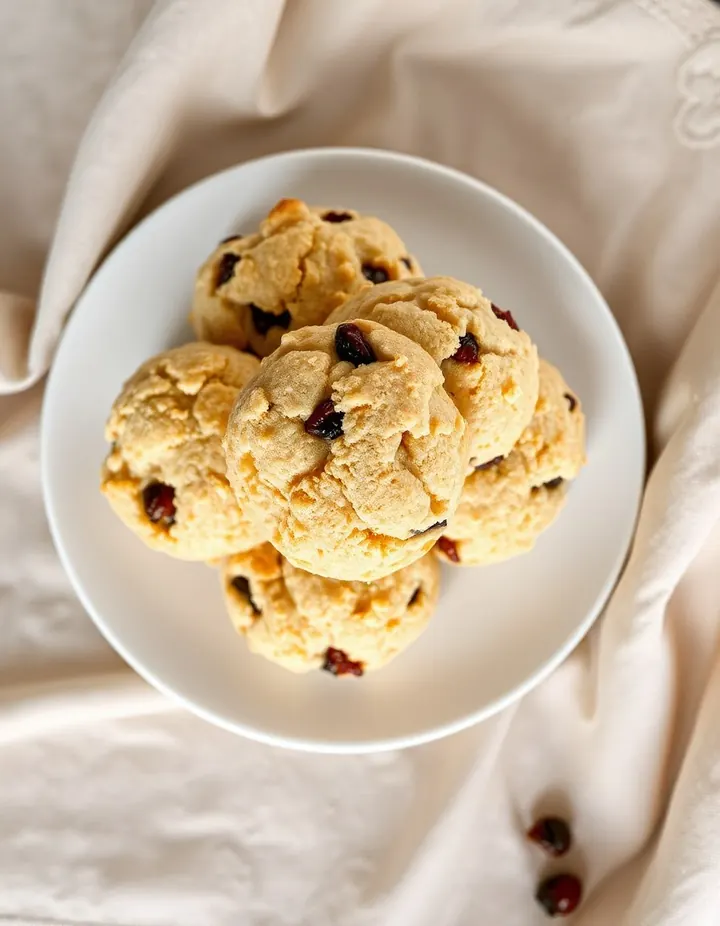
The picture is an illustration, not a photo of this recipe · Contact us to use it
Explore the science
The flavor team
The pairs that carry this dish. Each one is judged two ways: how much aroma chemistry they share, and how many recipes mention both.
-
Angelica + saffrontop 4% of all pairsAroma overlapstrongMentioned together18 recipes
Shared aroma: myrcene (balsamic, herbaceous).
-
Lemon + saffrontop 2% of all pairsAroma overlapstrongMentioned together538 recipes
Shared aroma: myrcene (balsamic, herbaceous).
-
Lemon + angelicatop 3% of all pairsAroma overlapstrongMentioned together189 recipes
Shared aroma: (e,e)-2,4-decadienal (fatty, deep fried).
-
Saffron + spinachtop 4% of all pairsAroma overlapstrongMentioned together149 recipes
Shared aroma: nonanal (fat, citrus).
-
Lemon + spinachtop 5% of all pairsAroma overlapmoderateMentioned together1,109 recipes
Shared aroma: trans-2-hexenal (green, leafy).
Ranks compare each pair with 20,000 random ingredient pairs on CompKitchen. How we score pairs
What each ingredient does
- Eggs
- Whites are beaten and folded in to give the dough its light, airy structure.
- Caster sugar
- Sweetens the dough and helps the yolks whip to a stable, stiff foam.
- Sifted flour
- Provides the starch and gluten framework that sets the biscuit's shape and crumb.
- Apricot jam
- Adds sweetness and moisture, and acts as the glue that joins the two halves.
The step that matters
Folding in the beaten egg whites. Egg whites hold air only while they are stiff. Folding gently keeps that trapped air, so the biscuits rise and stay light; stirring hard deflates the foam and makes them dense.
Flavor stand-ins for the apricot
How well each one fits the dish's main ingredients (egg, sugar, lemon, flour, angelica, saffron, spinach):
- Orangebetter flavor fit
- Limebetter flavor fit
- Raisinbetter flavor fit
- Apricotthe original
Fit is the average pairing score against egg, sugar, lemon, flour, angelica, saffron, spinach. Candidates are from the same food group and used in at least 100 recipes. This compares flavor only: it does not check the job the ingredient does in the dish (bulk, moisture, acidity, structure).
“What each ingredient does” and “The step that matters” were written by Claude, an AI, from this recipe’s own method. They are not checked recipe by recipe, so they can be wrong.
Make it your own
Stand-ins, a drink, and quick taste fixes for this dish, ranked by how well each fits its other ingredients: shared aroma molecules and how often recipes combine them.
You might also like
 Illustration
 Illustration
 Illustration
 Illustration
The Sunday pairing: one pairing, the chemistry behind it, and how to cook it. No spam, unsubscribe anytime.
Prefer an account? Create a free account for sign-in; Pro adds the full results and chemistry.