Why it works: Lemon and saffron match in chemistry and in kitchens. They rank in the top 1% of all ingredient pairs, and cooks put them together in 538 recipes. Both carry eucalyptol, which smells eucalyptus, herbal. The science ↓
Lemon Pickle
Ingredients
Directions
The book says “a slow oven”. The 300°F (150°C) in the steps is the modern equivalent, not the book's own figure.
Prepare the lemons
Cut each lemon into four parts without cutting through the rind.
Fill the incisions with salt.
Let them sit for a week.
Rinse the lemons to remove excess salt.
Stew and pickle
Place the lemons in a jar.
Cover the lemons with good vinegar, adding saffron, mace, and a clove.
Cover the jar.
Stew the lemons in a 300°F (150°C) oven for about 3 hours until tender.
Remove the lemons.
Add fresh vinegar to the jar.
Boil white peppercorns and cayenne in the vinegar.
Cut the lemons into 8 pieces.
Pour the vinegar mixture over the lemons.
Seal the jar.
Transcribed from a scanned cookbook and modernised for today's kitchens. Where the book gave no heat or time, or said "a moderate oven", the temperatures and times here may be modern equivalents rather than the book's own figures.
Explore the science
The flavor team
The pairs that carry this dish. Each one is judged two ways: how much their aromas overlap, and how often cooks already put them together.
-
Lemon + saffrontop 1% of all pairsSmell alikestrongCooked together538 recipes
Shared aroma: eucalyptol (eucalyptus, herbal).
-
Saffron + clovetop 5% of all pairsSmell alikestrongCooked together455 recipes
Shared aroma: estragole (anise, licorice).
-
Mace + clovetop 6% of all pairsSmell alikelowCooked together8,400 recipes
Shared aroma: methyleugenol (clove, spice).
-
Lemon + clovetop 10% of all pairsSmell alikestrongCooked together8,150 recipes
Shared aroma: eucalyptol (eucalyptus, herbal).
-
Vinegar + clovetop 15% of all pairsSmell alikemoderateCooked together10,386 recipes
Shared aroma: isobutyraldehyde (malty, green).
Ranks compare each pair with 20,000 random ingredient pairs on CompKitchen. How we score pairs
What each ingredient does
- Lemons
- Their rind and pulp soften during stewing and make up the body of the pickle.
- Salt
- Draws out moisture and firms the lemons while they cure.
- Good vinegar
- Acidity preserves the lemons and carries the flavour of the spices.
- White peppercorns
- Boiled in the vinegar to give a sharp, warm pungency to the pickle.
- Cayenne
- Adds heat to the vinegar, giving the pickle a spicy finish.
The step that matters
Rinsing after the salt cure. Rinsing removes excess surface salt so the pickle is not overly salty. Salt drawn into the lemons is what firms and preserves them, so the rinse should remove only the surface excess.
Swap the mace
How well each one fits the dish's main ingredients (lemon, vinegar, saffron, clove):
- Cardamomfits better
- Tarragonfits better
- Allspicefits better
- Macethe original
Fit is the average pairing score against lemon, vinegar, saffron, clove. Candidates are from the same food group and used in at least 100 recipes.
“What each ingredient does” and “The step that matters” were written by Claude from this recipe’s own method and reviewed in samples by CompKitchen.
You might also like
 Lemon Cake228 recipes
 Lemon Ice147 recipes
 Lemon Sherbet103 recipes
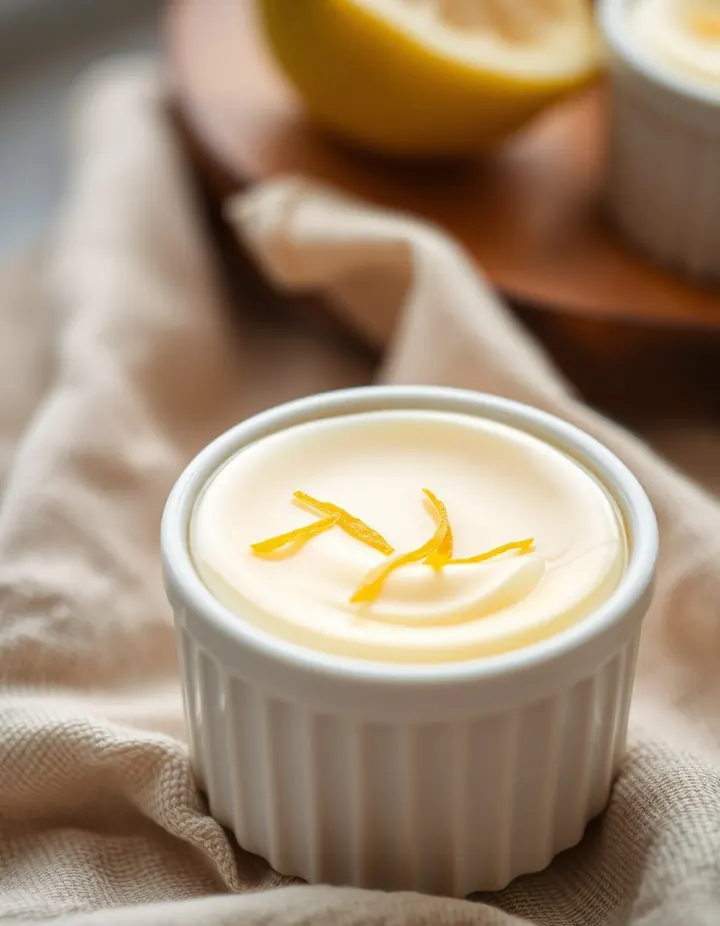 Lemon Custard64 recipes
The free Flavor Lab newsletter: one surprising pairing a week and the molecular reason it works, in 60 seconds. No spam, unsubscribe anytime.
Prefer an account? Create a free account to save pairings and unlock the full chemistry.