Why it works: Apple and white wine work together. They rank in the top 8% of all ingredient pairs, and cooks put them together in 372 recipes. Both carry 2-isobutyl-3-methoxypyrazine, which smells green bell pepper, earthy. The science ↓
Lemon Ob Orange Mince Pies
Ingredients
Directions
The book says “a quick oven”. The 400°F (200°C) in the steps is the modern equivalent, not the book's own figure.
Prepare the filling
Squeeze the juice from the lemon or Seville orange.
Boil the outer peel until soft enough to mash.
Chop the boiled peel and mix with apples, suet, sugar, currants, candied peel, and lemon juice.
If the mixture is too dry, add a little white wine.
Assemble and bake
Roll out the puff pastry to ½ inch thick and cut into rounds.
Place half of the rounds on a buttered baking tray.
Grease small tins and place them upside down in the center of the pastry rounds.
Press the pastry around the tins without cutting through.
Wet the edges with beaten egg yolk and place another round of pastry on top.
Alternatively, cut the pastry into squares, place the tins in the center, and cover with another square.
Brush the tops with egg wash.
Bake in a preheated oven at 400°F (200°C) for 20-25 minutes.
Transcribed from a scanned cookbook and modernised for today's kitchens. Where the book gave no heat or time, or said "a moderate oven", the temperatures and times here may be modern equivalents rather than the book's own figures.
Explore the science
The flavor team
The pairs that carry this dish. Each one is judged two ways: how much their aromas overlap, and how often cooks already put them together.
-
Apple + white winetop 8% of all pairsSmell alikemoderateCooked together372 recipes
Shared aroma: 2-isobutyl-3-methoxypyrazine (green bell pepper, earthy).
-
White wine + buttertop 9% of all pairsSmell alikemoderateCooked together5,083 recipes
Shared aroma: ethyl octanoate (fruity, wine).
-
Lemon + white winetop 11% of all pairsSmell alikemoderateCooked together3,832 recipes
Shared aroma: myrcene (balsamic, herbaceous).
-
Apple + curranttop 12% of all pairsSmell alikelowCooked together1,918 recipes
Shared aroma: isoamyl acetate (banana, pear).
-
Currant + white winetop 14% of all pairsSmell alikelowCooked together276 recipes
Shared aroma: ethyl cinnamate (sweet, balsamic).
Ranks compare each pair with 20,000 random ingredient pairs on CompKitchen. How we score pairs
What each ingredient does
- Apples
- Break down into the moist, soft body of the mincemeat filling.
- Suet
- Adds fat that keeps the filling rich and moist as it cooks.
- Sugar
- Sweetens the filling and helps preserve it.
- Currants
- Add chewy texture and concentrated sweetness to the filling.
- Rich puff pastry
- Forms the flaky, buttery crust that rises and browns in the oven.
- Lemon or seville orange juice
- Adds acidity that brightens the sweet, rich filling.
The step that matters
Press the pastry around the tins without cutting through. Thin spots or cuts let the filling leak and the pastry shell lose its shape. Even pressing keeps the walls sealed and the crust rising evenly in the oven.
Flavor stand-ins for the currant
How well each one fits the dish's main ingredients (lemon, apple, sugar, white wine, butter):
- Pearbetter flavor fit
- Blackberrybetter flavor fit
- Peachbetter flavor fit
- Currantthe original
Fit is the average pairing score against lemon, apple, sugar, white wine, butter. Candidates are from the same food group and used in at least 100 recipes. This compares flavor only: it does not check the job the ingredient does in the dish (bulk, moisture, acidity, structure).
“What each ingredient does” and “The step that matters” were written by Claude from this recipe’s own method and reviewed in samples by CompKitchen.
You might also like
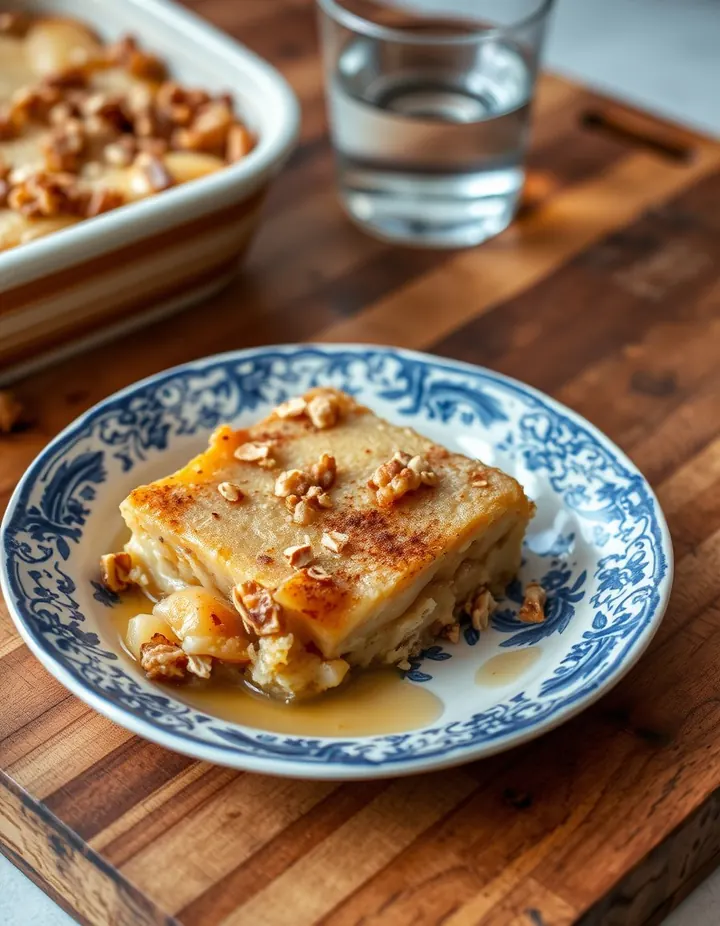 Apple Pudding256 recipes
 Lemon Cake228 recipes
 Lemon Ice147 recipes
 Lemon Sherbet103 recipes
The free Flavor Lab newsletter: one surprising pairing a week and the molecular reason it works, in 60 seconds. No spam, unsubscribe anytime.
Prefer an account? Create a free account for sign-in; Pro adds the full results and chemistry.