Why it works: Pepper and clove match in chemistry and in kitchens. They rank in the top 5% of all ingredient pairs, and cooks put them together in 17,451 recipes. Both carry ethyl octanoate, which smells fruity, wine. The science ↓
Oysters for Lunch
Ingredients
Directions
The book gives no oven temperature. The 400°F (200°C) in the steps was added when the recipe was transcribed, as a starting point.
Prepare the oysters
Wash the oysters in their own liquor and wipe them dry.
Strain the liquor and mix it with pepper, mace, salt, cloves, and vinegar.
Bring the mixture to a boil.
Drain the oysters.
Wrap and bake
Wrap each oyster with bacon and secure with a skewer.
Place the wrapped oysters on toast.
Cook the oysters in a 400°F (200°C) oven for a short time.
Make the pickled oysters
For pickled oysters, simmer the oysters in their juice until the edges curl.
Strain the juice and let it settle.
Pour off a quart of the juice.
Add white wine or vinegar, mace, cloves, and black pepper to the clear juice.
Heat the mixture without boiling.
Pour the mixture over the oysters in a jar.
Let the pickled oysters sit for two days before serving.
Transcribed from a scanned cookbook and modernised for today's kitchens. Where the book gave no heat or time, or said "a moderate oven", the temperatures and times here may be modern equivalents rather than the book's own figures.
Explore the science
The flavor team
The pairs that carry this dish. Each one is judged two ways: how much their aromas overlap, and how often cooks already put them together.
-
Pepper + clovetop 5% of all pairsSmell alikestrongCooked together17,451 recipes
Shared aroma: ethyl octanoate (fruity, wine).
-
Mace + clovetop 6% of all pairsSmell alikelowCooked together8,400 recipes
Shared aroma: methyleugenol (clove, spice).
-
Vinegar + white winetop 11% of all pairsSmell alikemoderateCooked together1,776 recipes
Shared aroma: beta-damascenone (apple, rose).
-
Vinegar + peppertop 14% of all pairsSmell alikemoderateCooked together27,814 recipes
Shared aroma: 4'-methylacetophenone (bitter almond).
-
Clove + white winetop 14% of all pairsSmell alikemoderateCooked together1,715 recipes
Shared aroma: ethyl cinnamate (sweet, balsamic).
Ranks compare each pair with 20,000 random ingredient pairs on CompKitchen. How we score pairs
What each ingredient does
- Oysters
- Form the main body of the dish, cooking gently to stay tender and juicy.
- Bacon
- Wraps each oyster, rendering fat and browning to add savory flavor and crispness.
- Vinegar
- Adds acidity that sharpens flavor and helps preserve the pickled oysters.
- White wine
- Adds acidity and mild fruity flavor to the pickling liquid.
- Cloves
- Contribute warm, aromatic flavor to the pickling liquid.
The step that matters
Simmer the oysters until the edges curl. Oysters overcooked past the point of curling become firm, shrink, and turn rubbery, so they should be heated only until the edges just curl.
Swap the mace
How well each one fits the dish's main ingredients (oyster, vinegar, pepper, clove, white wine):
- Allspicefits better
- Tarragonfits better
- Thymefits better
- Macethe original
Fit is the average pairing score against oyster, vinegar, pepper, clove, white wine. Candidates are from the same food group and used in at least 100 recipes.
“What each ingredient does” and “The step that matters” were written by Claude from this recipe’s own method and reviewed in samples by CompKitchen.
You might also like
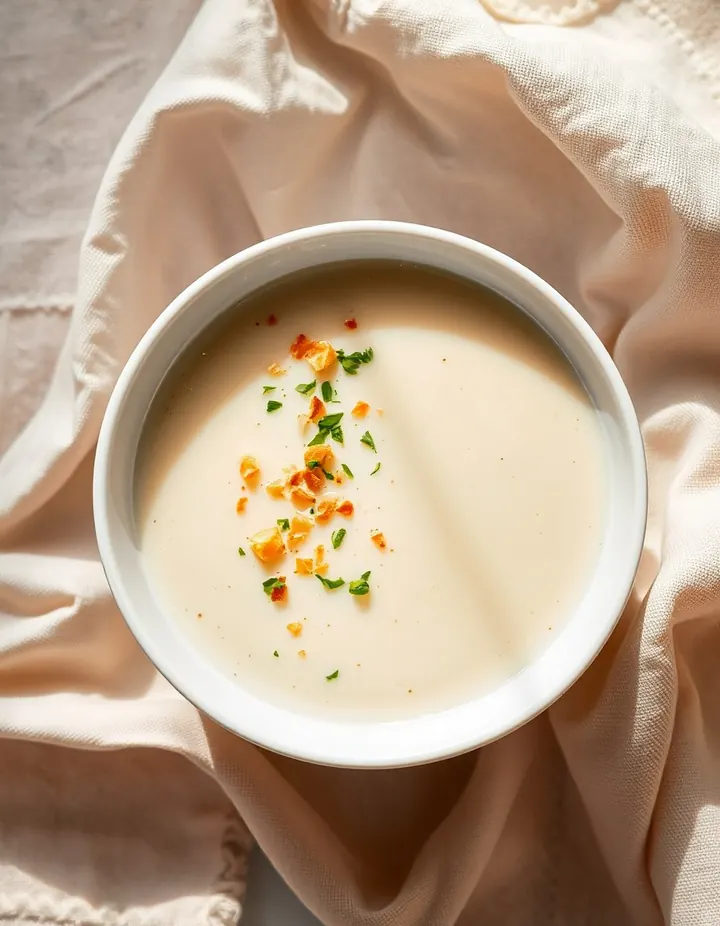 Mock Oyster Soup21 recipes
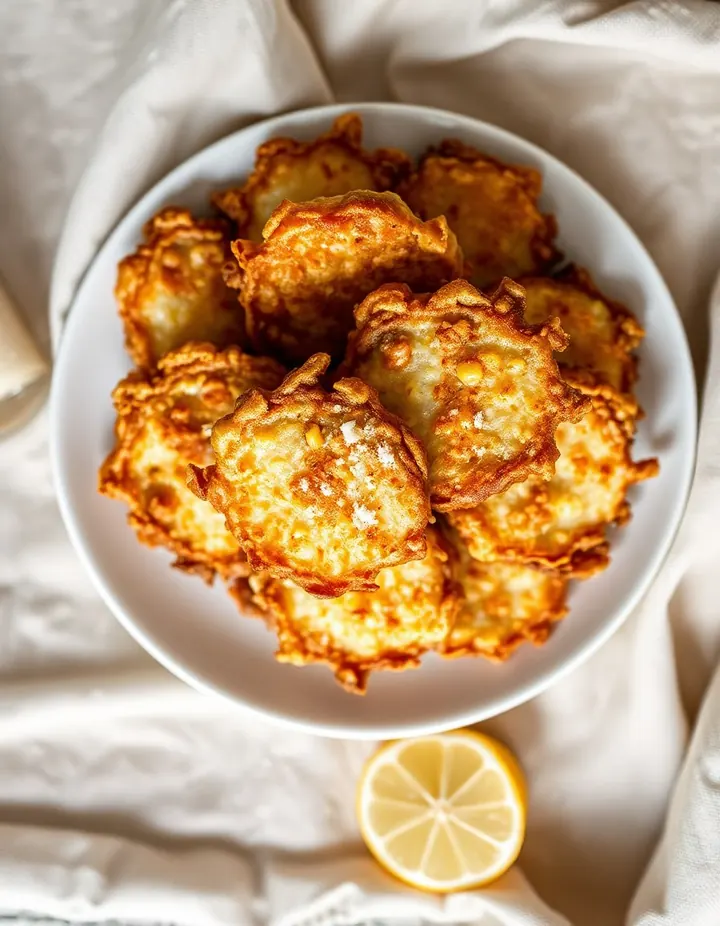 Corn Fritters6 recipes
 Tomato Soup526 recipes
 Brown Bread461 recipes
The free Flavor Lab newsletter: one surprising pairing a week and the molecular reason it works, in 60 seconds. No spam, unsubscribe anytime.
Prefer an account? Create a free account to save pairings and unlock the full chemistry.