Why it works: Oyster and anchovy match in chemistry and in kitchens. They rank in the top 4% of all ingredient pairs, and 601 recipes mention both. Both carry 1-octen-3-ol, which smells mushroom, earthy. The science ↓
The recipe
Ingredients
Contains: egg, milk, wheat, fish, shellfish (auto-detected from the ingredients and method; we can miss things, so check labels)
Directions
Prepare the oysters
Choose plump, juicy oysters and do not remove them from their shells until ready to cook.
Save the oyster liquor, then strain it.
Place the strained liquor in a stew pan with the oysters and bring the mixture to a boil.
Remove the mixture from heat and strain it into a basin.
Wash the stew pan with hot water.
Make the sauce
Return the strained liquor to the stew pan and add an equal amount of milk.
Rub 2½ ounces of butter with 1 tablespoon of flour in a separate bowl, then add it to the stew pan.
Bring the mixture to a boil and strain it again.
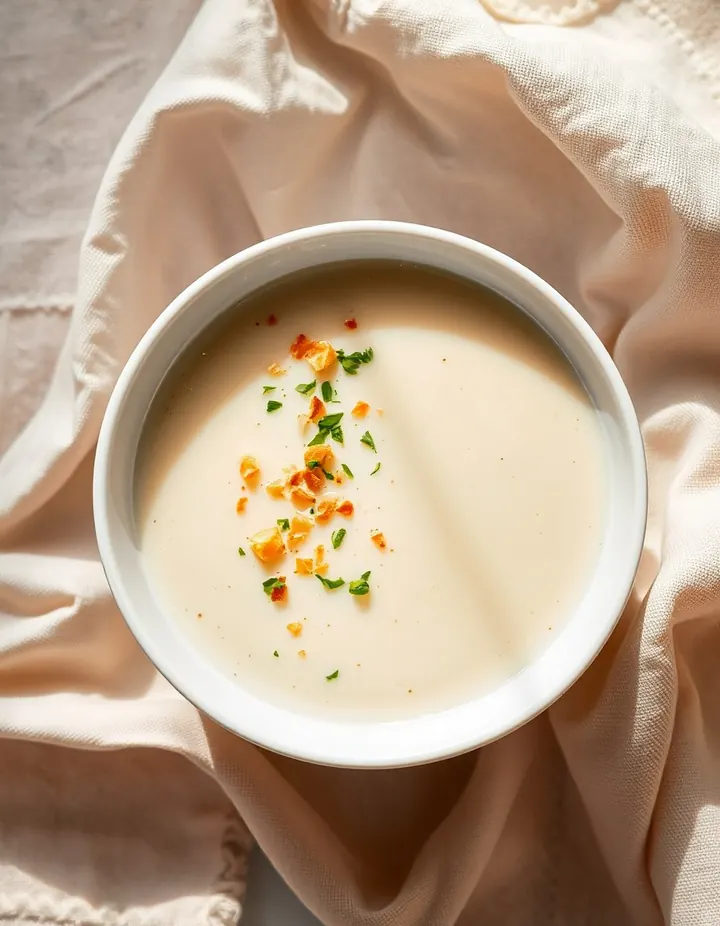
Shave the oysters and add only the soft parts to the sauce.
Keep the sauce warm by the fire.
If the sauce is too thick, add melted butter, cream, or milk mixed with an egg yolk.
Finish the sauce
Pound the soft parts of a few raw oysters, then strain the pounded oyster parts.
Stir the strained oyster parts into the sauce.
Cook to a safe temperature. This method doesn't say how hot the inside should get. Check with a food thermometer in the thickest part:
- Shellfish: shrimp, lobster and scallops until pearly and opaque; clams, mussels and oysters until the shells open (throw away any that stay shut).
Figures from the USDA's safe minimum internal temperatures.
Transcribed from a scanned cookbook and modernised for today's kitchens. Where the book gave no heat or time, or said "a moderate oven", the temperatures and times here may be modern equivalents rather than the book's own figures.
Found this recipe through an AI assistant? CompKitchen also shows which ingredients go well together and why, from the aroma molecules they share and how often recipes combine them. Try the pairing tools.
Explore the science
The flavor team
The pairs that carry this dish. Each one is judged two ways: how much aroma chemistry they share, and how many recipes mention both.
-
Oyster + anchovytop 4% of all pairsAroma overlapstrongMentioned together601 recipes
Shared aroma: 1-octen-3-ol (mushroom, earthy).
-
Butter + milktop 3% of all pairsAroma overlapstrongMentioned together81,222 recipes
Shared aroma: (z)-4-heptenal (biscuit, cream).
-
Butter + creamtop 3% of all pairsAroma overlapstrongMentioned together41,494 recipes
Shared aroma: delta-dodecalactone (sweet, creamy).
-
Oyster + buttertop 5% of all pairsAroma overlapstrongMentioned together8,175 recipes
Shared aroma: 2,6-nonadienal (cucumber, green).
-
Butter + anchovytop 6% of all pairsAroma overlapmoderateMentioned together3,672 recipes
Shared aroma: linalool (floral, citrus).
Ranks compare each pair with 20,000 random ingredient pairs on CompKitchen. How we score pairs
What each ingredient does
- Oysters
- Provide the main flavour and, once puréed, body to the sauce.
- Butter
- Enriches the sauce and adds richness and a smooth mouthfeel.
- Flour
- Thickens the sauce when rubbed with butter and cooked into the liquid.
- Milk
- Dilutes the oyster liquor and adds creaminess to the sauce.
- Lemon juice or vinegar
- Adds acidity that brightens the flavour of the sauce.
The step that matters
Adding the flour and butter mixture. Flour must be cooked in the hot liquid to thicken smoothly; adding it unevenly or without boiling can leave lumps or a raw floury taste.
Flavor stand-ins for the lemon
How well each one fits the dish's main ingredients (oyster, butter, milk, flour, cream, anchovy):
- Vanillaabout as good a flavor fit
- Lemonthe original
- Strawberryabout as good a flavor fit
- Peachabout as good a flavor fit
Fit is the average pairing score against oyster, butter, milk, flour, cream, anchovy. Candidates are from the same food group and used in at least 100 recipes. This compares flavor only: it does not check the job the ingredient does in the dish (bulk, moisture, acidity, structure).
“What each ingredient does” and “The step that matters” were written by Claude, an AI, from this recipe’s own method. They are not checked recipe by recipe, so they can be wrong.
Make it your own
Stand-ins, a drink, and quick taste fixes for this dish, ranked by how well each fits its other ingredients: shared aroma molecules and how often recipes combine them.
More oyster sauce recipes
You might also like
 Illustration
 Illustration
 Illustration
 Illustration
The Sunday pairing: one pairing, the chemistry behind it, and how to cook it. No spam, unsubscribe anytime.
Prefer an account? Create a free account for sign-in; Pro adds the full results and chemistry.