Why it works: Butter and flour are a kitchen classic. They rank in the top 12% of all ingredient pairs, and cooks put them together in 124,287 recipes. Both carry isobutyraldehyde, which smells malty, green. The science ↓
Puff Paste
Ingredients
Directions
Prepare
Choose a cool area in the kitchen to make the pastry.
Wash your hands in hot water to cool them before starting.
If no refrigerator is available, prepare a basin of ice in a cool part of the larder.
Make the dough
Mix the flour with a pinch of salt on a board.
Add a few drops of lemon juice and cold water to form a smooth paste, not too stiff.
Knead the paste until it is workable, then let it rest for about five minutes.
Squeeze the butter in a cloth to remove all liquid; it should be very cold.
Laminate
Shape the butter into a square and roll the paste out until it is thin.
Fold the paste over the butter in thirds, then roll it out again.
Repeat the rolling and folding process, ensuring to use flour as needed to prevent sticking.
Transcribed from a scanned cookbook and modernised for today's kitchens. Where the book gave no heat or time, or said "a moderate oven", the temperatures and times here may be modern equivalents rather than the book's own figures.
Explore the science
The flavor team
The pairs that carry this dish. Each one is judged two ways: how much their aromas overlap, and how often cooks already put them together.
-
Butter + flourtop 12% of all pairsSmell alikelowCooked together124,287 recipes
Shared aroma: isobutyraldehyde (malty, green).
-
Butter + lemontop 16% of all pairsSmell alikemoderateCooked together41,227 recipes
Shared aroma: 3-hexenal (apple, fruity).
-
Flour + lemontop 17% of all pairsSmell alikemoderateCooked together30,404 recipes
Shared aroma: isobutyraldehyde (malty, green).
Butter and flour barely smell alike, yet cooks put them together in 124,287 recipes: they work on texture and structure more than aroma.
Ranks compare each pair with 20,000 random ingredient pairs on CompKitchen. How we score pairs
What each ingredient does
- Butter
- Cold solid layers of fat that separate sheets of dough, creating flaky layers as it melts in the oven.
- Vienna flour
- Forms the gluten network that gives the dough its structure and elasticity for rolling.
- Cold water
- Hydrates the flour to form the dough, and keeping it cold keeps the butter from softening.
- Lemon juice
- Adds a little acidity that can help relax gluten, making the dough easier to roll.
The step that matters
Keeping the butter very cold. If the butter softens and blends into the dough instead of staying in separate layers, the pastry loses its flaky rise. Chilling between rolls helps keep it firm.
Swap the lemon
How well each one fits the dish's main ingredients (butter, flour):
- Raisinfits better
- Vanillafits better
- Coconutfits better
- Lemonthe original
Fit is the average pairing score against butter, flour. Candidates are from the same food group and used in at least 100 recipes.
“What each ingredient does” and “The step that matters” were written by Claude from this recipe’s own method and reviewed in samples by CompKitchen.
More puff pastry recipes
You might also like
 Lemon Cake228 recipes
 Lemon Ice147 recipes
 Lemon Sherbet103 recipes
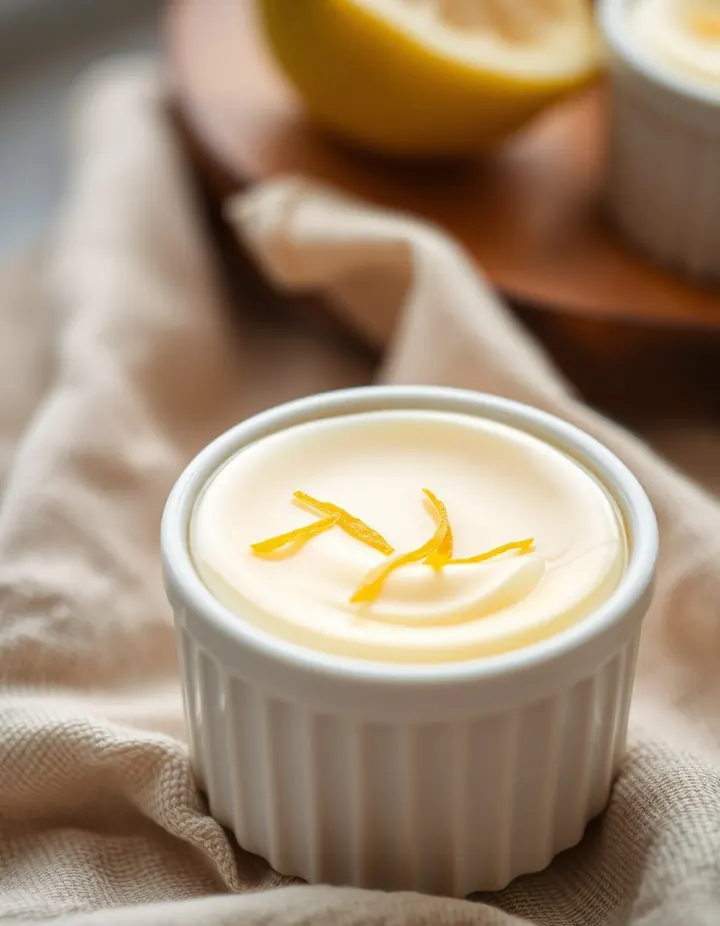 Lemon Custard64 recipes
The free Flavor Lab newsletter: one surprising pairing a week and the molecular reason it works, in 60 seconds. No spam, unsubscribe anytime.
Prefer an account? Create a free account to save pairings and unlock the full chemistry.