Why it works: Orange and lemon match in chemistry and in kitchens. They rank in the top 1% of all ingredient pairs, and cooks put them together in 10,634 recipes. Both carry 3-hexenal, which smells apple, fruity. The science ↓
Rum Cakes
Ingredients
Directions
The book says “a moderate oven”. The 350°F (175°C) in the steps is the modern equivalent, not the book's own figure.
Make the yeast dough
In a bowl, dissolve the yeast in warm milk.
Sift flour onto a board.
Take one third of the sifted flour and make a hollow in the center.
Mix the dissolved yeast into the hollow for one minute.
Cover the mixture and let it rise in a warm place until doubled in size.
In another hollow of the remaining flour, add sugar, eggs, and orange-flower water.
Knead the mixture, gradually incorporating the butter and prepared yeast-dough.
Mix for five minutes.
Let it rise again until doubled in size.
Shape and bake
Butter six round rum-cake molds.
Fill the molds three-quarters full with dough.
Let the molds rise until full.
Bake in a 350°F (175°C) oven for twenty minutes.
Once browned, unmold the cakes and place them on a wire rack.
Make the rum syrup and serve
In a saucepan, combine sugar, water, and sliced lemon.
Bring to a boil, then remove from heat.
Stir in rum.
Pour over the cakes before serving.
Transcribed from a scanned cookbook and modernised for today's kitchens. Where the book gave no heat or time, or said "a moderate oven", the temperatures and times here may be modern equivalents rather than the book's own figures.
Explore the science
The flavor team
The pairs that carry this dish. Each one is judged two ways: how much their aromas overlap, and how often cooks already put them together.
-
Orange + lemontop 1% of all pairsSmell alikestrongCooked together10,634 recipes
Shared aroma: 3-hexenal (apple, fruity).
-
Butter + milktop 7% of all pairsSmell alikemoderateCooked together81,283 recipes
Shared aroma: (z)-4-heptenal (biscuit, cream).
-
Butter + flourtop 12% of all pairsSmell alikelowCooked together124,287 recipes
Shared aroma: isobutyraldehyde (malty, green).
-
Milk + rumtop 12% of all pairsSmell alikemoderateCooked together967 recipes
Shared aroma: ethyl 2-methylbutyrate (fruity, apple).
-
Orange + rumtop 12% of all pairsSmell alikemoderateCooked together801 recipes
Shared aroma: beta-damascenone (apple, rose).
Butter and flour barely smell alike, yet cooks put them together in 124,287 recipes: they work on texture and structure more than aroma.
Ranks compare each pair with 20,000 random ingredient pairs on CompKitchen. How we score pairs
What each ingredient does
- Flour
- Forms the gluten network that gives the cakes their structure.
- Eggs
- Add richness, structure and moisture to the dough.
- Compressed yeast
- Produces gas that makes the dough rise and become light.
- Butter
- Adds fat for tenderness and a richer crumb.
- Warm milk
- Hydrates the flour and feeds the yeast to start fermentation.
- Sugar
- Adds sweetness and helps the crust brown.
The step that matters
Let the dough rise until doubled before baking. Yeast gas expansion creates the light, open crumb. Under-proofed dough stays dense, while over-proofed dough can collapse in the oven.
Swap the orange
How well each one fits the dish's main ingredients (egg, butter, flour, milk, sugar, lemon, rum):
- Vanillafits better
- Raisinfits better
- Figfits better
- Orangethe original
Fit is the average pairing score against egg, butter, flour, milk, sugar, lemon, rum. Candidates are from the same food group and used in at least 100 recipes.
“What each ingredient does” and “The step that matters” were written by Claude from this recipe’s own method and reviewed in samples by CompKitchen.
You might also like
 Orange Bundt Cake349 recipes
 Lemon Cake228 recipes
 Lemon Ice147 recipes
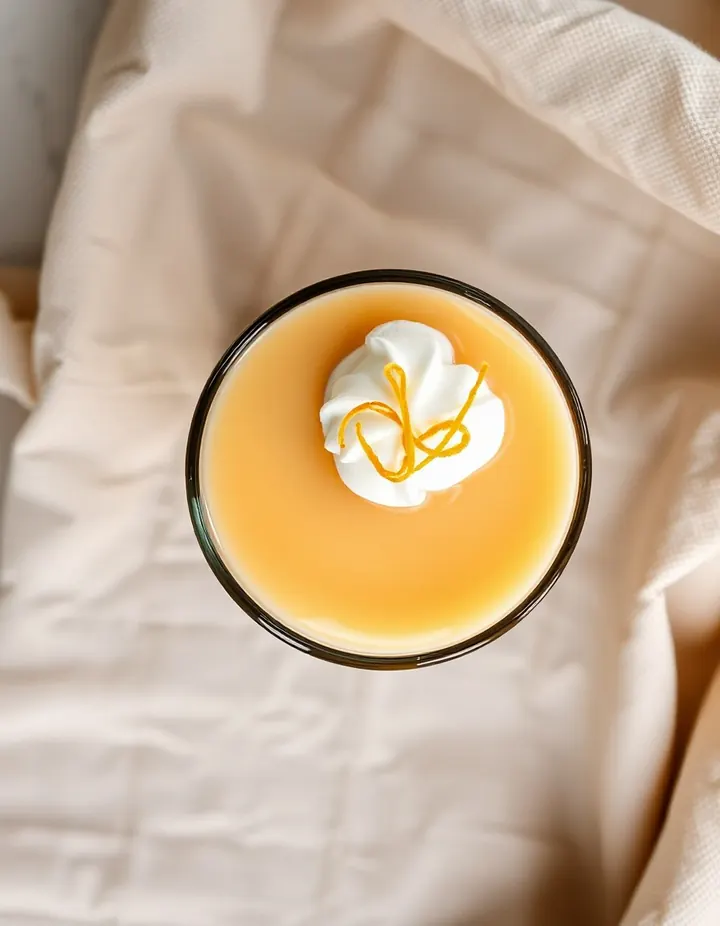 Orange Cream Rice Pudding121 recipes
The free Flavor Lab newsletter: one surprising pairing a week and the molecular reason it works, in 60 seconds. No spam, unsubscribe anytime.
Prefer an account? Create a free account to save pairings and unlock the full chemistry.