Why it works: Peach and vanilla match in chemistry and in kitchens. They rank in the top 1% of all ingredient pairs, and cooks put them together in 558 recipes. Both carry beta-damascenone, which smells apple, rose. The science ↓
Gateaux of Peaches
Ingredients
Directions
The book says “a slow oven”. The 300°F (150°C) in the steps is the modern equivalent, not the book's own figure.
Make the sponge
Combine eggs and sugar in a bowl.
Place the bowl over a pan of boiling water and whip until warm.
Remove from heat and continue whipping until the mixture is almost stiff.
Pass the peaches through a fine sieve.
Add 2 tablespoons of puree to the mixture along with cochineal, 1 teaspoon vanilla, and flour.
Gently fold in the flour mixture.
Prepare a plain mold by brushing it with melted butter, coating it with caster sugar, and dusting it with flour.
Pour the mixture into the mold and wrap a band of buttered paper around the outside.
Bake at 300°F (150°C) for about 30 minutes.
Assemble and ice
Remove from the mold and let cool.
Cut into 1-inch thick slices.
Spread the remaining peach puree thickly on the slices.
Stack the slices.
Prepare the icing.
For the icing, mix 6 ounces icing sugar with 2 tablespoons liquid from the peaches and a little vanilla until warm and liquid.
Pour the icing over the cake and quickly dust with finely chopped dried pistachios.
Serve as a cake or with the remaining peaches and a little whipped cream around the base.
Transcribed from a scanned cookbook and modernised for today's kitchens. Where the book gave no heat or time, or said "a moderate oven", the temperatures and times here may be modern equivalents rather than the book's own figures.
Explore the science
The flavor team
The pairs that carry this dish. Each one is judged two ways: how much their aromas overlap, and how often cooks already put them together.
-
Peach + vanillatop 1% of all pairsSmell alikestrongCooked together558 recipes
Shared aroma: beta-damascenone (apple, rose).
-
Pistachio + nutstop 1% of all pairsSmell alikestrongCooked together425 recipes
Shared aroma: alpha-pinene (pine, turpentine).
-
Pistachio + flourtop 7% of all pairsSmell alikestrongCooked together505 recipes
Shared aroma: isobutyraldehyde (malty, green).
-
Vanilla + pistachiotop 8% of all pairsSmell alikestrongCooked together407 recipes
Shared aroma: alpha-pinene (pine, turpentine).
-
Vanilla + nutstop 8% of all pairsSmell alikemoderateCooked together638 recipes
Shared aroma: alpha-pinene (pine, turpentine).
Ranks compare each pair with 20,000 random ingredient pairs on CompKitchen. How we score pairs
What each ingredient does
- Eggs
- Whipped with sugar to trap air, giving the cake its light, airy structure.
- Flour
- Sets during baking to give the cake its structure once the whipped eggs are folded in.
- Peaches
- Puree adds moisture and fruity flavour to the sponge and the filling.
- Butter
- Greases the mold so the cake releases cleanly and browns lightly at the edges.
- Sugar
- Sweetens the cake and helps stabilise the whipped eggs.
The step that matters
Whipping the eggs and sugar. Whipping over warm water and then off the heat builds a stable foam. Overwhipping or deflating it while folding in the flour makes the sponge dense and flat.
Swap the nuts
How well each one fits the dish's main ingredients (peach, vanilla, pistachio, egg, flour, sugar, butter):
- Almondfits better
- Chestnutfits better
- Hazelnutfits better
- Nutsthe original
Fit is the average pairing score against peach, vanilla, pistachio, egg, flour, sugar, butter. Candidates are from the same food group and used in at least 100 recipes.
“What each ingredient does” and “The step that matters” were written by Claude from this recipe’s own method and reviewed in samples by CompKitchen.
You might also like
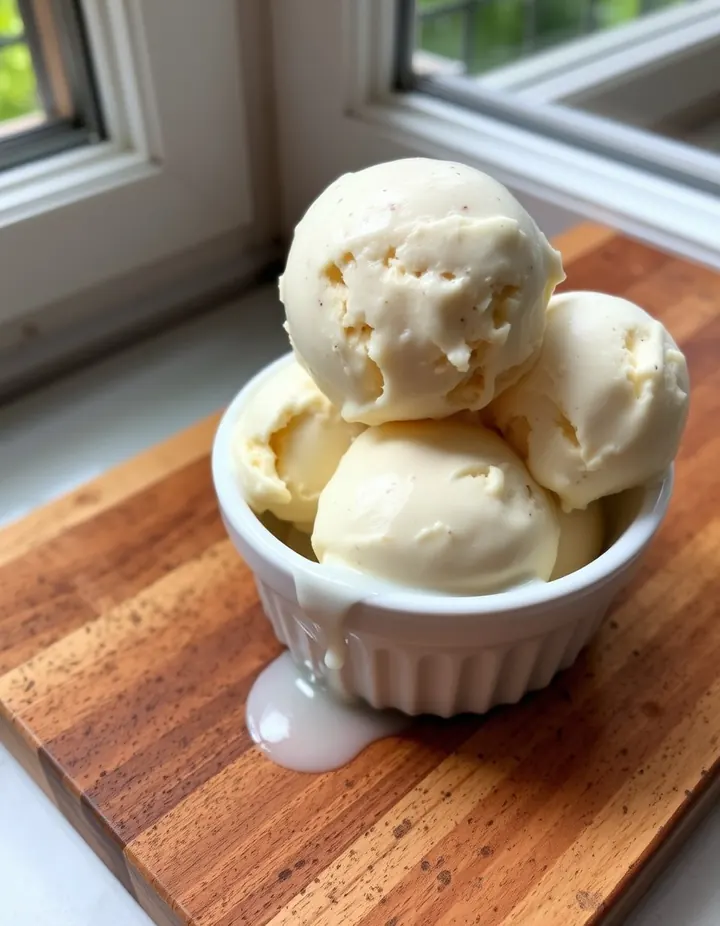 Vanilla Ice Cream108 recipes
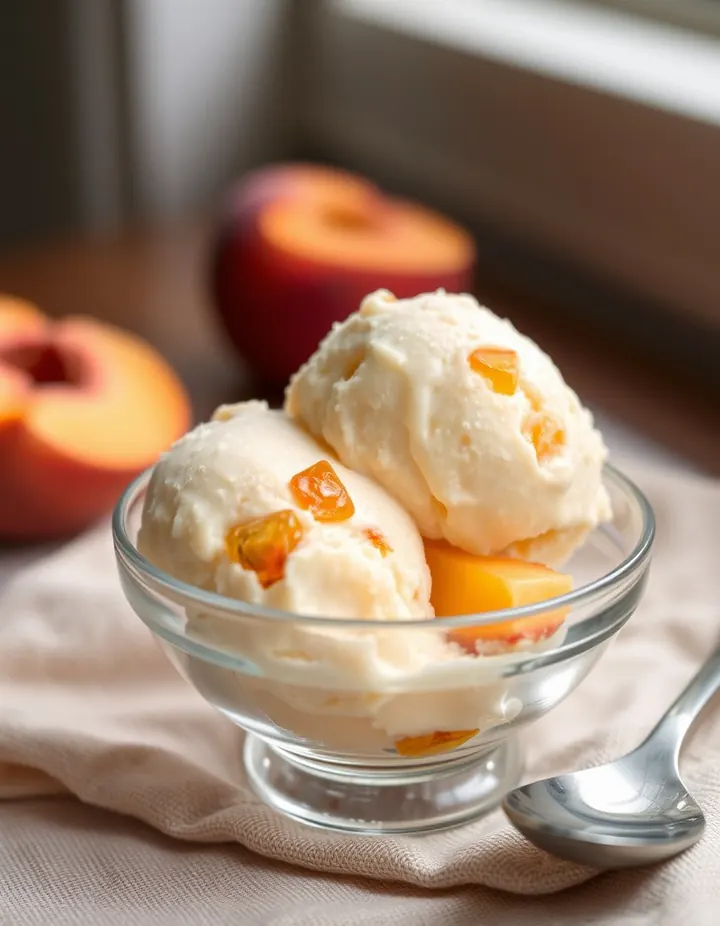 Peach Ice Cream64 recipes
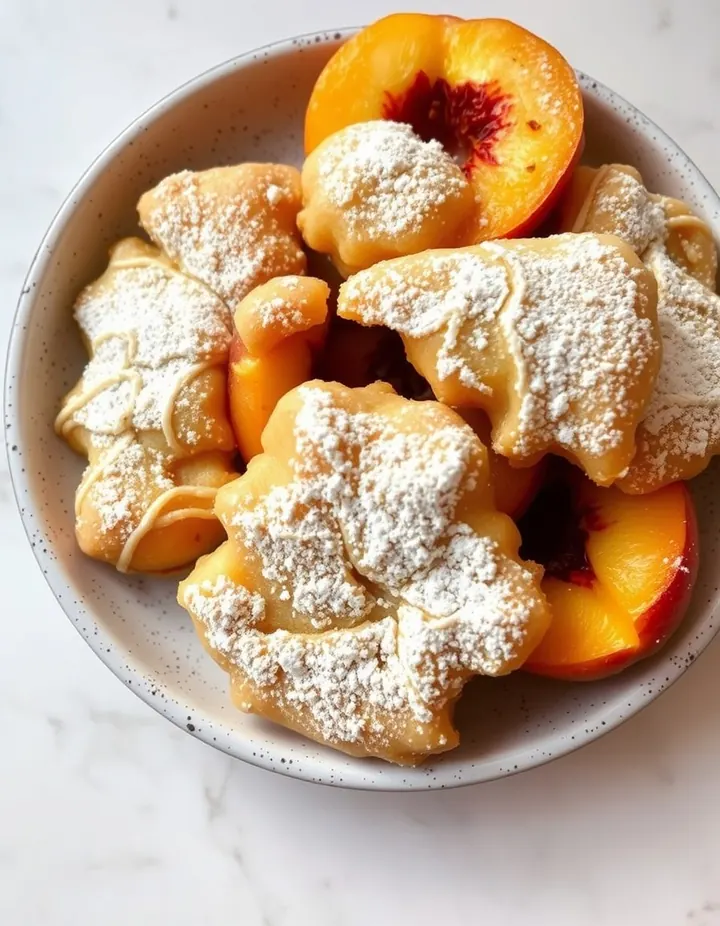 Peach Fritters55 recipes
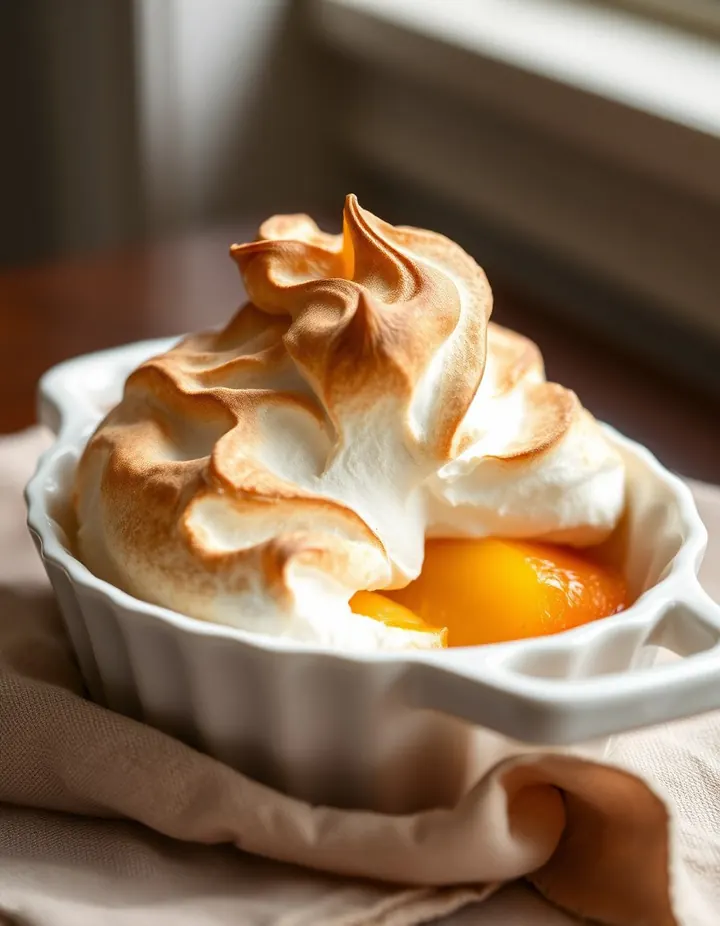 Peach Meringue40 recipes
The free Flavor Lab newsletter: one surprising pairing a week and the molecular reason it works, in 60 seconds. No spam, unsubscribe anytime.
Prefer an account? Create a free account to save pairings and unlock the full chemistry.