Why it works: Lemon and orange match in chemistry and in kitchens. They rank in the top 1% of all ingredient pairs, and cooks put them together in 10,634 recipes. Both carry 3-hexenal, which smells apple, fruity. The science ↓
A German Pudding
Ingredients
Directions
The book gives no oven temperature. The 350°F (175°C) in the steps was added when the recipe was transcribed, as a starting point.
Prepare the rice and apples
Boil the rice in milk with lemon peel until very tender, then drain.
Mash the apples to a pulp and mix with the rice, white wine, egg yolks, orange, and citron.
Sweeten the mixture to taste.
Bake the pudding
Line a mold with pastry and beat the egg whites to a strong froth.
Combine the frothy egg whites with the other ingredients and fill the mold.
Bake until golden brown at 350°F (175°C).
Make the boiled pudding and sauce
For the sauce, pour boiling milk over bread crumbs and let soak.
Beat the butter to a cream and mix in the egg yolks.
Drain the milk from the bread and add it along with pounded sugar and lemon peel.
Whip the egg whites into a solid froth and fold them in last.
Butter a cloth, place the pudding inside, and tie it loosely.
Boil in water for 1 hour.
For the sauce, boil cream, raisin wine, and sugar rubbed on lemon peel.
Add beaten egg yolks and lemon juice, mix well, and heat without boiling.
Serve some sauce over the pudding and the rest in a sauceboat.
Transcribed from a scanned cookbook and modernised for today's kitchens. Where the book gave no heat or time, or said "a moderate oven", the temperatures and times here may be modern equivalents rather than the book's own figures.
Explore the science
The flavor team
The pairs that carry this dish. Each one is judged two ways: how much their aromas overlap, and how often cooks already put them together.
-
Lemon + orangetop 1% of all pairsSmell alikestrongCooked together10,634 recipes
Shared aroma: 3-hexenal (apple, fruity).
-
Milk + buttertop 7% of all pairsSmell alikemoderateCooked together81,283 recipes
Shared aroma: (z)-4-heptenal (biscuit, cream).
-
Rice + milktop 7% of all pairsSmell alikemoderateCooked together7,374 recipes
Shared aroma: 2-nonenal (fatty, green).
-
Apple + orangetop 7% of all pairsSmell alikestrongCooked together2,230 recipes
Shared aroma: beta-damascenone (apple, rose).
-
Apple + white winetop 8% of all pairsSmell alikemoderateCooked together372 recipes
Shared aroma: 2-isobutyl-3-methoxypyrazine (green bell pepper, earthy).
Ranks compare each pair with 20,000 random ingredient pairs on CompKitchen. How we score pairs
What each ingredient does
- Eggs
- Egg whites whipped into froth add lift, and yolks add richness and set the custard.
- Apples
- Mashed apples add moisture, body and gentle tartness to the pudding.
- Bread crumbs
- Soaked in hot milk, they absorb liquid and give the pudding a soft, tender crumb.
- Butter
- Creamed butter adds fat for a rich, tender texture and flavour.
- Whole rice
- Cooked until very tender, it forms the starchy base that gives the pudding body.
- Sugar
- Sweetens the pudding and sauce and helps browning on the baked version.
The step that matters
Heat the sauce without boiling. Once the beaten egg yolks are added, boiling can curdle them and make the sauce grainy. Gentle heat thickens it smoothly.
Swap the apple
How well each one fits the dish's main ingredients (rice, milk, lemon, white wine, egg, orange, butter):
- Vanillafits about as well
- Blackberryfits about as well
- Figfits about as well
- Applethe original
Fit is the average pairing score against rice, milk, lemon, white wine, egg, orange, butter. Candidates are from the same food group and used in at least 100 recipes.
“What each ingredient does” and “The step that matters” were written by Claude from this recipe’s own method and reviewed in samples by CompKitchen.
You might also like
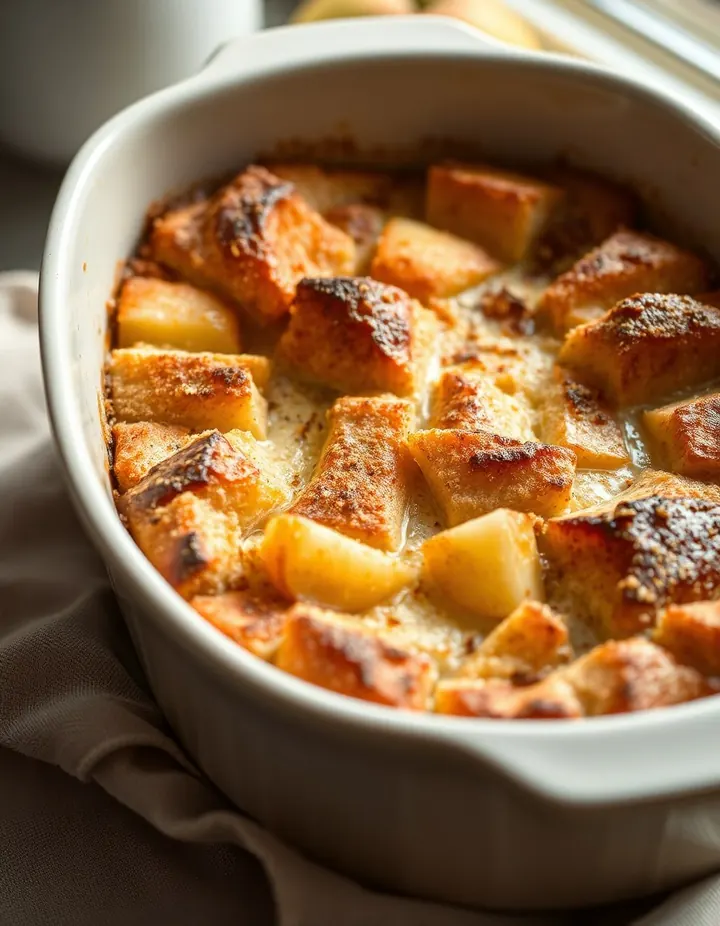 Apple Bread Pudding21 recipes
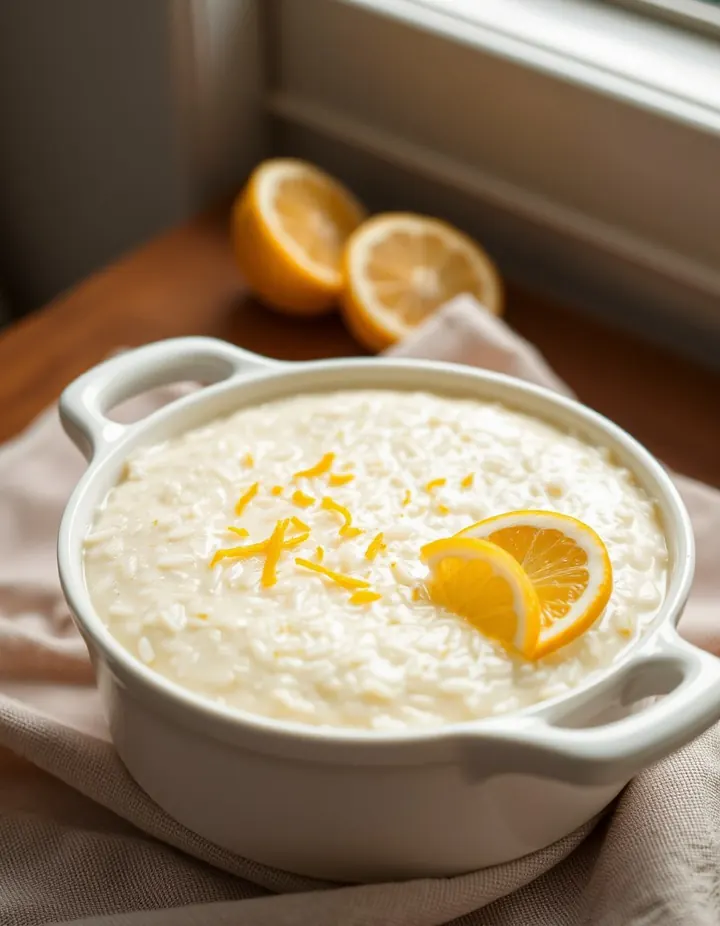 Lemon Rice Pudding19 recipes
 Orange Bundt Cake349 recipes
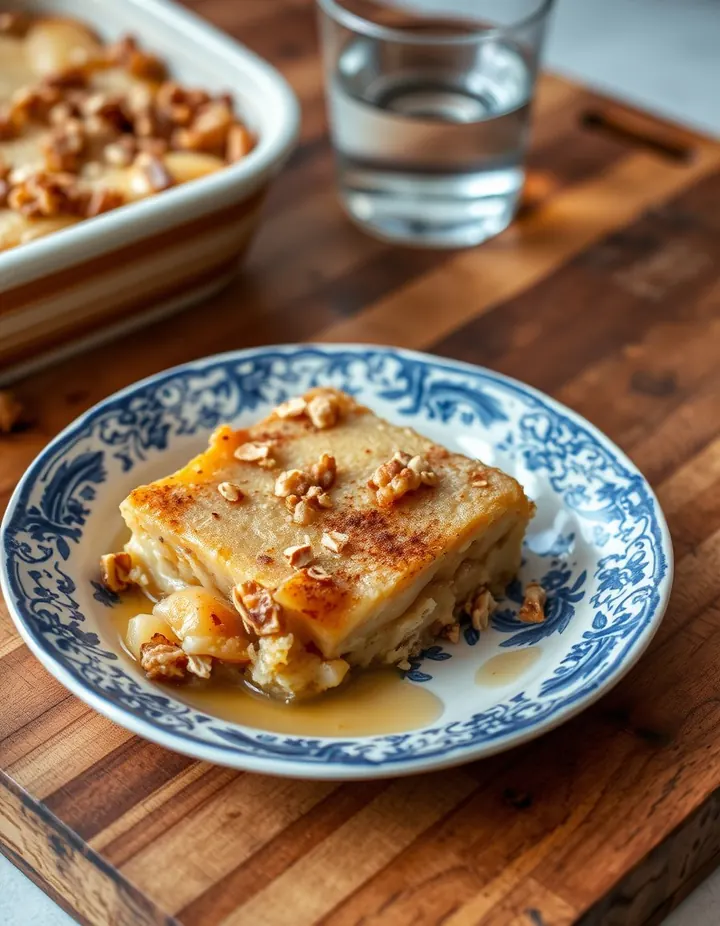 Apple Pudding256 recipes
The free Flavor Lab newsletter: one surprising pairing a week and the molecular reason it works, in 60 seconds. No spam, unsubscribe anytime.
Prefer an account? Create a free account to save pairings and unlock the full chemistry.