Why it works: Butter and flour are a kitchen classic. They rank in the top 12% of all ingredient pairs, and cooks put them together in 124,287 recipes. Both carry isobutyraldehyde, which smells malty, green. The science ↓
Piping or Fancy Cake Icing
Ingredients
Directions
The book says “a hot oven”. The 400°F (200°C) in the steps is the modern equivalent, not the book's own figure.
Make a paper bag and place a piping funnel at the bottom.
Pour prepared sugar into the bag and tear off the point.
Hold the bag in your right hand and squeeze the sugar through the funnel with your left fingers.
In a cool place, dry the pastry butter in a floured cloth and shape it into a square about the size of a slice of sandwich bread.
Sift flour onto a marble slab, make a well in the center, add lemon juice, and gradually mix in water until a smooth paste forms.
Knead the paste until smooth, then roll it out into a strip wider than the butter and more than twice its length.
Place the butter on one half of the paste, fold the other half over, and press the edges together with a rolling pin.
Let it cool for 15 minutes, then roll it out to three times its original length while keeping the width the same.
Fold the paste in three, turn it so the folded edges are on the right and left, and roll and fold again.
Repeat this process until the paste has been rolled out six times, sprinkling with flour as needed.
When finished, bake in a hot oven at 400°F (200°C) without opening the door until partially baked.
Transcribed from a scanned cookbook and modernised for today's kitchens. Where the book gave no heat or time, or said "a moderate oven", the temperatures and times here may be modern equivalents rather than the book's own figures.
Explore the science
The flavor team
The pairs that carry this dish. Each one is judged two ways: how much their aromas overlap, and how often cooks already put them together.
-
Butter + flourtop 12% of all pairsSmell alikelowCooked together124,287 recipes
Shared aroma: isobutyraldehyde (malty, green).
-
Sugar + flourtop 15% of all pairsSmell alikemoderateCooked together92,116 recipes
Shared aroma: phenylacetaldehyde (hawthorne, honey).
-
Butter + lemontop 16% of all pairsSmell alikemoderateCooked together41,227 recipes
Shared aroma: 3-hexenal (apple, fruity).
-
Flour + lemontop 17% of all pairsSmell alikemoderateCooked together30,404 recipes
Shared aroma: isobutyraldehyde (malty, green).
-
Sugar + buttertop 17% of all pairsSmell alikemoderateCooked together98,233 recipes
Shared aroma: guaiacol (smoky, sweet).
Butter and flour barely smell alike, yet cooks put them together in 124,287 recipes: they work on texture and structure more than aroma.
Ranks compare each pair with 20,000 random ingredient pairs on CompKitchen. How we score pairs
Swap the lemon
How well each one fits the dish's main ingredients (sugar, butter, flour):
- Raisinfits better
- Vanillafits better
- Figfits better
- Lemonthe original
Fit is the average pairing score against sugar, butter, flour. Candidates are from the same food group and used in at least 100 recipes.
You might also like
 Lemon Cake228 recipes
 Lemon Ice147 recipes
 Lemon Sherbet103 recipes
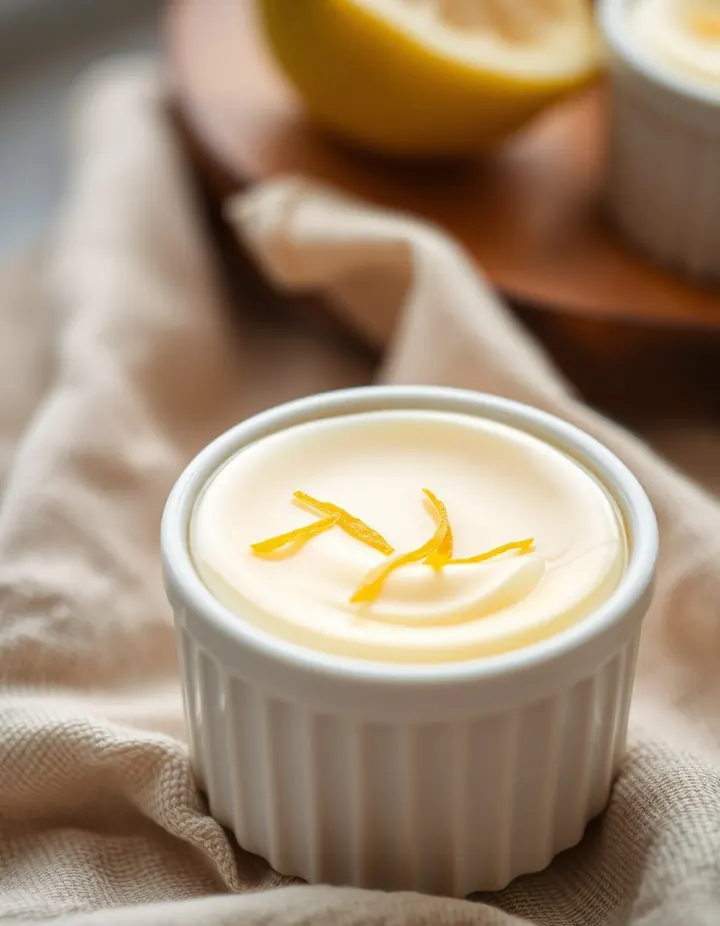 Lemon Custard64 recipes
The free Flavor Lab newsletter: one surprising pairing a week and the molecular reason it works, in 60 seconds. No spam, unsubscribe anytime.
Prefer an account? Create a free account to save pairings and unlock the full chemistry.