Why it works: Thyme and lemon match in chemistry and in kitchens. They rank in the top 1% of all ingredient pairs, and cooks put them together in 3,973 recipes. Both carry beta-phellandrene, which smells minty, terpene. The science ↓
Curried Chicken a LA Marie
Ingredients
Directions
The book gives no cooking times; the times in the steps were added in transcription, so check for doneness rather than trusting the clock.
Prepare the sauce base
Cut the chicken into neat joints, using only the best parts.
Slice the onions finely and place them in a stew pan with butter, thyme, and bay leaf. Cook on the stove until pale golden.
Add curry powder, salt, glaze, and flour. Mix in the milk and add the chicken joints.
Bring to a boil, then simmer for about 1 hour, stirring frequently to prevent burning.
Make the aspic coating
Remove the chicken joints and let them cool. Add lemon juice, cream, and dissolved gelatin to the pan contents.
Reboil and strain through a fine sieve, stirring on ice until it begins to set.
Mask the cooled chicken pieces with the mixture and place them on a baking tin over crushed ice.
Garnish and serve
Cover with a little cool aspic jelly and garnish with chopped aspic jelly.
Form a border around the chicken with boiled cold curry rice and farced olives, sprinkling with lobster coral and parsley.
Serve as a cold entrée or for a ball supper.
Transcribed from a scanned cookbook and modernised for today's kitchens. Where the book gave no heat or time, or said "a moderate oven", the temperatures and times here may be modern equivalents rather than the book's own figures.
Explore the science
The flavor team
The pairs that carry this dish. Each one is judged two ways: how much their aromas overlap, and how often cooks already put them together.
-
Thyme + lemontop 1% of all pairsSmell alikestrongCooked together3,973 recipes
Shared aroma: beta-phellandrene (minty, terpene).
-
Onion + thymetop 7% of all pairsSmell alikemoderateCooked together11,171 recipes
Shared aroma: coumarin (sweet, hay).
-
Butter + milktop 7% of all pairsSmell alikemoderateCooked together81,283 recipes
Shared aroma: (z)-4-heptenal (biscuit, cream).
-
Butter + creamtop 8% of all pairsSmell alikemoderateCooked together41,516 recipes
Shared aroma: delta-dodecalactone (sweet, creamy).
-
Chicken + oniontop 8% of all pairsSmell alikemoderateCooked together17,814 recipes
Shared aroma: gamma-nonanolactone (coconut, sweet).
Ranks compare each pair with 20,000 random ingredient pairs on CompKitchen. How we score pairs
What each ingredient does
- Chicken
- Provides the main body of the dish, carried in a curry-flavoured sauce.
- Butter
- Carries the onion flavour and browns the onions gently, adding richness.
- Flour
- Thickens the curry sauce so it coats the chicken joints.
- Milk
- Forms the liquid base of the sauce, softening and mellowing the curry flavour.
- Gelatin
- Sets the strained sauce into a firm aspic coating for the chicken.
- Cream
- Adds richness and a smooth, velvety texture to the set coating.
The step that matters
Stirring the sauce on ice until it begins to set. Gelatin sets as it cools, so the sauce must be stirred while chilling to stay smooth and evenly coat the chicken. If it sets unstirred, it becomes lumpy and uneven.
Swap the lemon
How well each one fits the dish's main ingredients (chicken, onion, butter, thyme, flour, milk, cream):
- Coconutfits better
- Avocadofits about as well
- Lemonthe original
- Figfits about as well
Fit is the average pairing score against chicken, onion, butter, thyme, flour, milk, cream. Candidates are from the same food group and used in at least 100 recipes.
“What each ingredient does” and “The step that matters” were written by Claude from this recipe’s own method and reviewed in samples by CompKitchen.
You might also like
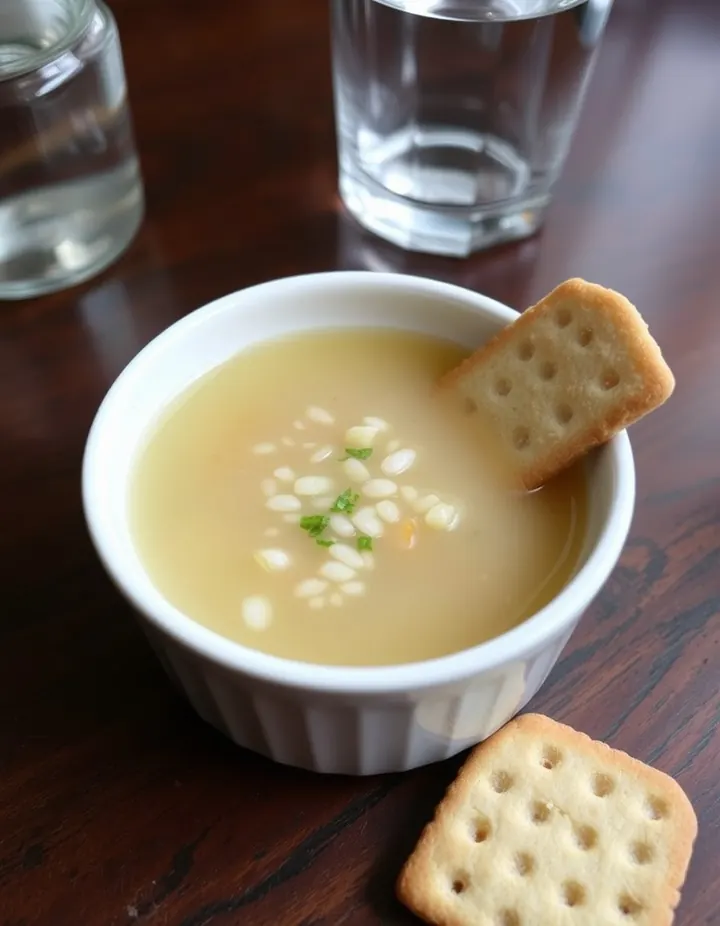 Chicken Broth257 recipes
 Lemon Sauce236 recipes
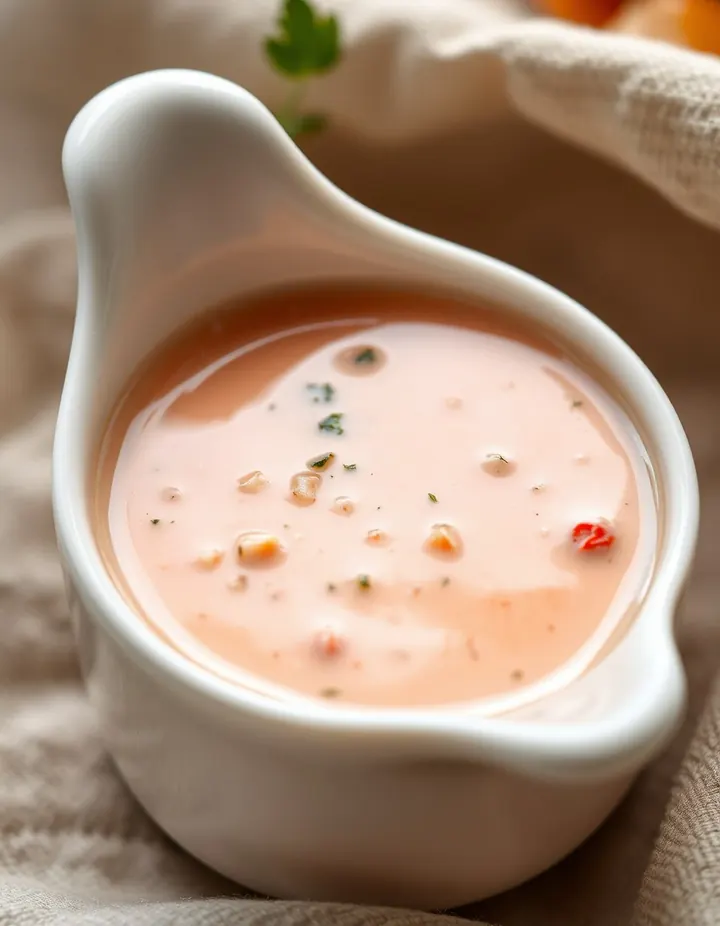 Lobster Sauce174 recipes
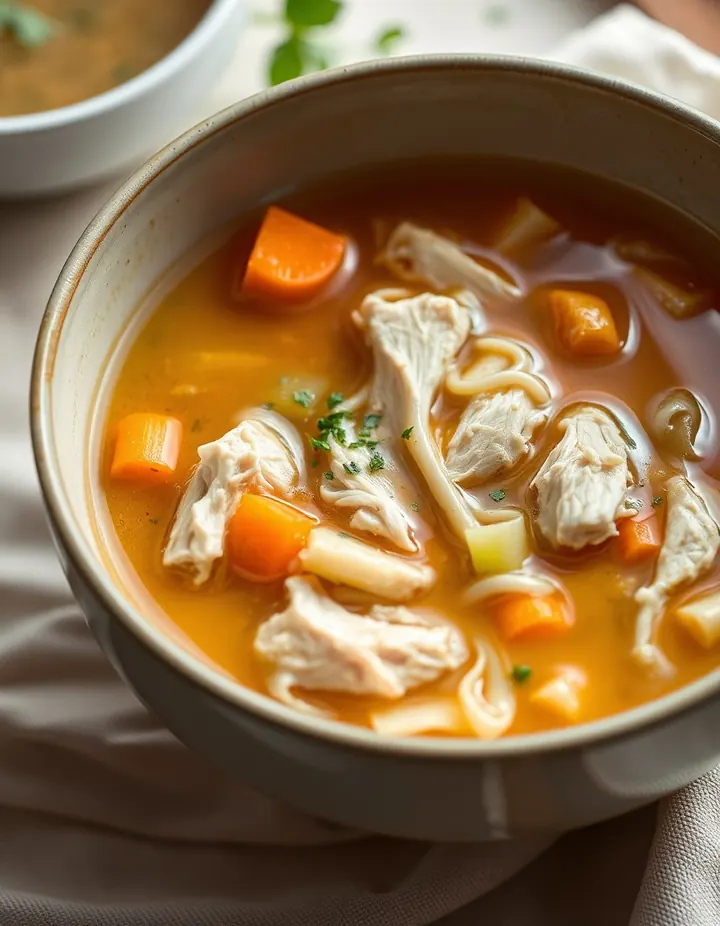 Chicken Soup156 recipes
The free Flavor Lab newsletter: one surprising pairing a week and the molecular reason it works, in 60 seconds. No spam, unsubscribe anytime.
Prefer an account? Create a free account to save pairings and unlock the full chemistry.