Why it works: Orange and lemon match in chemistry and in kitchens. They rank in the top 1% of all ingredient pairs, and cooks put them together in 10,634 recipes. Both carry 3-hexenal, which smells apple, fruity. The science ↓
Banbury Cakes
Ingredients
Directions
The book says “a quick oven”. The 400°F (200°C) in the steps is the modern equivalent, not the book's own figure.
Prepare the filling
Mix all ingredients except the butter and flour.
Make and roll the paste
Make a light paste with the butter and flour.
Roll out the paste once or twice to prevent rising too much.
Roll out half of the paste into a very thin square.
Assemble and bake
Spread the mixed fruit and spice evenly on the rolled-out paste.
Moisten the edges.
Lay the remaining half of the paste on top, rolled equally thin.
Press the edges securely together.
Mark it with a knife into divisions two inches wide and three long.
Bake in a preheated oven at 400°F (200°C) for 25 to 30 minutes.
Divide into cakes while still warm.
Transcribed from a scanned cookbook and modernised for today's kitchens. Where the book gave no heat or time, or said "a moderate oven", the temperatures and times here may be modern equivalents rather than the book's own figures.
Explore the science
The flavor team
The pairs that carry this dish. Each one is judged two ways: how much their aromas overlap, and how often cooks already put them together.
-
Orange + lemontop 1% of all pairsSmell alikestrongCooked together10,634 recipes
Shared aroma: 3-hexenal (apple, fruity).
-
Butter + flourtop 12% of all pairsSmell alikelowCooked together124,287 recipes
Shared aroma: isobutyraldehyde (malty, green).
-
Currant + orangetop 15% of all pairsSmell alikelowCooked together2,034 recipes
Shared aroma: alpha-pinene (pine, turpentine).
-
Lemon + buttertop 16% of all pairsSmell alikemoderateCooked together41,227 recipes
Shared aroma: 3-hexenal (apple, fruity).
-
Beef + buttertop 16% of all pairsSmell alikemoderateCooked together10,847 recipes
Shared aroma: 2-furfurylthiol (coffee, roasted).
Butter and flour barely smell alike, yet cooks put them together in 124,287 recipes: they work on texture and structure more than aroma.
Ranks compare each pair with 20,000 random ingredient pairs on CompKitchen. How we score pairs
What each ingredient does
- Butter
- Enriches the paste, giving it a short, tender texture as it is worked with flour.
- Flour
- Forms the paste structure that encloses the filling and holds the cake together.
- Beef suet
- Adds fat that keeps the filling moist and rich during baking.
- Currants
- Provide sweetness and chewy body within the spiced filling.
- Macaroons or ratafias
- Add almond-flavoured crumbs that bind the filling and add aroma.
The step that matters
Rolling the paste thin and even. Rolling the paste once or twice and keeping both halves very thin limits how much it rises, so the cake bakes flat and the filling stays evenly distributed rather than puffing unevenly.
Swap the currant
How well each one fits the dish's main ingredients (beef, orange, lemon, butter, flour):
- Limefits better
- Raisinfits better
- Blackberryfits better
- Currantthe original
Fit is the average pairing score against beef, orange, lemon, butter, flour. Candidates are from the same food group and used in at least 100 recipes.
“What each ingredient does” and “The step that matters” were written by Claude from this recipe’s own method and reviewed in samples by CompKitchen.
You might also like
 Orange Bundt Cake349 recipes
 Lemon Cake228 recipes
 Lemon Ice147 recipes
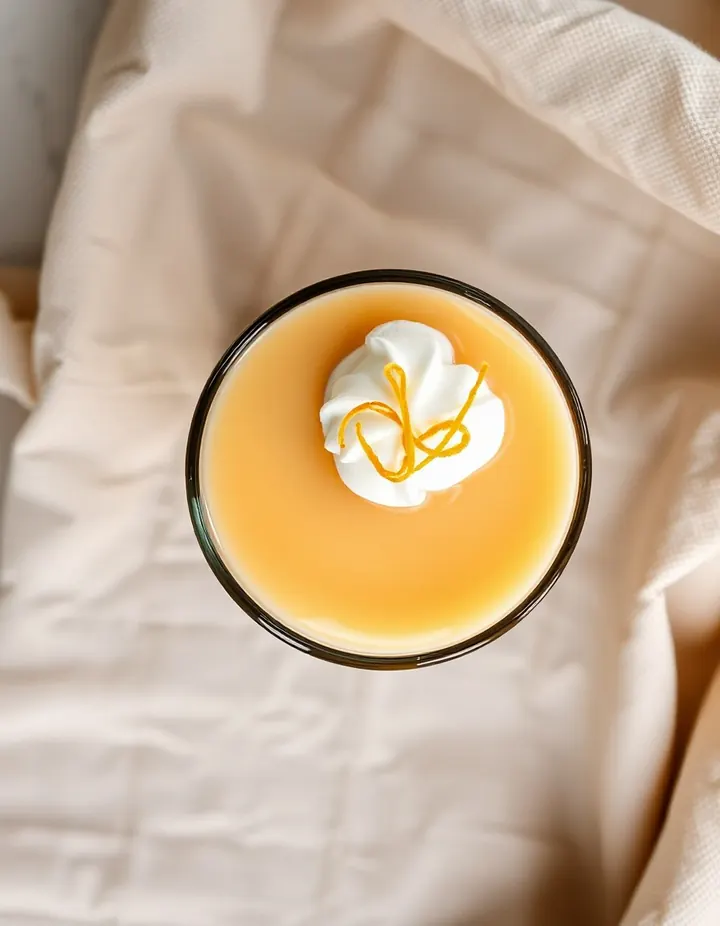 Orange Cream Rice Pudding121 recipes
The free Flavor Lab newsletter: one surprising pairing a week and the molecular reason it works, in 60 seconds. No spam, unsubscribe anytime.
Prefer an account? Create a free account to save pairings and unlock the full chemistry.