Why it works: Cinnamon and clove match in chemistry and in kitchens. They rank in the top 1% of all ingredient pairs, and 14,027 recipes mention both. Both carry ethyl cinnamate, which smells sweet, balsamic. The science ↓
The recipe
Ingredients
Contains: milk, wheat (auto-detected from the ingredients and method; we can miss things, so check labels)
Directions
Make the dough
Mix the soda into the milk.
Combine the remaining ingredients, including the milk-soda mixture.
Mix well, adding flour if the dough seems to stick.
Form a ball and place in a plastic bag or a covered bowl and let stand overnight.
Shape and bake
Cut the dough into three or four sections.
One at a time, roll out each section into a fairly thin round with a rolling pin, using extra flour if the dough sticks.
Using cookie cutters, cut shapes such as star, crescent moon, Santa, angel, etc.
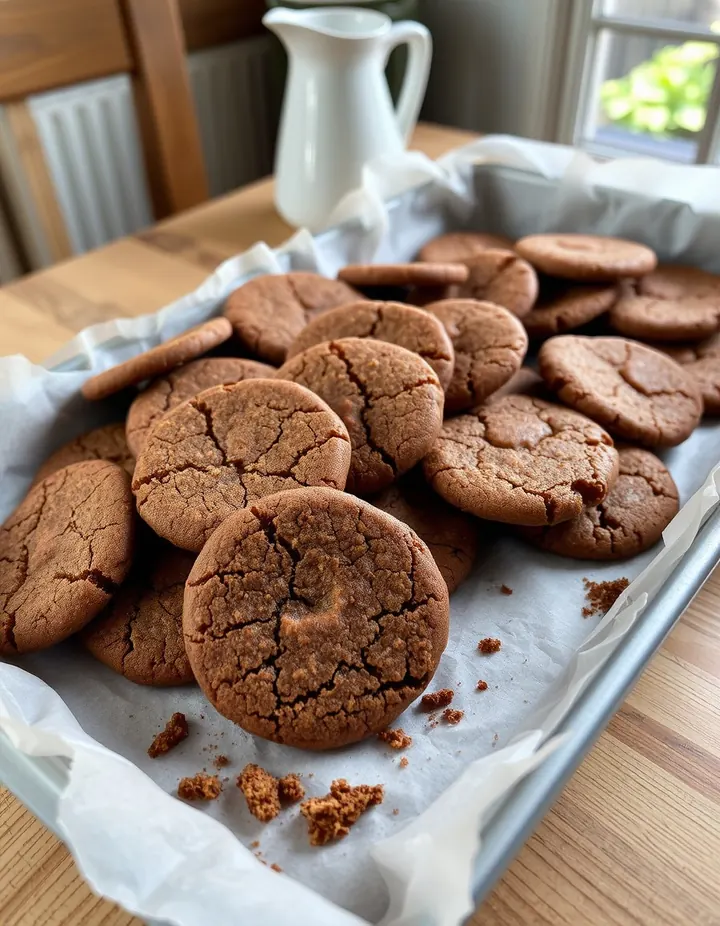
Bake in a 200°C (400°F) oven for about 7–10 minutes, or until golden brown on the bottom.
Cool flat.
Decorate and store
Decorate the cookies with frosting, such as those that come in CakeMate tubes, or make your own favorite frosting.
Let the decorated cookies dry overnight.
Store in an airtight container.
This recipe comes from the Recipes Wiki on Fandom and is licensed CC BY-SA 4.0. Our formatting and summaries are shared under the same licence.
Steps grouped into stages for easier reading; the method is the source's own.
Explore the science
The flavor team
The pairs that carry this dish. Each one is judged two ways: how much aroma chemistry they share, and how many recipes mention both.
-
Cinnamon + clovetop 1% of all pairsAroma overlapstrongMentioned together14,027 recipes
Shared aroma: ethyl cinnamate (sweet, balsamic).
-
Cinnamon + gingertop 1% of all pairsAroma overlapstrongMentioned together6,380 recipes
Shared aroma: estragole (anise, licorice).
-
Ginger + clovetop 1% of all pairsAroma overlapstrongMentioned together5,171 recipes
Shared aroma: estragole (anise, licorice).
-
Cream + buttertop 3% of all pairsAroma overlapstrongMentioned together41,494 recipes
Shared aroma: delta-dodecalactone (sweet, creamy).
-
Sugar + cinnamontop 4% of all pairsAroma overlaplowMentioned together30,777 recipes
Shared aroma: guaiacol (smoky, sweet).
Sugar and cinnamon share little aroma chemistry, yet 30,777 recipes mention both: they likely work on texture and structure more than aroma.
Ranks compare each pair with 20,000 random ingredient pairs on CompKitchen. How we score pairs
What each ingredient does
- Flour
- Provides the structure that holds the dough together and lets it be rolled and cut.
- Sugar
- Adds sweetness and helps the cookies brown during baking.
- Syrup (molasses)
- Adds moisture, dark color and a deep, rich flavor to the dough.
- Butter or margarine
- Adds fat for tenderness and flavor in the cookie.
- Baking soda
- Reacts with the acidity in the syrup to lighten the dough and help it spread and brown.
The step that matters
Rolling the dough thin. Dough rolled too thick bakes unevenly and stays soft in the middle, while thin rounds bake crisp and evenly. Extra flour prevents sticking but too much makes cookies dry and tough.
Flavor stand-ins for the clove
How well each one fits the dish's main ingredients (sugar, syrup, molasses, cinnamon, ginger, cream, butter):
- Nutmegbetter flavor fit
- Clovethe original
- Cardamomabout as good a flavor fit
- Allspiceabout as good a flavor fit
Fit is the average pairing score against sugar, syrup, molasses, cinnamon, ginger, cream, butter. Candidates are from the same food group and used in at least 100 recipes. This compares flavor only: it does not check the job the ingredient does in the dish (bulk, moisture, acidity, structure).
“What each ingredient does” and “The step that matters” were written by Claude from this recipe’s own method and reviewed in samples by CompKitchen.
You might also like
 Illustration
 Illustration
 Illustration
 Illustration
The Sunday pairing: one pairing, the chemistry behind it, and how to cook it. No spam, unsubscribe anytime.
Prefer an account? Create a free account for sign-in; Pro adds the full results and chemistry.