Why it works: Cinnamon and ginger match in chemistry and in kitchens. They rank in the top 1% of all ingredient pairs, and 6,380 recipes mention both. Both carry estragole, which smells anise, licorice. The science ↓
The recipe
Ingredients
Contains: egg, milk, wheat (auto-detected from the ingredients and method; we can miss things, so check labels)
Directions
Make the dough
Put molasses, brown sugar, butter, and lard in a pot and heat, stirring constantly under medium-low heat until melted.
Do not boil the mixture. The process can be sped up by first softening the butter and lard in the microwave.
Do not allow the mixture to scorch, or the cookies will not hold together.
Take the mixture off the heat and add 2-1/2 cups of flour and all of the spices. Mix thoroughly and set aside to cool to lukewarm, stirring occasionally.
Lightly beat the eggs and incorporate them into the dough. Let the dough cool completely.
Sieve together the remaining flour with the baking soda and baking powder.
Add the flour gradually to the dough, stirring thoroughly after each addition.
When the dough becomes too thick to stir, knead with your hands first in the bowl, then on a well-floured work surface. Add more flour if needed, but only a bit at a time.
Grease a bowl with butter and put the dough in it. Cover with cloth and let rest for a couple of hours.
Roll and bake
Generously flour your work surface.
Take a piece of dough and roll it out very thinly.
Cut out shapes and place on a cookie sheet. No need to grease the sheet.
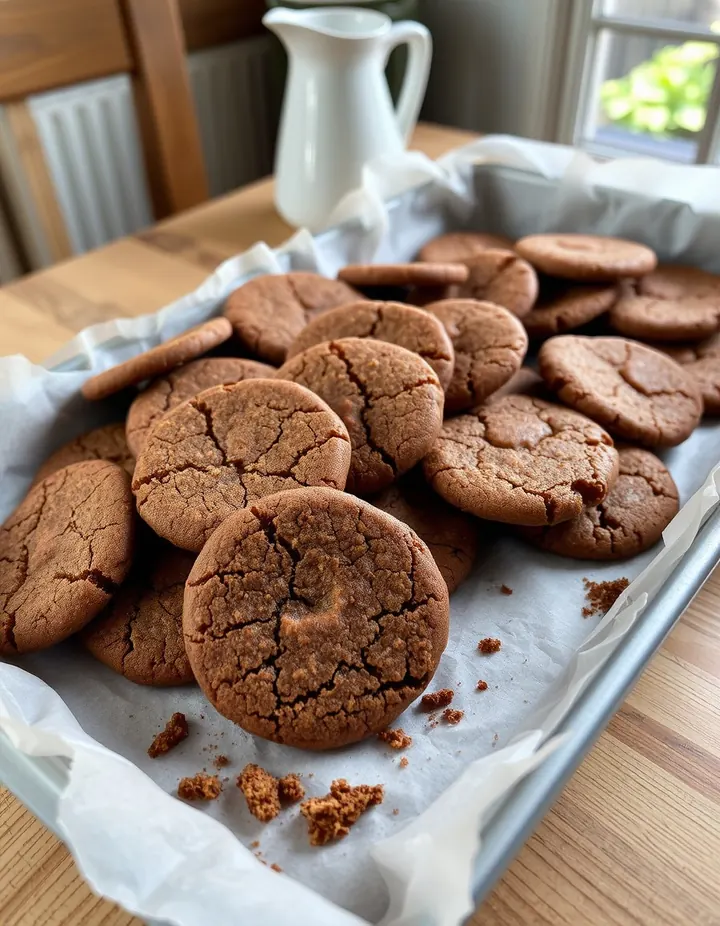
Bake in a 400-degree oven. The cookies should bake in no more than five or six minutes; watch them carefully, and when the bottom edge begins to brown and the surface looks dry, they should be ready.
Take the cookies out of the oven and put the pan on a rack. When the cookies cool, they should be harder and slide off the pan. If they are still moist or stick, pop them back into the oven for another minute or two.
Store and reuse
The recipe makes lots of cookies, so it can be halved (or doubled, for that matter).
The dough will keep almost indefinitely in the fridge, covered with plastic wrap. When it comes out of the fridge, it will be quite hard, but a bit of kneading and rolling will make it soft and pliable again.
This recipe comes from the Recipes Wiki on Fandom and is licensed CC BY-SA 4.0. Our formatting and summaries are shared under the same licence.
Steps grouped into stages for easier reading; the method is the source's own.
Explore the science
The flavor team
The pairs that carry this dish. Each one is judged two ways: how much aroma chemistry they share, and how many recipes mention both.
-
Cinnamon + gingertop 1% of all pairsAroma overlapstrongMentioned together6,380 recipes
Shared aroma: estragole (anise, licorice).
-
Honey + cinnamontop 4% of all pairsAroma overlapmoderateMentioned together1,446 recipes
Shared aroma: 4-methoxybenzaldehyde (sweet, anise).
-
Sugar + cinnamontop 4% of all pairsAroma overlaplowMentioned together30,777 recipes
Shared aroma: guaiacol (smoky, sweet).
-
Ginger + peppertop 4% of all pairsAroma overlapstrongMentioned together6,799 recipes
Shared aroma: 2-isopropyl-3-methoxypyrazine (earthy, pea).
-
Honey + gingertop 5% of all pairsAroma overlapmoderateMentioned together1,163 recipes
Shared aroma: estragole (anise, licorice).
Sugar and cinnamon share little aroma chemistry, yet 30,777 recipes mention both: they likely work on texture and structure more than aroma.
Ranks compare each pair with 20,000 random ingredient pairs on CompKitchen. How we score pairs
What each ingredient does
- Molasses
- Adds deep flavour, moisture and a dark colour that gives the gingerbread its character.
- Brown sugar
- Adds sweetness and moisture, and helps the cookies brown and stay tender.
- Butter
- Adds fat for richness and a tender, crisp texture.
- Lard
- Adds fat that keeps the cookies tender and helps them hold a clean shape.
- Flour
- Provides the structure that holds the dough together once baked.
- Eggs
- Bind the dough and add structure and richness.
The step that matters
Keep the molasses mixture from boiling or scorching. Overheating the sugars and molasses can burn them or drive off moisture, and the dough then bakes dry and fails to hold together. Gentle heat that just melts the fats keeps the dough workable.
“What each ingredient does” and “The step that matters” were written by Claude from this recipe’s own method and reviewed in samples by CompKitchen.
You might also like
 Illustration
 Illustration
 Illustration
 Illustration
The Sunday pairing: one pairing, the chemistry behind it, and how to cook it. No spam, unsubscribe anytime.
Prefer an account? Create a free account for sign-in; Pro adds the full results and chemistry.