Why it works: Raisin and flour match in chemistry and in kitchens. They rank in the top 1% of all ingredient pairs, and cooks put them together in 9,075 recipes. Both carry isobutyraldehyde, which smells malty, green. The science ↓
Christmas Plum-pudding
Ingredients
Directions
Prepare the fruit and nuts
In a bowl, combine the raisins and brandy. Let them soak while preparing the other ingredients.
Pick over the currants, wash them in cold water, dry them with a towel, and toss with a little flour in a sieve.
Remove the skin from the beef suet and chop it finely with the flour.
Slice the citron, candied lemon, and orange peel thinly.
Grate the yellow rind and squeeze the juice from the orange and lemon.
Pour boiling water over the almonds, let them sit until the skins are moist, then rub off the skins and slice the nuts.
Mix the pudding
Grate the nutmeg and sift it into the sugar with the salt.
Crumb the stale bread and mix all ingredients together by hand.
Add the eggs, brandy, sherry, and just enough cream or milk to moisten the mixture.
Steam and serve
Butter and flour a pudding mold, shaking out excess flour.
Fill the mold to within an inch of the top, cover with buttered white paper, and seal tightly.
Place the mold in boiling water, ensuring the water reaches two-thirds up the side, and boil for 10 hours, replenishing water as needed.
Transcribed from a scanned cookbook and modernised for today's kitchens. Where the book gave no heat or time, or said "a moderate oven", the temperatures and times here may be modern equivalents rather than the book's own figures.
Explore the science
The flavor team
The pairs that carry this dish. Each one is judged two ways: how much their aromas overlap, and how often cooks already put them together.
-
Raisin + flourtop 1% of all pairsSmell alikestrongCooked together9,075 recipes
Shared aroma: isobutyraldehyde (malty, green).
-
Lemon + orangetop 1% of all pairsSmell alikestrongCooked together10,634 recipes
Shared aroma: 3-hexenal (apple, fruity).
-
Raisin + almondtop 2% of all pairsSmell alikemoderateCooked together1,781 recipes
Shared aroma: 2-nonanone (fruity, floral).
-
Flour + almondtop 5% of all pairsSmell alikemoderateCooked together8,673 recipes
Shared aroma: isobutyraldehyde (malty, green).
-
Orange + almondtop 6% of all pairsSmell alikemoderateCooked together3,125 recipes
Shared aroma: 2,4-decadienal (seaweed).
Ranks compare each pair with 20,000 random ingredient pairs on CompKitchen. How we score pairs
What each ingredient does
- Eggs
- Bind the mixture and set into a firm, sliceable pudding when cooked.
- Stale bread
- Absorbs liquid and gives the pudding a light, crumbly body.
- Beef suet
- Adds fat that keeps the pudding moist and rich during long steaming.
- Raisins
- Provide concentrated sweetness and chewy texture after soaking in brandy.
- Sugar
- Sweetens the pudding and helps it develop a deep, dark color.
- Brandy
- Adds aroma and flavor while softening the dried fruit.
The step that matters
Boil for the full 10 hours with water kept two-thirds up the mold. Long, gentle steaming cooks the eggs and starch through without drying the pudding. If the water drops below the level of the mold or boils dry, the pudding can scorch or turn heavy and undercooked.
Swap the currant
How well each one fits the dish's main ingredients (raisin, brandy, flour, beef, lemon, orange, almond):
- Figfits better
- Cranberryfits better
- Limefits better
- Currantthe original
Fit is the average pairing score against raisin, brandy, flour, beef, lemon, orange, almond. Candidates are from the same food group and used in at least 100 recipes.
“What each ingredient does” and “The step that matters” were written by Claude from this recipe’s own method and reviewed in samples by CompKitchen.
You might also like
 Orange Bundt Cake349 recipes
 Lemon Cake228 recipes
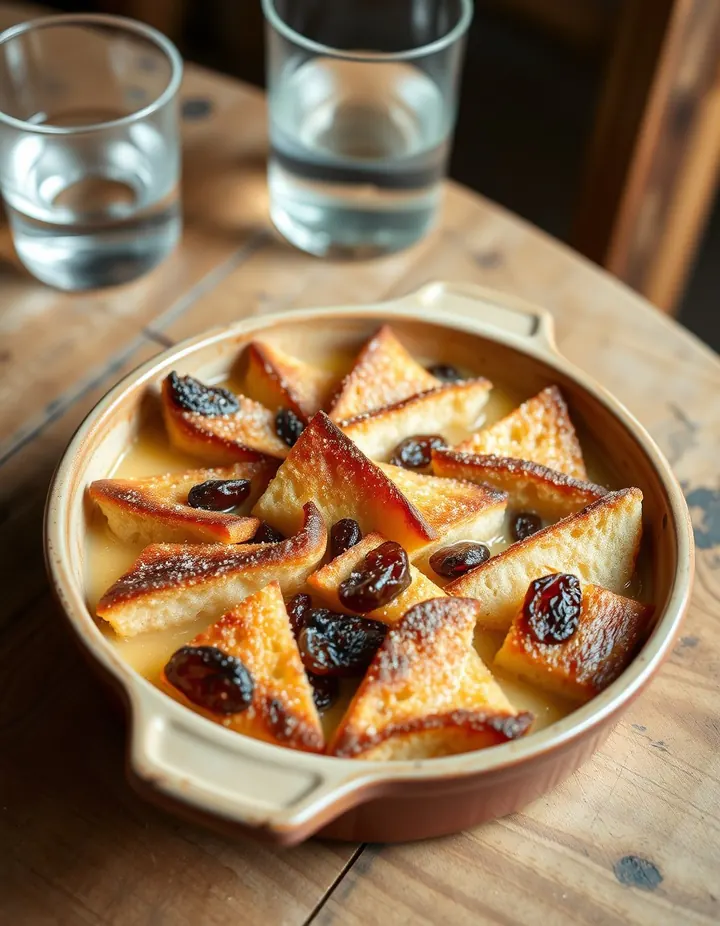 Bread Pudding153 recipes
 Lemon Ice147 recipes
The free Flavor Lab newsletter: one surprising pairing a week and the molecular reason it works, in 60 seconds. No spam, unsubscribe anytime.
Prefer an account? Create a free account to save pairings and unlock the full chemistry.