Why it works: Corn and lemon are a kitchen classic. They rank in the top 13% of all ingredient pairs, and cooks put them together in 1,927 recipes. Both carry 2-nonenal, which smells fatty, green. The science ↓
Lemon-Cream-Tart Meringue
Ingredients
Directions
The book says “a slow oven”. The 300°F (150°C) in the steps is the modern equivalent, not the book's own figure.
Prepare the filling
Boil 1 pint of water in a saucepan.
In another bowl, mix 4 oz of powdered sugar with 1 oz of corn-starch.
Grate the rind of a lemon and squeeze in the juice, then stir well for 1 minute.
Add 2 whole eggs and beat together for 1 minute.
Pour the mixture into the boiling water, stirring sharply with a whisk until it boils, then remove from heat.
Bake the crust and set the filling
Preheat the oven to 300 °F (150 °C).
Line a flat pie dish with the crust and bake for 10 minutes until golden.
Pour the lemon mixture into the baked crust and let it cool completely.
Make the meringue and finish
In a copper basin, beat 3 egg whites to stiff peaks, then mix in 3 oz of powdered sugar.
Spread half of the meringue over the tart, smoothing it with a knife.
Use a pastry bag to decorate the top with the remaining meringue.
Sprinkle with sugar and bake in a slow oven for 10 minutes until pale brown.
Cool, then carefully slide onto a dessert dish and serve.
Transcribed from a scanned cookbook and modernised for today's kitchens. Where the book gave no heat or time, or said "a moderate oven", the temperatures and times here may be modern equivalents rather than the book's own figures.
Explore the science
The flavor team
The pairs that carry this dish. Each one is judged two ways: how much their aromas overlap, and how often cooks already put them together.
-
Corn + lemontop 13% of all pairsSmell alikemoderateCooked together1,927 recipes
Shared aroma: 2-nonenal (fatty, green).
-
Sugar + lemontop 18% of all pairsSmell alikelowCooked together53,532 recipes
Shared aroma: 2-nonenal (fatty, green).
-
Lemon + eggtop 19% of all pairsSmell alikelowCooked together44,316 recipes
Shared aroma: (e,e)-2,4-decadienal (fatty, deep fried).
-
Sugar + eggtop 21% of all pairsSmell alikemoderateCooked together122,807 recipes
Shared aroma: 2-nonenal (fatty, green).
-
Sugar + corntop 21% of all pairsSmell alikelowCooked together7,168 recipes
Shared aroma: 2-nonenal (fatty, green).
Sugar and lemon barely smell alike, yet cooks put them together in 53,532 recipes: they work on texture and structure more than aroma.
Ranks compare each pair with 20,000 random ingredient pairs on CompKitchen. How we score pairs
What each ingredient does
- Eggs
- Whole eggs thicken the lemon filling as they set with the hot liquid.
- Corn-starch
- Starch thickens the boiled filling so it holds a clean, sliceable structure.
- Egg whites
- Whipped into foam, they form the airy structure of the meringue topping.
- Powdered sugar
- Sweetens the filling and dissolves easily into the meringue for a smooth texture.
- Lemon juice
- Adds acidity that brightens the sweet filling and balances its richness.
The step that matters
Boiling the lemon filling with the starch. Cornstarch only thickens fully once it reaches a boil, and it must be whisked constantly so it does not lump or scorch. Undercooked starch leaves a runny filling.
Swap the lemon
How well each one fits the dish's main ingredients (sugar, corn, egg):
- Vanillafits better
- Coconutfits about as well
- Raisinfits about as well
- Lemonthe original
Fit is the average pairing score against sugar, corn, egg. Candidates are from the same food group and used in at least 100 recipes.
“What each ingredient does” and “The step that matters” were written by Claude from this recipe’s own method and reviewed in samples by CompKitchen.
You might also like
 Lemon Cake228 recipes
 Lemon Ice147 recipes
 Lemon Sherbet103 recipes
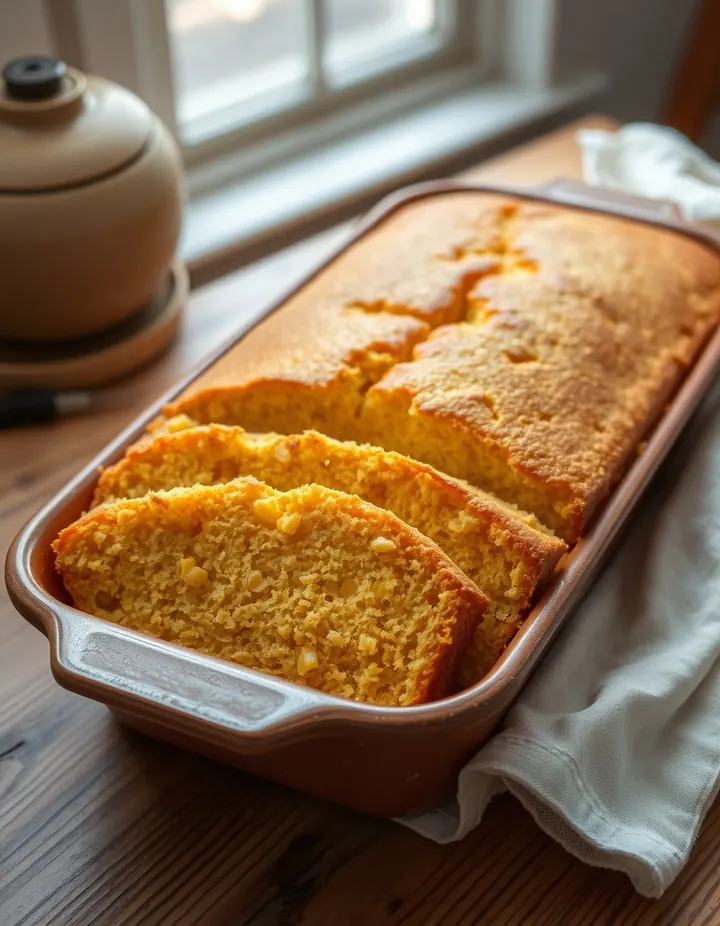 Corn Cake90 recipes
The free Flavor Lab newsletter: one surprising pairing a week and the molecular reason it works, in 60 seconds. No spam, unsubscribe anytime.
Prefer an account? Create a free account to save pairings and unlock the full chemistry.