Why it works: Lemon and cinnamon match in chemistry and in kitchens. They rank in the top 7% of all ingredient pairs, and 7,950 recipes mention both. Both carry beta-phellandrene, which smells minty, terpene. The science ↓
Calves’ Feet Jelly
Ingredients
Directions
Prepare the stock
Wash the calves’ feet.
Split the calves’ feet.
Place the calves’ feet in a stewpan with the cold water.
Boil quickly.
Skim the surface.
Simmer gently for six hours, skimming frequently.
Strain the liquid into an uncovered earthen pan.
Let it cool overnight.
Remove the fat from the surface.
Wipe the surface with a warm cloth.
Make the jelly
Combine the jelly with lemon juice, lemon rind, cinnamon, and sugar.
Bring the mixture to a boil.
Beat the egg whites with cold water.
Add the beaten egg whites to the jelly, stirring vigorously for 20 minutes while boiling.
Reduce heat and simmer uncovered for another 20 minutes.
Strain the mixture through a jelly bag.
If the jelly is not bright, strain it again.
Set and serve
Pour the jelly into a mold.
Chill the mold on ice for an hour before serving.
Transcribed from a scanned cookbook and modernised for today's kitchens. Where the book gave no heat or time, or said "a moderate oven", the temperatures and times here may be modern equivalents rather than the book's own figures.
Explore the science
The flavor team
The pairs that carry this dish. Each one is judged two ways: how much aroma chemistry they share, and how many recipes mention both.
-
Lemon + cinnamontop 7% of all pairsAroma overlapstrongMentioned together7,950 recipes
Shared aroma: beta-phellandrene (minty, terpene).
-
Cinnamon + sugartop 10% of all pairsAroma overlaplowMentioned together30,779 recipes
Shared aroma: guaiacol (smoky, sweet).
-
Lemon + sugartop 18% of all pairsAroma overlaplowMentioned together53,532 recipes
Shared aroma: 2-nonenal (fatty, green).
-
Lemon + eggtop 19% of all pairsAroma overlaplowMentioned together44,316 recipes
Shared aroma: (e,e)-2,4-decadienal (fatty, deep fried).
-
Sugar + eggtop 21% of all pairsAroma overlapmoderateMentioned together122,807 recipes
Shared aroma: 2-nonenal (fatty, green).
Cinnamon and sugar share little aroma chemistry, yet 30,779 recipes mention both: they likely work on texture and structure more than aroma.
Ranks compare each pair with 20,000 random ingredient pairs on CompKitchen. How we score pairs
What each ingredient does
- Calves’ feet
- Release gelatin as they simmer, giving the jelly its body and setting power.
- Egg whites
- Bind to impurities as they heat, so straining leaves the jelly clear.
- Lemon juice
- Adds acidity that brightens the flavour and balances the sugar.
- Loaf sugar
- Sweetens the jelly and adds body to the final set.
- Madeira wine
- Adds aroma and a rich, fortified sweetness to the finished jelly.
The step that matters
Clarifying with egg whites. Stirring the egg whites into the boiling jelly lets them coagulate and trap cloudy particles. Stirring too gently or skipping the simmer leaves the jelly murky, and the straining step cannot fully remove what the whites have not captured.
Flavor stand-ins for the lemon
How well each one fits the dish's main ingredients (cinnamon, sugar, egg, madeira wine):
- Vanillabetter flavor fit
- Raisinbetter flavor fit
- Lemonthe original
- Appleabout as good a flavor fit
Fit is the average pairing score against cinnamon, sugar, egg, madeira wine. Candidates are from the same food group and used in at least 100 recipes. This compares flavor only: it does not check the job the ingredient does in the dish (bulk, moisture, acidity, structure).
“What each ingredient does” and “The step that matters” were written by Claude from this recipe’s own method and reviewed in samples by CompKitchen.
You might also like
 Lemon Cake228 recipes
 Lemon Ice147 recipes
 Lemon Sherbet103 recipes
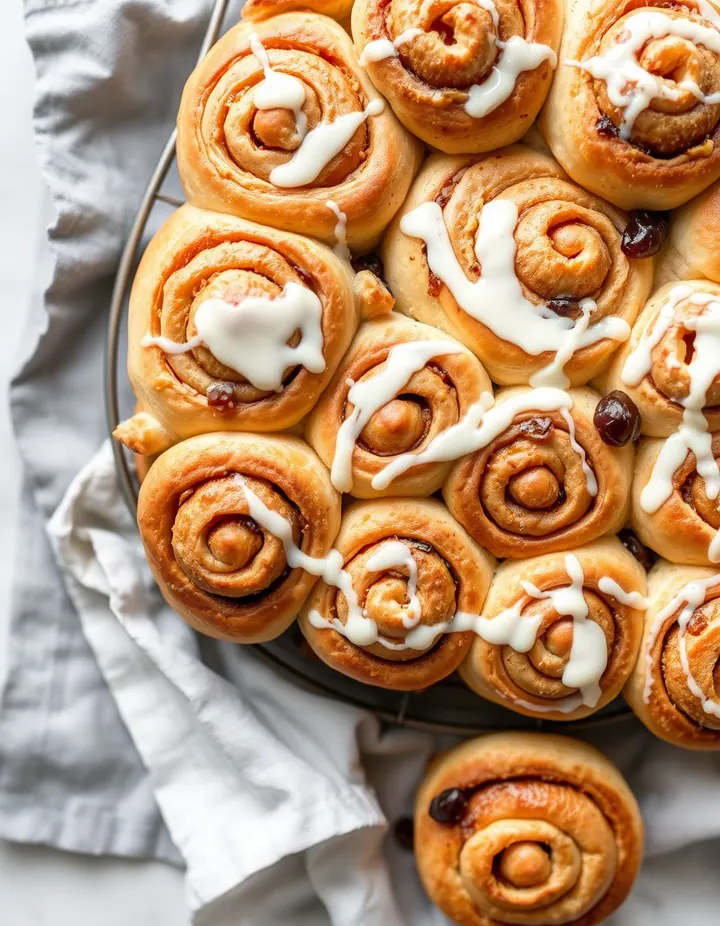 Cinnamon Rolls71 recipes
The Sunday pairing: one pairing, the chemistry behind it, and how to cook it. No spam, unsubscribe anytime.
Prefer an account? Create a free account for sign-in; Pro adds the full results and chemistry.